
Brief Summary
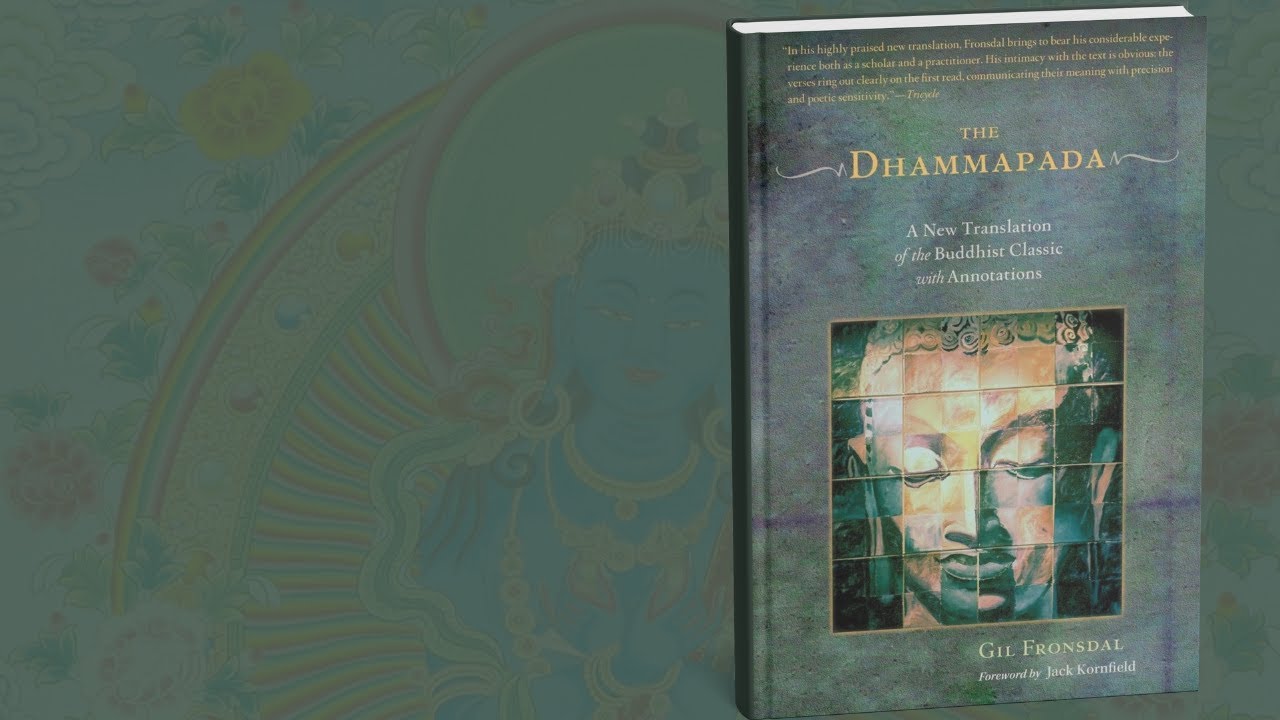
This video provides an in-depth exploration of the Dhammapada, a revered Buddhist text. It explains the text's origins, its place within the Theravada Buddhist canon, and its unique characteristics compared to similar texts. The video also discusses the interpretation and significance of its verses, emphasizing the importance of understanding and practicing the teachings for achieving inner peace and liberation.
- Origins and Significance of the Dhammapada
- Key Teachings and Practices for Liberation
- Importance of Understanding and Practicing the Teachings
Introduction to Dhammapada
The Dhammapada is a highly cherished and widely favored Buddhist scripture, admired for its poetic beauty and profound depth. Its verses encapsulate the core principles of Buddhism in a simple and accessible manner. These teachings have been memorized and recited by Buddhist followers for thousands of years, containing universal truths applicable to all individuals. The text emphasizes that hatred is never overcome by hatred, and true happiness arises from good deeds and wisdom. It guides those who embrace the path of Dharma toward complete peace and liberation by relinquishing attachments.
Origin and Collection of Verses
The Dhammapada is part of the Theravada Buddhist canon, specifically within the Sutta Pitaka, which is further divided into five sections called Nikayas. The Dhammapada belongs to the Khuddaka Nikaya, a collection of shorter works. It is also associated with similar texts known as Dharma Padas in Sanskrit, though the Dhammapada is unique in being preserved in Pali. These texts are collections of verses, varying in content and arrangement, suggesting that ancient Buddhist followers compiled numerous such collections, with selections and arrangements evolving over time.
Development and Interpretation
Scholars believe the composition of these texts began early and continued across different Buddhist communities. While the exact date of the Dhammapada's final form is unknown, later Theravada commentators consider it a collection of verses spoken by the Buddha, often adding stories to explain their context. Around 166 verses have parallels in the Sutta Pitaka and Vinaya Pitaka, attributed to the Buddha, while others are spoken by disciples or deities, possibly echoing the Buddha's teachings. The arrangement of verses and chapters has been subject to interpretation, with common suggestions focusing on the importance of mind and behavior as a foundation.
The Mind: The Source of Experience
Every experience originates from the mind, which directs and shapes it. Negative thoughts and actions lead to suffering, akin to a cartwheel following an ox. Conversely, a peaceful mind brings happiness, like an inseparable shadow. Dwelling on negative actions done to oneself perpetuates hatred, while ceasing such thoughts ends animosity. Hatred is only overcome by non-hatred, an eternal truth often unrecognized.
Living Mindfully and Avoiding Pitfalls
Those engrossed in pleasure, lacking self-control, imbalanced in eating, and lazy are easily overcome by temptation, like a weak tree in the wind. Conversely, those mindful of their senses, balanced in eating, faithful, and diligent cannot be swayed. Impure individuals who lack restraint and truthfulness are unworthy of wearing saffron robes, while those who have overcome flaws, are disciplined, truthful, and virtuous are deserving.
The Path to Truth and Happiness
Those who mistake the unnecessary for the necessary remain trapped in wrong thinking, unable to reach the truth. Those who discern the true from the false attain genuine understanding and reside in correct thought. Just as rain penetrates a poorly roofed house, lust invades an uncultivated mind. A well-guarded mind, however, remains impervious to lust.
Consequences of Actions
Those who perform evil deeds suffer in this life and the next, experiencing sorrow and regret. Conversely, those who perform good deeds rejoice in both lives, finding joy and delight in their virtuous actions. Evil actions lead to distress and rebirth in realms of woe, while good actions bring happiness and rebirth in realms of bliss.
The Value of Knowledge and Practice
Memorizing many teachings without contemplation and practice is like a herdsman counting another's cows, yielding no true benefit. Those who know and practice even a little, abandoning desire, hatred, and delusion, and live with awareness and freedom, attain the true fruit of contemplation, unattached in this life and the next.
The Path of Mindfulness and Diligence
Mindfulness is the path to immortality, while carelessness is the path to death. The mindful do not die, while the careless are as good as dead. Wise individuals, recognizing this difference, delight in mindfulness and follow the path of the noble. Those immersed in meditation, constantly striving and persevering, realize Nirvana, true peace.
Qualities of a Wise Person
A person with enthusiasm, awareness, purity in action and thought, restraint, and mindfulness, who walks the path of Dharma, gains increasing glory. Through diligence, mindfulness, restraint, and self-control, a wise person becomes strong, unshakeable by any flood. Fools and the ignorant drown themselves in carelessness, while the wise protect mindfulness as their greatest treasure.
Living with Awareness and Avoiding Distractions
Do not indulge in carelessness or sensory pleasures. Those who are mindful and meditative attain great happiness. Overcome carelessness with mindfulness, reach the heights of understanding, and free yourself from sorrow. A wise person views the sorrowful masses as one standing on a mountaintop looks down upon those in the plains.
The Wise Stand Out
Among the mindful, one who is fully aware, among those asleep, one who is awake, that wise person advances like a swift horse, leaving the weak behind. Through mindfulness, Indra became the greatest among the gods, who always praise mindfulness and shun carelessness.
The Benefits of Mindfulness for Monastics
A monastic who delights in mindfulness and fears carelessness advances like a fire, burning away all fetters, both light and heavy. A monastic who rejoices in mindfulness and dreads carelessness never falls away and is close to Nirvana.
Controlling the Mind
The restless, unsteady mind, difficult to control and restrain, is straightened by the wise, like an arrow maker straightens an arrow. Like a fish thrown from water onto dry land, the mind flutters, seeking to escape the control of Mara.
The Importance of a Well-Guarded Mind
The mind is hard to manage, flitting and unsteady, alighting wherever it pleases. A controlled mind brings happiness. The mind is exceedingly difficult to perceive, being subtle and hidden, alighting wherever it pleases. The wise safeguard it, for a guarded mind brings joy.
The Nature of the Mind and Liberation
The mind can travel far, remains alone, is bodiless, and hides in the cave (of the heart). Those who restrain it are freed from the bonds of Maya. Those whose minds are unsteady, who do not know true Dharma, and whose hearts waver, their wisdom is never complete.
Qualities of a Stable Mind
Those who are aware, whose minds do not flow, whose hearts are not troubled, and who have abandoned both good and evil, have no fear. Understand this body to be like an earthen jar, fortify the mind like a citadel, fight Mara with the sword of wisdom, and guard what has been attained without attachment.
The Fleeting Nature of the Body
Soon this body will lie on the earth, discarded, devoid of consciousness, like a useless piece of wood. Neither an enemy nor one who hates can inflict so much harm as one's own ill-directed mind. Neither mother, nor father, nor any other relative can do so much good as one's own well-directed mind.
Mastery Over the World
Who shall conquer this world and the realm of Yama and the world of the gods? Who shall discover the well-taught path of Dharma, as a skilled gardener selects flowers? One who is practicing can conquer this world and the realm of Yama and the world of the gods. One who is practicing can discover the well-taught path of Dharma, as a skilled gardener selects flowers.
The Illusion of the Body
This body is like foam; understanding its illusion and cutting off Mara's flowers, one goes beyond the sight of death. Death carries away the person who gathers flowers, whose mind is distracted, and who is insatiable in sensual pleasures, like a flood sweeps away a sleeping village.
The Wise and the Foolish
Like a bee that takes nectar from a flower without harming its color or fragrance, so should the sage wander in the village. Do not look at the faults of others, or what they have done or not done; rather, look at what you yourself have done and not done.
The Power of Practice
Like a beautiful flower that is colorful but without fragrance, so are fruitless the well-spoken words of one who does not practice them. Like a beautiful flower that is colorful and fragrant, so are fruitful the well-spoken words of one who practices them.
The Importance of Good Deeds
Just as from a heap of flowers many garlands can be made, so should many good deeds be done by one born as a mortal. The fragrance of flowers, sandalwood, tagara, or jasmine does not travel against the wind, but the fragrance of virtuous people travels against the wind; the virtuous pervade all directions.
The Fragrance of Virtue
The fragrance of virtue is superior to the fragrance of sandalwood, tagara, lotus, and jasmine. Faint is the fragrance of tagara and sandalwood, but the fragrance of the virtuous rises to the highest, reaching even the gods. Mara cannot find the path of those who possess virtue, live mindfully, and are freed by right understanding.
The Radiance of Wisdom
Like a sweet-smelling lotus that grows in a heap of rubbish thrown on the highway, so the disciple of the Fully Awakened One shines forth with wisdom among those who are like rubbish, among the blind ordinary people.
The Company One Keeps
Long is the night for one who is awake; long is a mile for one who is tired; long is samsara for fools who do not know the true Dharma. If a traveler cannot find a companion who is better or equal, let them proceed alone; there is no fellowship with fools.
The Nature of Fools
The fool thinks, "I have wealth," but even the self is not one's own; how much less wealth? The fool who knows their foolishness is at least wise to that extent, but the fool who thinks themselves wise is truly a fool. If a fool associates with a wise person even for a lifetime, they will not understand the Dharma, just as a spoon does not know the taste of soup.
The Wisdom of Association
If an intelligent person associates with a wise person even for a moment, they will quickly understand the Dharma, just as the tongue knows the taste of soup. Fools, lacking understanding, act as their own enemies, committing evil deeds that later bring sorrow.
The Consequences of Actions
That deed is not well done if, having done it, one repents and weeps, with a tearful face. That deed is well done if, having done it, one does not repent and is joyful and happy. As long as an evil deed does not bear fruit, the fool thinks it is sweet as honey, but when the evil deed bears fruit, the fool suffers.
The Value of Understanding
A fool may eat food with the tip of a blade of grass every month, but they are not worth as much as one who has understood the Dharma. Just as fresh milk does not curdle immediately, so an evil deed does not bear fruit immediately; smoldering, it follows the fool.
The Downfall of Fools
Reasoning is detrimental to the fool; it impairs their good fortune and destroys their head. The fool wants underserved honor, precedence among monastics, authority in monasteries, and homage from good families.
The Path to Nirvana
Let both householders and renunciants think, "This was done by me; in every work, let them follow my bidding." The ambition of the fool increases, as do their greed and pride. One is the path to material gain, another is the path to Nirvana; understanding this, the monastic, the disciple of the Buddha, should not delight in homage but cultivate solitude.
The Value of Wise Counsel
As one who points out treasure, so is the wise person who sees your fault and rebukes you; associate with such a sage. It will be better, not worse, for one who associates with such a person. Let them advise, instruct, and prevent one from what is wrong; such a person is dear to the good and hateful to the bad.
The Importance of Good Company
Do not associate with bad friends or with the vile; associate with good friends and with the noble. One who understands the Dharma sleeps in peace with a clear mind; the wise always delight in the Dharma taught by the noble.
The Qualities of the Wise
As canal makers lead water, as arrow makers shape the arrow, as carpenters shape wood, so the wise control themselves. As a solid rock is not shaken by the wind, so the wise are not moved by praise or blame.
The Stillness of the Wise
As a deep lake is clear and still, so the wise become clear and still upon hearing the Dharma. Good people always let go; the good do not chatter with longing for pleasures; when touched by happiness or sorrow, the wise show neither elation nor depression.
The True Sage
If, for their own sake or for the sake of another, one does not wish for success in a wrong way, not even for children, wealth, or dominion, then they are truly virtuous, wise, and principled. Few are those who reach the far shore; most people only run up and down the near shore.
The Path to Liberation
But those who act according to the Dharma, well-taught, will reach the far shore, having crossed the realm of death, so difficult to cross. Leaving the dark ways, the wise should cultivate the bright. Having gone from home to homelessness, so difficult to do, they should seek enjoyment where there is no enjoyment.
The Qualities of the Awakened
Leaving sensual desires behind, possessing nothing, the wise should cleanse themselves of the defilements of the mind. Those whose minds are well-developed in the awakening factors, who, without clinging, delight in non-grasping, whose corruptions are destroyed and who are full of light, are liberated in this world.
The Journey's End
For one who has completed the journey, who is free from sorrow, who is wholly liberated, and who has broken all bonds, no fever exists. The mindful strive; they do not delight in any abode; like swans that abandon their lake, they leave home after home.
The Path of the Awakened
Those who do not hoard, who are wise in food, whose pasture is the signless liberation, their path, like that of birds in the air, is difficult to trace. Those whose corruptions are destroyed, who are wise in food, whose pasture is the signless liberation, their path, like that of birds in the air, is difficult to trace.
The Honor of the Pure
Even the gods honor such a one, whose senses are calmed like horses well-trained by a charioteer, who is free from pride and corruption. The one who is disciplined in mind, speech, and action, who is well-liberated and perfectly peaceful.
The Ultimate Person
The person who has faith, who knows the uncreated, who has cut off the chain, who has ended the opportunity to be reborn, who has destroyed craving, is truly the ultimate person. Delightful is that land where the Arhant dwells, be it village, forest, plain, or hill.
The Joy of the Forest
Delightful are the forests where people do not delight; there, the passionless delight, for they do not seek sensual pleasures. Better than a thousand useless words is one useful word, hearing which one attains peace.
The Value of a Single Verse
Better than a thousand useless verses is one useful verse, hearing which one attains peace. Better than reciting a hundred meaningless verses is one verse of the Dharma, hearing which one attains peace.
The Greatest Victory
Greater is one who conquers oneself than one who conquers a thousand times a thousand in battle. Conquering oneself is better; self-control is best. Neither a god, nor a gandharva, nor Mara with Brahma could turn into defeat the victory of one who is self-controlled and always restrained.
The Power of Respect
Better than one who serves the sacrificial fire for a hundred years is one moment's reverence for those who have cultivated themselves. Any sacrifice or offering performed for a year is not worth one-fourth of the merit gained by revering the upright.
The Blessings of Reverence
For one who is ever respectful and reveres the worthy, four things increase: life, beauty, happiness, and strength. Better than living a hundred years, immoral and unrestrained, is living one day virtuous and meditative.
The Value of Wisdom and Effort
Better than living a hundred years, immoral and unwise, is living one day wise and meditative. Better than living a hundred years, idle and inactive, is living one day energetic and resolute.
The Importance of Insight
Better than living a hundred years without seeing how things arise and pass away is living one day seeing how things arise and pass away. Better than living a hundred years without seeing the deathless state is living one day seeing the deathless state. Better than living a hundred years without seeing the ultimate Dharma is living one day seeing the ultimate Dharma.
The Urgency of Good Deeds
Hasten to do good; restrain your mind from evil. If one is slow in doing good, the mind delights in evil. If one commits evil, let them not do it again; let them not delight in it, for sorrow is the outcome of accumulating evil.
The Joy of Accumulating Merit
If one does good, let them do it again; let them delight in it, for happiness is the outcome of accumulating merit. Even an evil-doer may experience good as long as their evil deed has not ripened, but when their evil deed ripens, then they experience evil.
The Gradual Accumulation of Good and Evil
Even a doer of good may experience evil as long as their good deed has not ripened, but when their good deed ripens, then they experience good. Do not think lightly of evil, saying, "It will not come to me." Drop by drop is the water pot filled; likewise, the fool, gathering it little by little, is filled with evil.
The Power of Small Acts
Do not think lightly of good, saying, "It will not come to me." Drop by drop is the water pot filled; likewise, the wise person, gathering it little by little, is filled with good. Just as a merchant with a small escort avoids a dangerous road if they have much wealth to protect, or as one desiring to live avoids poison, so should one avoid evil.
The Purity of Intention
If there is no wound on the hand, one may touch poison; poison does not affect one who has no wound; there is no evil for one who does not do evil. Like fine dust thrown against the wind, evil falls back upon that very fool who harms an innocent, pure, and blameless person.
The Destinations of the Virtuous and the Wicked
Some are born again into a womb; evil-doers go to hell; the virtuous go to heaven; those free from corruptions are completely liberated. There is no place on earth, no place in the sky, no place in the sea, no mountain cave where one might escape from an evil deed.
The Inescapability of Karma
There is no place on earth, no place in the sky, no place in the sea, no mountain cave where one might escape from death. All tremble at violence; life is dear to all. Comparing oneself with others, one should neither kill nor cause to kill.
The Golden Rule
All tremble at violence; life is dear to all. Comparing oneself with others, one should neither kill nor cause to kill. One who, while seeking happiness, harms with violence beings that also desire happiness will not find happiness after death.
The Path to Happiness
One who, while seeking happiness, does not harm with violence beings that also desire happiness will find happiness after death. Speak not harshly to anyone; those thus addressed will retort. Painful indeed is vindictive speech, and retaliation will touch you.
The Absence of Conflict
If, like a cracked gong, you do not vibrate in response, you have attained Nirvana; resentment is no longer in you. Just as a cowherd drives the cows to pasture with a staff, so old age and death drive the life of beings.
The Consequences of Ignorance
When a fool commits evil, they do not realize what they are doing, but the evil deeds burn that witless person as if by fire. One who harms an innocent and unoffending person will quickly fall into one of ten evil states.
The Ten Evil States
They experience sharp pain, or disaster, injury to the body, or serious illness, derangement of mind, or oppression by the government, or heavy loss, or destruction of relatives, or destruction of wealth, or a fire that burns down their houses, and at the breaking up of the body, that witless person goes to hell.
The True Brahmin
Neither nakedness, nor matted hair, nor dirt, nor fasting, nor lying on the ground, nor dust, nor striving, nor sitting motionless can purify a mortal who has not overcome doubt. But one who is clothed in white, who lives calmly, who is controlled, subdued, certain, and who has abstained from harming all beings is a Brahmin, a renunciant, a monastic.
The Qualities of a Good Horse
Where will one find such a person who is restrained by conscience, as a good horse is by the whip? Like a good horse touched by the whip, be zealous and swiftly moved. By faith, virtue, effort, concentration, and discernment, gain knowledge and good conduct, and, being mindful, put an end to this suffering.
The Path of Self-Mastery
As irrigation engineers lead water, as arrow makers shape the arrow, as carpenters shape wood, so the self-controlled control themselves. Why this laughter, why this joy, when constantly aflame? Enveloped in darkness, do you not seek a light?
The Nature of the Body
Look upon this adorned image, a heap of wounds, put together, sickly, full of many thoughts, in which there is no strength or permanence. This body is worn out, a nest of disease, and fragile. This foul mass breaks up, for life is rooted in death.
The Impermanence of Beauty
What delight is there in seeing these white bones, like gourds scattered in autumn? Of bones is made this citadel, plastered with flesh and blood, wherein dwell old age, death, conceit, and detraction.
The Enduring Nature of Dharma
Even splendid chariots of kings wear out, and the body too comes to old age, but the Dharma of the good does not age; thus do the good reveal it among the good. The person who has learned little grows old like an ox; their flesh increases, but their wisdom does not grow.
The Search for the Builder
Through many births I wandered, seeking the builder of this house, but I found them not; painful is birth again and again. O house-builder, you are seen! You will not build this house again. All your rafters are broken, your ridgepole is destroyed; my mind has reached the unconditioned; I have attained the destruction of craving.
The Regret of Lost Opportunities
Those who have not practiced chastity and have not gained wealth in their youth lie like old herons in a lake without fish. Those who have not practiced chastity and have not gained wealth in their youth lie like worn-out bows, sighing after the past.
The Importance of Self-Protection
If one holds oneself dear, one should diligently protect oneself; the wise should be watchful during at least one of the three watches. First, establish yourself in the right way, then you may instruct others; thus, the wise will not be defiled.
The Power of Self-Control
As one instructs others, so should one do oneself; being well-controlled, one may control others; truly, self-control is difficult. Self is the protector of self; who else could be the protector? With oneself fully controlled, one gains a protector difficult to find.
The Origin of Evil
The evil done by oneself, born of oneself, produced by oneself, crushes the witless, as a diamond crushes a hard gem. One whose wickedness is great leads themselves to that state where their enemy would wish them to be, as a creeper smothers a sal tree.
The Difficulty of Goodness
Easy to do are things that are bad and harmful to oneself; but exceedingly difficult to do are things that are good and beneficial. The fool who scorns the teaching of the worthy, the Arhants, the followers of the right way, bears fruit that leads to their own destruction, like a bamboo that fruits for its own ruin.
The Nature of Purity
By oneself is evil done; by oneself is one defiled; by oneself is evil left undone; by oneself is one purified. Purity and impurity depend on oneself; no one can purify another. Let one not neglect one's own welfare for the sake of another's, however great; let one understand one's own welfare and be intent upon it.
The Path to Awakening
Follow not the vulgar way; live not in heedlessness; embrace not false views; be not attached to the world. Rouse yourself; be not heedless; live righteously according to the Dharma; the righteous live happily in this world and the next.
The Illusion of the World
Look upon the world as a bubble; look upon it as a mirage; then the King of Death will not see one who looks thus upon the world. Come, look upon this world, like a painted chariot, wherein fools flounder, but for the wise there is no attachment.
The Radiance of Good Deeds
One who was formerly heedless and afterwards becomes heedful illumines this world like the moon freed from a cloud. One whose evil deeds are covered over by good, illumines this world like the moon freed from a cloud.
The Rarity of the Awakened
This world is blind; few are those who see clearly; like birds escaping from a net, few go to heaven. Swans fly on the path of the sun; those with psychic powers travel through the air; the wise are led away from this world, having conquered Mara and their

