
Brief Summary
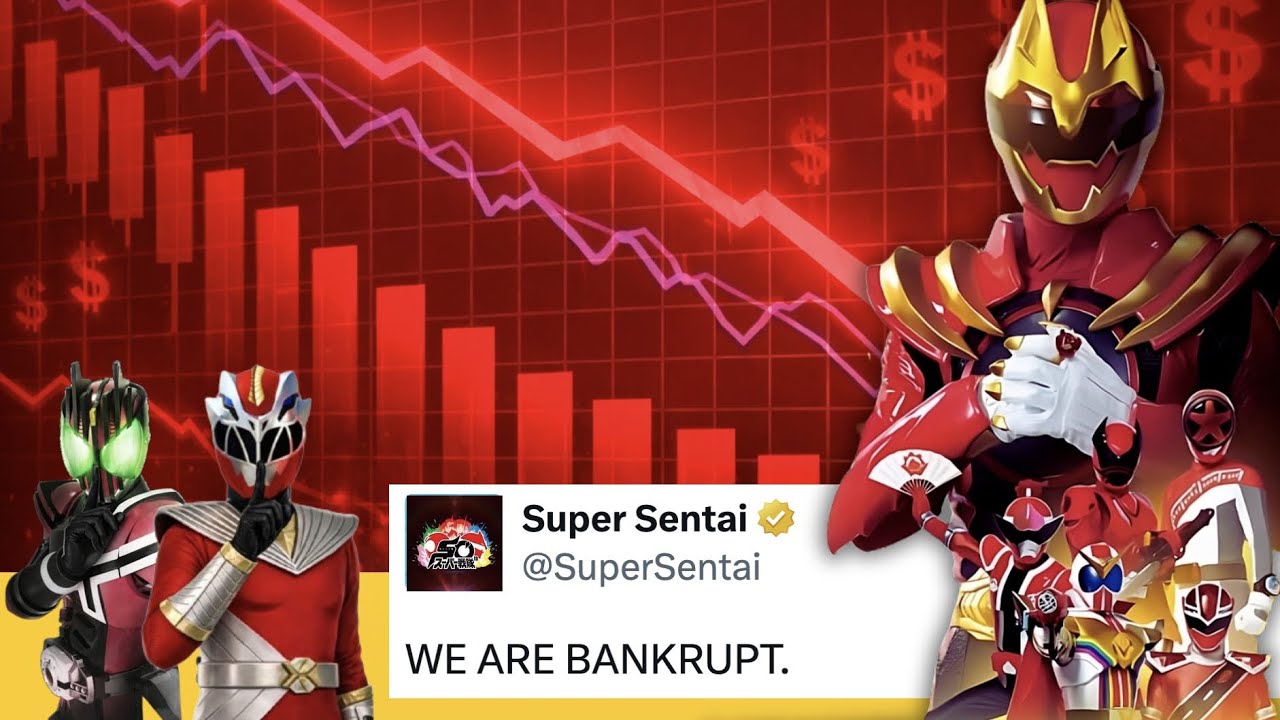
This video discusses the rise and fall of the Super Sentai franchise, a cornerstone of Japanese pop culture for nearly 50 years. It explores the factors contributing to its decline, including changing market trends, the influence of Power Rangers, and the increasing popularity of Kamen Rider. The video also touches on the franchise's legacy and the emergence of Project Red as its potential successor.
- Super Sentai's success was initially driven by its unique color-coded team concept and strong toy sales.
- The adaptation of Super Sentai into Power Rangers significantly impacted the franchise, creating international recognition and revenue streams but also influencing design choices.
- The rise of Kamen Rider and changing market trends, including mobile gaming and streaming services, contributed to Super Sentai's decline in the 2010s.
- The COVID-19 pandemic and internal controversies further exacerbated the franchise's struggles, leading to its eventual end in 2025.
- Project Red is introduced as a new meta-franchise aimed at reinventing Tokusatsu for a modern audience with a global approach.
Introduction
The video introduces Super Sentai as a long-standing pillar of Japanese pop culture, highlighting its impact on childhoods worldwide, including the creator's own experience as a Power Rangers fan. It sets the stage for exploring the reasons behind the franchise's decline, including decreasing merchandise sales, dwindling international revenue, and the format's struggle to adapt to its own history. The video aims to tell the story of how Super Sentai fell off after half a century of evolution, experimentation, and reinvention, and why its end wasn't just a cancellation, but the beginning of an entirely new thing.
The Origin
Super Sentai began in 1975 with Himitsu Sentai Goranger, which established the language of superhero storytelling in Japan. Goranger differentiated itself through its concept of a color-coded team of five heroes fighting together with coordinated weapons, vehicles, and personalities. Despite its success and long run, Goranger didn't have big mechs or collectible gimmicks, focusing on a simple premise of five color-coded heroes punching bad guys. Throughout the 70s and 80s, Toei evolved the brand, introducing giant robots, sci-fi settings, and more mature storytelling.
The Birth of Power Rangers
In 1992, Kyoryu Sentai Zyuranger was adapted by Saban into Mighty Morphin Power Rangers in 1993, marking a turning point in Super Sentai history. This adaptation transformed the Japan-only series into a global phenomenon by combining Japanese footage with American actors. The success of Power Rangers reshaped the business model behind Super Sentai, creating international licensing money, global merchandise deals, and a second life for every Super Sentai season. Power Rangers created a shadow that loomed over Sentai for the next 30 years, influencing design choices, toy strategies, and which seasons would be built with Western markets in mind.
Henshin, Kamen Rider!
The early 2000s marked Super Sentai's commercial peak, with shows consistently hitting high financial numbers. Power Rangers ensured that every Super Sentai season had an international afterlife, turning seasons into global hits in the US. While Super Sentai thrived, Kamen Rider was also making its rise, with Kamen Rider Kuuga doubling Time Ranger's toy sales. By 2007, Kamen Rider Deno surpassed Gekiranger in sales, signaling a shift in popularity.
Gokaiger vs Decade
The 2010s began with Kaizoku Sentai Gokaiger, a 35th-anniversary season that achieved significant financial success with 12.2 billion yen in toy sales. Gokaiger's success was inspired by Kamen Rider Decade, which celebrated 10 years of the Heisei era with a collectible gimmick. However, despite Gokaiger's success, Kamen Rider OOO outperformed it, making 26.3 billion yen.
The Fall Off Begins
The decline of Super Sentai began with Go-Busters, which, despite not being a bad show, had a significant financial downturn, earning only 9.1 billion yen. This was due to the timing of coming off an anniversary season like Gokaiger, and trying to do something different. Saban Brands skipped adapting Go-Busters in favor of a dinosaur-themed series, marking the first time Power Rangers had skipped a Sentai season.
The Final Years
The COVID-19 pandemic in 2020 brought further changes, with Kiramager's toy sales dropping to 4.6 billion yen. Zenkaiger, the 45th-anniversary season in 2021, attempted to innovate but still only achieved 4.2 billion yen in sales. Donbrothers in 2022 saw a slight increase to 5.8 billion yen, but the cast noted the possibility of the series ending. King-Ohger in 2023, with its big-budget CGI and world-building, increased sales to 5.4 billion yen, but this was still half of old era expectations.
The Final Super Sentai Season
In 2025, Go-Onger, the 50th-anniversary season, was announced as the final Super Sentai series. The show faced controversy when Maya Imamorei, who played Go-Onger Unicorn, was removed from the show due to an underage drinking scandal. This controversy, along with declining toy sales and the rising popularity of Kamen Rider, contributed to the decision to end the Super Sentai series.
The Future Is Yet to Come...
In November 2025, along with the cancellation of Super Sentai, Project Red was announced, a new tokusatsu meta-franchise. The first series in this franchise will be Super Space Sheriff Gavan Infinity, a reboot of the Metal Heroes series. Project Red is designed to be a new meta-franchise that can launch multiple interconnected series, cross over with itself, and also reinvent Tokusatsu without the baggage of a 50-year legacy.
Conclusion
Super Sentai didn't fail because it stopped being creative, but because the world around it changed. The business model, the toy market, the international rights landscape, and the expectations of modern audiences all contributed to its decline. The video concludes by emphasizing that endings in Tokusatsu are never just endings, and there are always new transformations, new heroes, and new adventures to be had.

