
Brief Summary
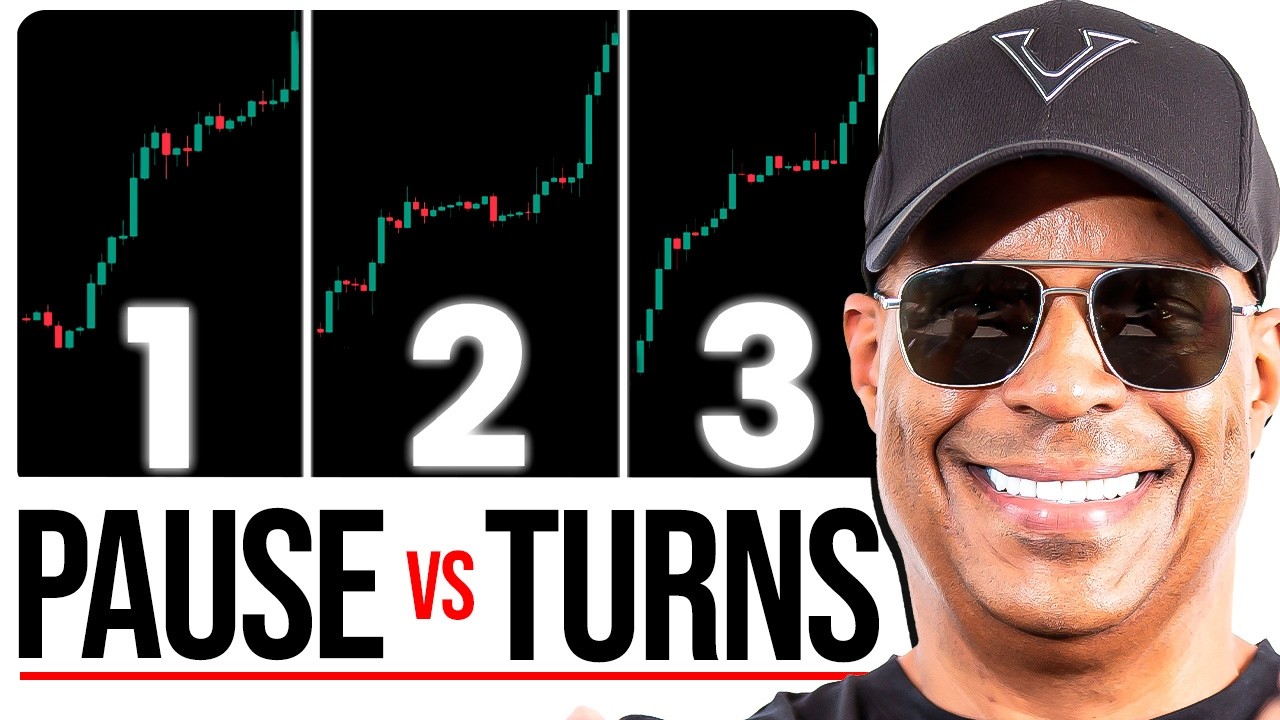
This video explains the crucial difference between market pauses and turns, emphasizing the importance of recognizing them for trading success. It introduces three types of market moves (bull and bear) and pauses, and highlights the significance of the numbers three and five in identifying potential market turning points, rooted in Fibonacci concepts. The video stresses that trading involves probabilities, not certainties, and effective risk management is key.
- Understanding the difference between market pauses and turns is crucial for trading success.
- Markets tend to turn or change direction after completing three to five legs (moves interrupted by pauses).
- Trading is a game of probabilities, not certainties, and risk management is essential.
Intro
The video introduces the concept of market pauses and turns, highlighting the critical distinction between them. Knowing whether a market is pausing briefly or undergoing a significant change in direction is essential for successful trading. Recognizing a pause allows traders to anticipate the likely next move and capitalize on it, with a high probability of success.
Bull Move
There are three types of bull market moves: a single, powerful upward bar; two strong upward bars; and multiple consecutive upward bars. The time frame of the chart (e.g., five-minute, two-minute, daily) is irrelevant, as these patterns are universal. A bull move is characterized by solidity in the color of the bars, indicating sustained upward momentum.
Bear Move
Bear moves mirror bull moves but occur to the downside. They consist of either a single powerful downward bar, two strong downward bars, or a series of consecutive downward bars. Identifying these moves is fundamental to understanding market direction.
Bull Market Pauses
There are three types of pauses in a bull market: a pullback or retracement where the price gives back a portion of its gains; a period of marking time where the price consolidates without significant movement; and a brief hiccup or interruption in the upward trend. The first type sacrifices price, while the second sacrifices time.
Bear Market Pauses
Pauses in a bear market also come in three forms, mirroring those in a bull market: a retracement where the price bounces back up temporarily; a period of sideways movement where the price consolidates; and a brief interruption in the downward trend.
3 & 5 Market Zones
The numbers three and five are significant in the markets, rooted in Fibonacci concepts. Markets often turn around after completing three or five cycles of moves and pauses. The zone between three and five is particularly important for identifying potential turning points. The presenter's trading profitability relies on actions taken at, after, or in between these numbers.
Chart Examples Part 1
The presenter shows chart example, explaining how to identify legs (moves) and pauses, and how to count to three to five to anticipate market turns. Changes in market direction often occur after the third leg, approximately 70% of the time. Being able to recognize legs and pauses is crucial for successful trading.
Certainty in Trading
The presenter emphasizes that certainty is unattainable in trading. Trading is a game of probabilities, not absolute assurances. Searching for certainty or a "holy grail" is futile. Traders must accept uncertainty and focus on managing risk and probabilities.
Chart Examples Part 2
The presenter analyzes the weekly chart of Bitcoin, counting the legs down from its all-time high. The analysis suggests that Bitcoin is closer to a bottom than a top, based on the concept of three to five legs and the presenter's bands.

