
Brief Summary
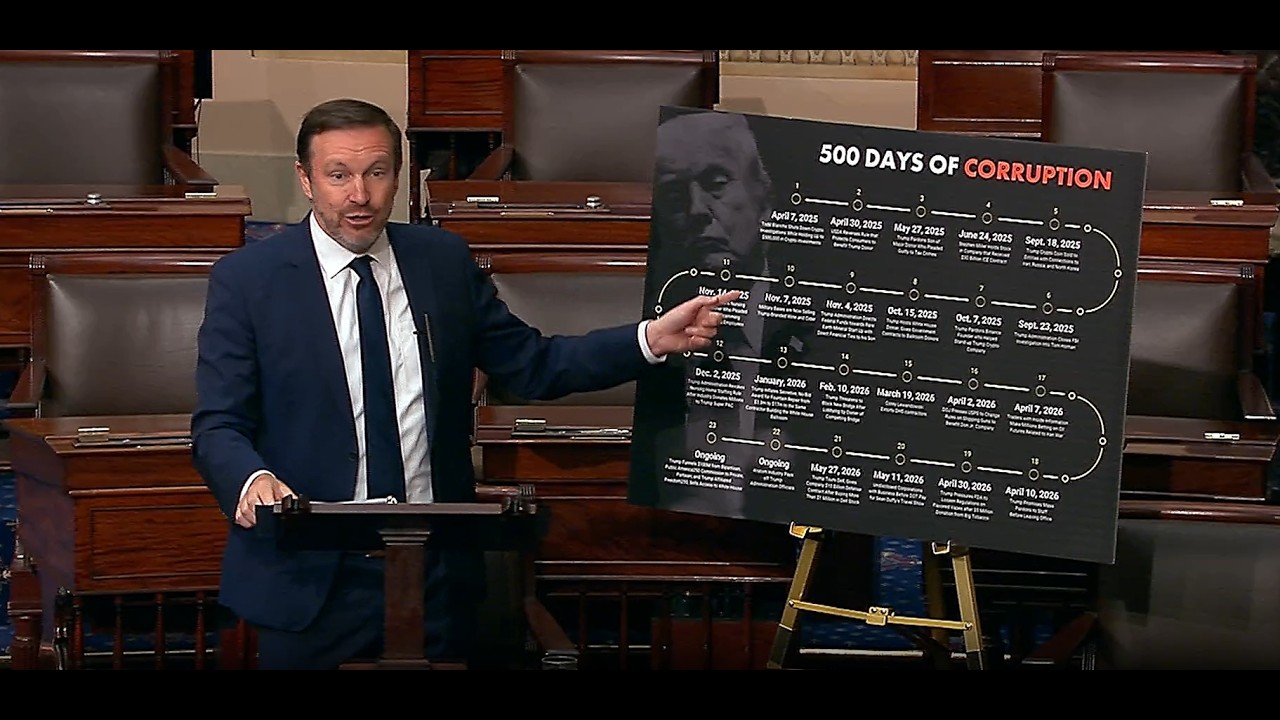
Senator Chris Murphy addresses the rampant corruption he attributes to President Donald Trump over 500 days in office. He argues that Trump's actions have normalized corruption in the White House and details multiple instances where Trump and his associates have engaged in questionable behaviors and decision-making favoring personal gain over public service. Key points include:
- Trump is accused of operating a corruption enterprise in the White House.
- Multiple instances of pay-for-play politics and pardons in exchange for political favors.
- Allegations of creating loopholes and revoking regulations benefiting Trump's personal interests and those of his family.
Introduction to Corruption Claims
Senator Murphy opens by stating that for the past year and a half, Trump has transformed the White House into a "corruption operation." He expresses concern about the normalization of corrupt practices, arguing that if the public begins to accept this behavior, the presidency could function merely as a means for personal enrichment.
Documenting 500 Days of Corruption
Murphy intends to chronicle incidents of corruption from Trump's administration, pointing out that the first significant event occurred with the termination of DOJ investigations into cryptocurrency companies, driven by connections to Trump, indicating a conflict of interest.
First Instances of Corruption
The senator highlights the reversal of poultry regulations that benefitted major donors to Trump's inauguration, showcasing a "pay-for-play" scenario where donors receive favors in return for their financial contributions to Trump’s campaign.
The Pardon Racketeering
In May 2025, Trump allegedly began a "pardon racket," where pardons were granted based on financial contributions. Murphy describes the case of Paul Walzak, who was pardoned after his mother paid $1 million for a meeting with Trump.
Government Contracts and Personal Investments
Murphy details how top officials, like Stephen Miller, profited from government contracts linked to their personal investments. He emphasizes a lack of competitive bidding in these contracts, indicating widespread corruption.
Crypto Corruption
Trump's personal interests in cryptocurrency were called out, with claims that he profited significantly from selling crypto tokens to parties connected with rogue nations, showcasing the risks of foreign governments influencing U.S. policies.
Pardons and No-Bid Contracts
The discussion moves to further corrupt pardons and no-bid contracts, including a notable instance involving drug traffickers who received pardons after assisting Trump with his business ventures.
Corruption Through Donations
Murphy continues to reveal how various sectors—including tobacco and nursing homes—utilized donations to gain undue influence over regulatory decisions, allowing them to evade accountability.
Direct Profiteering
The senator claims that Trump started directly profiting from his brands, as government entities were instructed to promote his products in exchange for compliance with orders, which is a blatant conflict of interest.
Legalized Corruption
Murphy highlights the legislative changes that benefited Trump's financial interests, emphasizing the involvement of Trump’s administration in altering longstanding laws to alleviate regulatory burdens impacting his family’s businesses.
Final Notes on Systemic Corruption
Concluding, Senator Murphy warns that the scale and systemic nature of corruption during Trump’s presidency is unprecedented and cannot be normalized or accepted. He asserts that government should serve the public, not enrich a select few associated with the administration.

