
Brief Summary
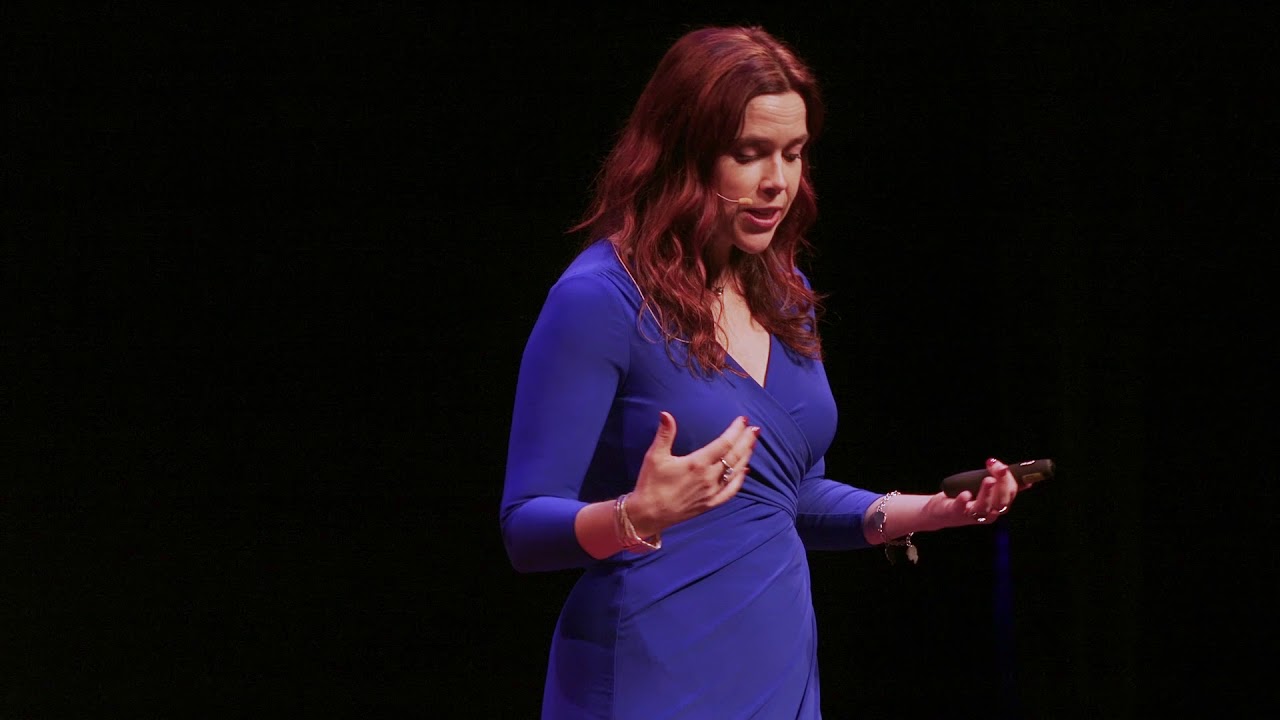
This TEDx Talk by Paris Goodyear-Brown explores the power of play therapy in helping traumatized children heal. It highlights how children use play as their primary language to express unspeakable experiences, with toys serving as their words. The talk emphasizes the importance of understanding how trauma is stored in the brain and body, and how play can be a digestive enzyme that metabolizes trauma by releasing joy hormones and facilitating the telling and holding of the child's story in the presence of a supportive other.
- Play is the primary language of children, especially those who are traumatized.
- Trauma is stored iconically and somatically, requiring non-verbal forms of expression.
- Play therapy helps children articulate the unspeakable and metabolize trauma through joy hormones.
Introduction: The Power of Play
Paris Goodyear-Brown introduces herself as a play therapist and emphasizes the profound truth in Plato's observation that one can learn more about a person through an hour of play than a year of conversation, especially when working with traumatized children. She shares her journey into play therapy, noting that while her clinical social work program taught her traditional therapy techniques, it didn't prepare her for the realities of working with young, traumatized children who express themselves through behavior rather than words. This led her to discover play therapy, which she believes is the primary language of children, allowing them to express their experiences when they lack the verbal skills to do so.
Play as the Language of Trauma
The speaker illustrates how children use play to communicate their trauma, sharing an example of a child who was sexually abused. Unable to articulate his experience verbally, the child used toys to create a powerful image, placing a spider on the private parts of a baby doll and asking the therapist to take a picture. This highlights how play allows children to express visceral experiences and communicate volumes without words. The speaker emphasizes the importance of therapists becoming "bigger containers" for these stories, acknowledging and validating the child's experience to encourage further expression.
Integrating Play Therapy in Practice
The speaker recounts her experience of turning her inner-city school office into a playroom and working with a young girl who had spent a night on a violent front porch. Instead of immediately trying to "therapize" her, she first addressed the girl's basic needs by providing a meal and a safe place to sleep. Only then did she introduce her to the playroom, where the girl used a guitar to create a song expressing her pain. This example demonstrates how play can help children access deeper levels of emotional expression, even when they lack the words to describe their experiences.
Iconic and Somatic Storage of Trauma
The speaker explains that trauma is often stored iconically (in pictures) and somatically (in the body), particularly in the right hemisphere of the brain, which is more dominant in children. She shares the story of Johnny, a child whose mother was attacked with a clothing iron. Johnny's play, involving a drawing of his mother crying and Play-Doh stuck to a toy iron, revealed the "gray matter of the brain stuck to a household object," illustrating how children use iconic expression to communicate what they cannot verbalize.
The Amygdala and Post-Traumatic Play
The speaker discusses the role of the amygdala, an almond-shaped cluster of cells in the midbrain responsible for somatosensory memories related to heightened emotional experiences. She uses the analogy of an army guy in Iraq to explain how the amygdala can become a "sloppy processor," leading to triggers and reactions in seemingly unrelated situations. She introduces the concept of post-traumatic play, using the example of Bobby, a four-year-old who witnessed his father's suicide. Bobby's play, involving red finger paint, water, and miniature figures, demonstrated cleansing rituals and the domestic violence cycle, revealing his deep understanding of the trauma he had experienced.
Words vs. Play: Danny's Story
The speaker shares the story of Danny, an 11-year-old boy who experienced significant neglect and abuse. Despite being verbal, Danny chose to express his trauma through play, washing a baby doll and recounting a humiliating experience of having his face shoved in his baby brother's diaper. This illustrates how play can mitigate the approach to trauma, allowing children to access and express painful memories in a less threatening way.
Bottom-Up Brain Development and Nurture House
The speaker explains bottom-up brain development, starting with the reptilian brain stem (am I safe?), followed by the limbic brain (am I loved?), and finally the neocortex (what can I learn from this?). She emphasizes that if the lower brain regions' questions aren't answered, the thinking brain goes offline. This led her to create Nurture House, a trauma treatment center designed to provide a safe and loving environment that answers those lower brain region questions with a resounding "yes."
The Neurobiology of Play and Trauma
The speaker describes the neurochemical boxing match between stress hormones (cortisol) and joy hormones (oxytocin and dopamine) that occurs during trauma recovery. Play helps to release oxytocin and dopamine, which are enhanced through competency and mastery experiences. She explains that play becomes the digestive enzyme that metabolizes trauma, bit by bit, in the presence of a supportive other.
Conclusion: The Power of Connection
The speaker concludes by emphasizing the importance of sharing and holding stories, quoting Maya Angelou: "There is no greater agony than burying an untold story inside of us." She highlights the privilege of being "another" for the children and families in her care and encourages the audience to consider whose stories they are meant to hold and how they can bring their playful presence to those around them.

