
Brief Summary
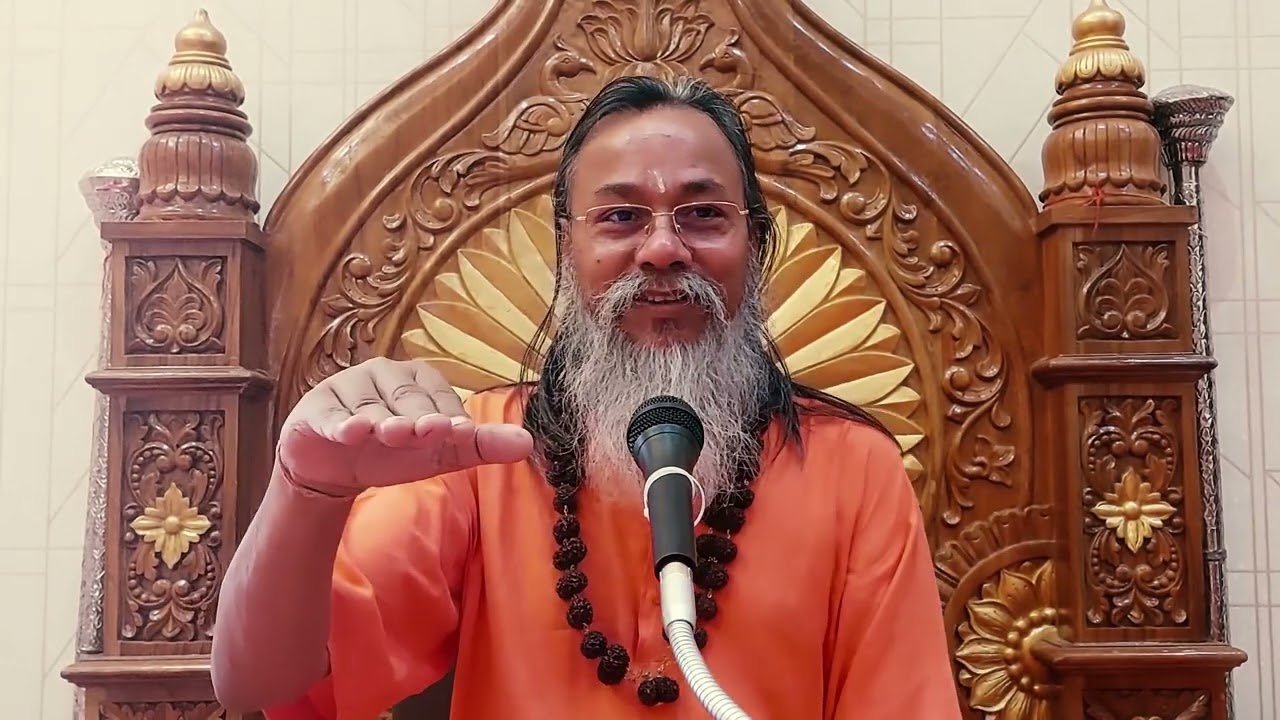
The video covers the teachings of Mahamandleshwar Swami Abhayanand Saraswati, focusing on the significance of spiritual texts, specifically highlighting the work of Jagatguru Shankaracharya. It makes distinctions between comprehensive scriptures and specific texts meant for focused understanding. The discussion emphasizes the concept of Nityan (eternal) and Anityan (transitory), the importance of spiritual practice for seekers, and principles such as reverence (Namaskara), praise (Stuti), and the essence of Bhagavad Gita.
- Important definitions of scriptures: "Shastra" addresses all aspects of life, while "Prakarana Granth" is specialized.
- The three types of seekers: beginners, intermediate, and advanced practitioners.
- Key spiritual concepts like the proper attitude toward study, reverence, and renunciation for spiritual growth.
Introduction to Shankaracharya's Teachings
The lecture begins with a traditional invocation to auspiciousness (Mangalacharan) and acknowledges the importance of the sages mentioned. Swami Abhayanand Saraswati discusses how Jagatguru Shankaracharya wrote specific texts to help spiritual seekers understand the essence of life.
Understanding of Shastra and Prakarana Granth
The speaker elaborates on the term "Shastra," which encompasses comprehensive philosophical teachings encompassing Dharma, Artha, Kama, and Moksha, unlike "Prakarana Granth," which focuses on specific subjects, like the nature of the self. He indicates that the 'Tattva Bodha,' a work by Shankaracharya, is a great introduction for beginners to understand the essential teachings without diving into complex life scenarios.
Significance of Mangalacharan
Mangalacharan, the auspicious invocation, is explained as a means to make one’s actions and thoughts conducive to positive outcomes. Swami Abhayanand emphasizes that one's actions should bring joy and beneficial outcomes, both personally and for others.
Three Ways of Mangalacharan
The video explains three types of Mangalacharan:
- Namaskara involves bowing and humbling oneself before the divine.
- Stuti involves praising the divine, recognizing their virtues and greatness.
- Vastu Nirdesh conveys one's intrinsic divine nature, helping others understand and perhaps experience it.
Understanding Vaasudeva and Its Significance
Swami Abhayanand breaks down the meaning of "Vaasudeva," referring to the all-pervading aspect of the divine that transcends time and space. It highlights how this divine essence is the foundation of all existence, embodying the deeper truths of life.
Importance of Seekers’ Readiness
The lecture emphasizes that spiritual teachings are not for everyone, rather they are tailored for those who ardently seek liberation (Moksha) and possess the necessary readiness. Such seekers are called "mumukshu," who yearn for freedom from worldly bondage.
Four Parts of Sadhana Chatustaya
The concept of "Sadhana Chatustaya," or the fourfold spiritual practice, is introduced: the discernment between the eternal and the transient (Viveka), the renunciation of worldly desires (Vairagya), and preparation for deep meditative practices (Samadhi). These elements are crucial in the spiritual journey towards attaining Moksha.
Exploration of Nityan and Anityan
Swami articulates the crucial understanding of "Nityan" (eternal) and "Anityan" (transitory). The eternal is identified as Brahman, while anything apart from Brahman is labeled as transitory and hence, impermanent.
Concept of Vairagya
The discussion continues into Vairagya, detailing the importance of detachment from material pleasures and how true renunciation does not mean abandoning the world but withdrawing one's desires for worldly gains, thereby focusing on inner fulfillment through spiritual practices.
Sadhana Chatustaya – Final Elements
The remaining four elements of Sadhana are motivated practice (Dama), endurance (Titiksha), faith (Shraddha), and concentration (Samadhi). These attributes must be developed by the seeker to navigate their spiritual journey successfully.
Conclusion and Reflection
The video concludes by reiterating the fundamental principles discussed. Swami Abhayanand motivates the audience to seek knowledge and deepen their understanding of these teachings for the soul’s ultimate unity with Brahman. The spiritual path is one of awareness, discipline, and unwavering focus towards liberation.

