
Brief Summary
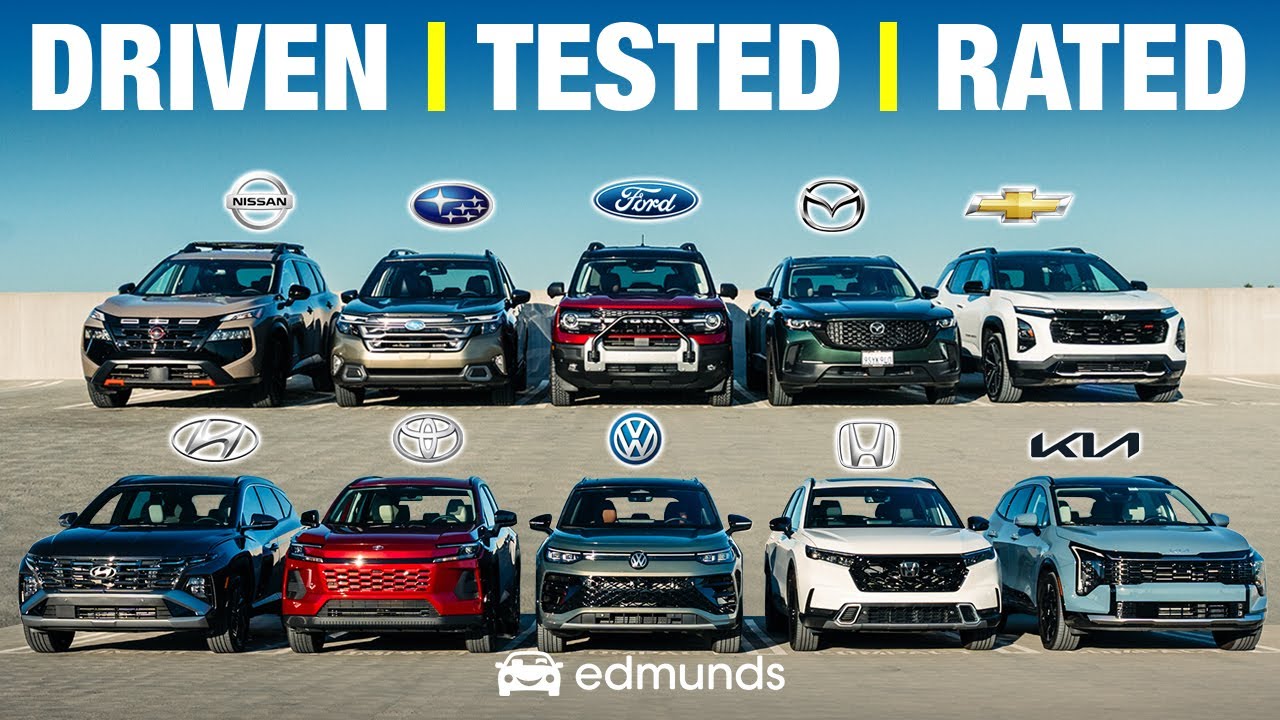
This video from Edmunds Cars compares 10 of the best-selling small SUVs, both hybrid and gas models, ranking them from worst to best based on Edmunds' overall rating score. The comparison covers comfort, cargo space, car seat accommodation, technology, driving experience, and fuel economy. The Chevy Equinox ranks last due to its poor driving experience and lack of hybrid option, while the Hyundai Tucson and Kia Sportage emerge as top contenders, praised for their well-rounded performance and features.
- Chevy Equinox: Ranks last due to poor driving experience and lack of hybrid option.
- Hyundai Tucson and Kia Sportage: Emerge as top contenders, praised for their well-rounded performance and features.
- Hybrid models are generally recommended, except for the Mazda CX-50.
Intro
The video introduces a comparison of 10 small SUVs, both hybrid and gas models, to determine the best in the market. The SUVs will be evaluated based on comfort, cargo space, car seats, technology, driving experience, and MPG. The ranking will be based on the overall Edmunds rating score.
Chevy Equinox
The Chevy Equinox is ranked last. Its strengths include a good-sized screen with Google integration and ample front and rear room with no middle seat hump. It also offers fun paint options and an off-road-looking Active model. However, it suffers from a slow, rough, and disconnected driving experience with poor visibility. There's no hybrid option, resulting in subpar fuel economy. The rear doors have small openings, making it difficult to load people, car seats, or cargo. Cargo space and interior small item storage are also lacking, and its towing capacity is limited compared to competitors.
Subaru Forester
The Subaru Forester Hybrid offers excellent visibility due to its large windows, creating a roomy and spacious feel. It provides ample passenger room in the back seat and easy access with wide door openings and a low seat height, making it suitable for those with limited mobility or kids. Car seat installation is also easy due to the large door openings and accessible latch anchors. However, the tech is among the worst in the industry, featuring a slow and low-resolution infotainment system with a tiny backup camera. The vehicle lacks physical controls, requiring more screen use. The adaptive cruise control is unresponsive, and the lane-keeping system is ineffective. Small item storage is poor, with limited clever storage spaces and small cupholders. The gas version is worse, with a stiffer suspension and underpowered engine.
Ford Bronco Sport
The Ford Bronco Sport is the most off-road capable SUV in the comparison, especially with the Sasquatch package, featuring all-terrain tires, good ground clearance, a locking differential, and all-wheel drive. It also has impressive towing capabilities, a popup rear window, and a dual-level cargo floor. The shelf can be used as a table. The infotainment system is crisp and easy to use, but climate controls are in the touchscreen. It offers fun styling touches and graphics packages, but it is more expensive and less efficient than rivals. The back seat has less legroom, narrow door openings, and limited floor space in the cargo area.
Nissan Rogue
The Nissan Rogue has a roomy cargo area with a flat load floor and small bins for small items. It offers plenty of smart storage spaces up front, including a split-opening center bin and a rubberized wireless charger. The control scheme is straightforward with buttons for frequently used functions. It provides great fuel economy for a gas vehicle, with over 30 MPG combined for all-wheel-drive versions. However, most trims have a dinky 8-inch screen with a laggy and outdated infotainment system that lacks Google built-in and wireless Android Auto or Apple CarPlay. The powertrain is sluggish, and the ride quality and cabin noise are poor. It also lacks a hybrid option.
Mazda CX-50
The Mazda CX-50 has less cargo space than its competition, but its upscale interior and sporty driving dynamics make up for it. The interior feels luxurious with high-quality materials and easy-to-use controls. The suspension provides controlled body motions, inspiring confidence in handling, and the engine offers ample power, with a turbocharged option available. However, the hybrid version has even less cargo space and trades the gas engine's responsiveness for fuel economy. The tech is a potential deal-breaker, with a small screen and an operating system that buries functions inside menus, requiring the use of a scroll knob.
Honda CR-V
The Honda CR-V feels like a high-quality piece of machinery with no squeaks or rattles. Honda pays close attention to the touchpoints, with real metal knobs and fun-to-use air vents. The driving experience stands out with great steering, handling, and smooth operation of the brake and gas pedals. The ride quality is refined, and the rear seat is great with doors that open to almost 90 degrees. However, it lacks features like ventilated seats, a surround-view camera, and a panoramic moonroof. The Google integration is only available on the top trim level, and other trims have an older infotainment system with poor graphics. The hybrid version has a higher price floor.
VW Tiguan
The VW Tiguan feels like a budget Audi with supportive seats, a high-end screen, and a quiet interior. Top trims have a beefier engine with serious power. It offers a ton of knee room in the back, huge door openings, and hidden child seat anchors. However, there is no hybrid option, resulting in below-average fuel economy. High-end features come at a cost, with a higher price ceiling than other cars in the test. The climate controls are all done through the screen.
Toyota Rav 4
The Toyota RAV4 has dramatically improved its technology offerings, debuting a brand new infotainment system with a responsive screen and easy-to-use layout. It offers two standard features that none of its competitors can match: a 12.3-inch digital instrument display and an integrated dash cam. The powertrain is quicker than expected, and the ride quality is good. It has the highest tow rating and is available as a plug-in hybrid. It's the only SUV with all-wheel drive that gets over 40 MPG combined. However, the navigation and voice commands require a data subscription after a year. The front seats are not as comfortable, and there is a lot of hard plastic on the interior. The rear seat is smaller, and the rear doors don't open very wide.
Kia Sportage
The Kia Sportage has comfortable and supportive front seats, a lot of small item storage, and a sleek design. It has a big standard screen that's sharp and easy to use, and top spec models get a blind spot camera. It's comfortable on the road with excellent driver assists and a plug-in hybrid option. The back seat area is great with big door openings and a ton of room. It offers excellent value with the same features as competitors at a lower price and has the best warranty. The cargo area is huge with a dual-level cargo floor. However, the controls for the media and climate functions are in the same menu, making them hard to use without taking your eyes off the road. Fuel economy is subpar for a hybrid.
Hyundai Tucson
The Hyundai Tucson has a fantastic interior with tons of room and comfortable seats. It has the Sportage beat when it comes to small item storage, with a giant shelf in front of the passenger and an open area for a small bag or purse. It has the same great tech as the Kia, and the placement of the wireless charging pad is convenient. The climate control setup is well-designed. The driving experience is great, combining attributes from other vehicles, and the driver aids are excellent. The back seat has big door openings and lots of knee room and headroom. The cargo area is massive, and it will tow more than almost every other car here. However, the touch controls aren't as easy to use as some of the physical ones in the Hyundai's competitors, and the hybrid isn't as efficient as some of its rivals.
Edmunds' Take
The Hyundai Tucson is the winner, as it is the most well-rounded and easy to recommend. In almost every case, the hybrid is the better buy, except for the Mazda. When shopping for a compact SUV, buyers can be as picky as they want to be and should prioritize their biggest need, as the top five contenders are all very good. Despite prices reaching over $40,000, these SUVs offer a lot of value.

