
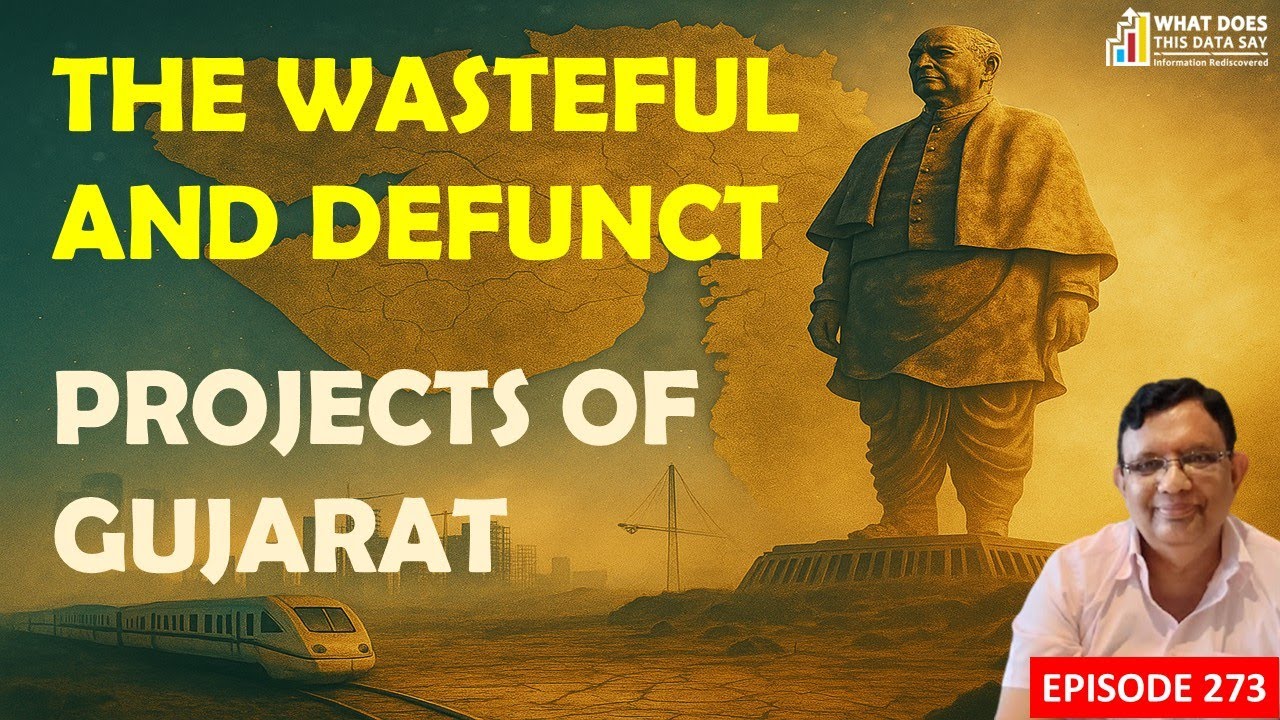
Brief Summary
The video critiques the "Gujarat model" of development under Narendra Modi, arguing that it prioritizes spectacle and advertising over genuine progress and accountability. It highlights wasteful projects, rising public debt, and the plight of Gujaratis seeking opportunities abroad, suggesting that the state's success is more of a rebranded image than a reality. The video also touches upon the 2002 Gujarat riots and their impact on the state's narrative, as well as the controversial release of convicts in the Bilkis Bano case.
- The "Gujarat model" prioritizes spectacle over genuine progress.
- Several large-scale projects in Gujarat have been wasteful and ineffective.
- Despite claims of prosperity, many Gujaratis are seeking opportunities abroad.
Introduction: Gujarat's Development Under Modi
The video introduces a critical examination of Gujarat's development, particularly during Narendra Modi's tenure as Chief Minister and later as Prime Minister. It questions the widely promoted "Gujarat model," suggesting it is more of an illusion than a reality. The analysis aims to look beyond the surface of advertised progress and examine the actual outcomes and impacts on the state and its people.
Historical and Political Context
The video discusses the 2002 Gujarat riots and their aftermath, including the criticism Modi faced and the subsequent shift towards marketing the "Gujarat model." It also mentions the Bilkis Bano case, where convicts were controversially released and later ordered back to prison by the Supreme Court, highlighting issues of justice and accountability.
Economic Growth Comparison
The video compares the per capita GDP growth of Gujarat with other states like Maharashtra, Tamil Nadu, Telangana, and Uttar Pradesh, during both UPA and Modi's rule. It indicates that Gujarat's growth rate declined under Modi's leadership compared to the UPA era, and contrasts Gujarat's performance with that of Telangana, which focused on expanding services rather than just manufacturing.
The Alliance of Politics and Capital
The video highlights the close relationship between politics and capital in Gujarat, particularly the rise of Gautam Adani's business empire. It suggests that Adani's growth mirrored Modi's political career, with Adani's businesses benefiting from state patronage. The video also touches upon the issue of Gujarati migrants being deported from the United States and the desperation driving people to leave the state in search of better opportunities.
Defunct Projects: Dholera Smart City
The video critiques the Dholera Smart City project, launched in 2009, which was envisioned as India's first and largest greenfield smart city. Despite its ambitious goals, the project remains largely barren with incomplete infrastructure and a significantly reduced vision, becoming more of an underpopulated industrial estate than a thriving metropolis.
Defunct Projects: Statue of Unity
The video examines the Statue of Unity, inaugurated in 2018, noting that despite being marketed as a major tourist attraction, it has struggled to generate sustainable revenue. Visitor numbers declined after the initial novelty wore off, and expensive features like helicopter rides have seen poor patronage, failing to deliver consistent returns or local employment.
Defunct Projects: GIFT City
The video discusses the Gujarat International Finance Tech City (GIFT City), conceived in 2007 to rival financial hubs like Singapore and Dubai. However, it remains largely under-occupied with limited private sector participation and a weak financial ecosystem, appearing more like a promotional brochure than a bustling financial district.
Defunct Projects: Sea Plane Project
The video critiques the sea plane project, launched with fanfare in 2017, which ultimately collapsed due to regulatory issues, lack of infrastructure, and low demand. The aircraft was returned to Maldives, and no commercial sea plane service ever materialized, turning what was promoted as a visionary leap into just another photo opportunity.
Defunct Projects: GSPC
The video discusses the Gujarat State Petroleum Corporation (GSPC) gas exploration project, which was touted as a major breakthrough in India's energy independence. However, it turned into a public sector disaster with technical failures, exaggerated claims, and massive cost overruns, leading to significant losses and the eventual transfer of assets to ONGC.
Conclusion: The Illusion of the Gujarat Model
The video concludes by stating that Gujarat's public debt has risen significantly, while schools and hospitals lag behind, and malnutrition and literacy gaps persist. It argues that the "Gujarat model" has become a national template of prioritizing PR over planning, and that the state's story is one of rebranding rather than genuine transformation. The video calls for an audit of the numbers, debt, and silence behind the golden brochures, revealing a stage still marked by the events of 2002.

