
Brief Summary
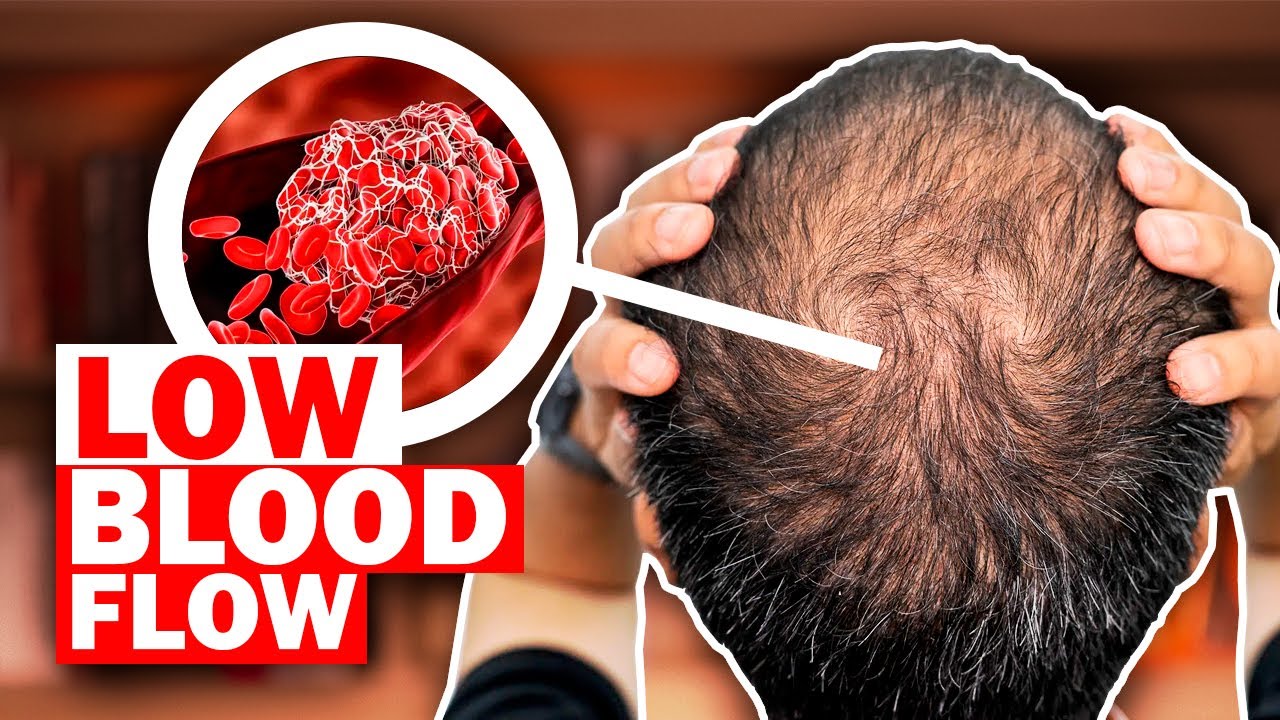
This video explains that hair loss is primarily caused by reduced blood flow to the hair follicles due to scalp tension and compression. It discusses how scalp massages and devices like the Grow Band can improve blood flow and potentially reverse hair loss. The video also touches on the role of DHT, the limitations of hair transplants, and the importance of addressing the root cause of hair loss for long-term results.
- Hair loss is primarily due to reduced blood flow to hair follicles.
- Scalp tension and compression restrict blood flow.
- Scalp massages and devices like the Grow Band can improve blood flow.
- DHT contributes to scar tissue formation in the scalp.
- Hair transplants don't address the underlying issue of scalp tension and blood flow.
The Root Cause of Hair Loss: Blood Flow
The primary cause of hair loss in men is reduced blood flow to the hair follicles. An example of Sadu Amar Baratti, who held his arm above his head for 30 years, leading to its miniaturization due to restricted blood flow, illustrates this point. Similarly, male pattern baldness involves hair follicle miniaturization, where hairs grow back weaker and thinner over time until they stop growing altogether. Hair follicles need blood to produce keratin, which makes up the hair strand. Studies show that balding scalps have significantly lower blood flow compared to healthy scalps.
The Pattern of Hair Loss: Scalp Tension
Male pattern baldness follows a specific pattern due to tension in the scalp, which compresses the dermal layer and reduces blood flow. Researchers created a computer model that demonstrated this downward compression across the scalp, mirroring the pattern of male pattern baldness. This tension causes the hair to wither away due to lack of blood flow, oxygen, and nutrients.
The Role of Scar Tissue and DHT
When the scalp is under constant tension, scar tissue forms, making the scalp hard and less vascular, further reducing blood flow. This physical change in the scalp tissue makes it difficult to reverse hair loss. DHT is involved in scar tissue formation, which explains why DHT blockers like finasteride can stop hair loss. Women, who have lower DHT levels, don't develop the same scar tissue, which is why they don't typically exhibit the same pattern of baldness as men.
The Truth About Hair Transplants
The hair transplant industry doesn't fully disclose that transplanted hair can also thin over time if the underlying issue of scalp tension and blood flow isn't addressed. Transplanted hairs are not immune to hair loss and will miniaturize over time if the patient doesn't block DHT. The hairs on the back and sides of the head remain healthy because the scalp isn't compressed by tension in those areas.
Reversing Hair Loss: Improving Blood Flow
Reducing scalp compression and improving blood flow can potentially reverse hair loss. A study where researchers injected a substance to relax the muscles surrounding the scalp resulted in hair regrowth. The lead researcher explained that the scalp behaves like a drum skin with tensioning muscles, and relaxing these muscles improves blood flow to the scalp.
Scalp Massages: An Easier Solution
Scalp massages can reduce scalp compression and improve blood flow. A 2019 study showed that 68% of participants with hair loss saw improvement with manual scalp massages. The key factor was cumulative massage hours, with 36 hours being the target to start seeing visible regrowth. Scalp massages can change the scalp tissue and surrounding muscle, leading to lasting changes.
The Grow Band: A Revolutionary Device
The Grow Band is designed to help men accumulate scalp massage time without manual effort. It massages the top of the scalp, reduces muscular tension around the perimeter, and increases blood flow to the dermal layer. A study showed that the Grow Band dramatically increased blood profusion units (BPU) on the surface of the scalp. Users have reported impressive regrowth with consistent use.
Fixing the Root Cause
Fixing hair loss requires addressing the root cause by creating a healthy scalp environment and improving blood flow. Blood flow is essential for hair follicle growth, as demonstrated by the effectiveness of PRP (platelet-rich plasma) treatments. Solutions that reduce scalp compression and improve blood flow are becoming increasingly popular.

