
Brief Summary
This video analyzes the hidden supply chains and economic mechanisms driving the Iran crisis, revealing how China is strategically positioning itself to benefit regardless of whether the conflict escalates or diplomacy succeeds. It highlights the critical role of Chinese logistics in sustaining Iran's missile program, the economic loop that bypasses US sanctions, and the potential consequences for global power dynamics and personal finances. The analysis concludes by outlining key indicators to watch in the coming days to gauge the direction of the crisis.
- China is profiting from Iran's discounted oil, using the revenue to supply Iran with goods and military equipment, bypassing US sanctions.
- China is positioning itself as a peacemaker in the Middle East, brokering deals and expanding its influence in the region.
- The Iran-China supply relationship has implications for global power dynamics, US sanctions enforcement, and personal finances due to potential oil price volatility and inflation.
Introduction: The Shadow War in the Indian Ocean
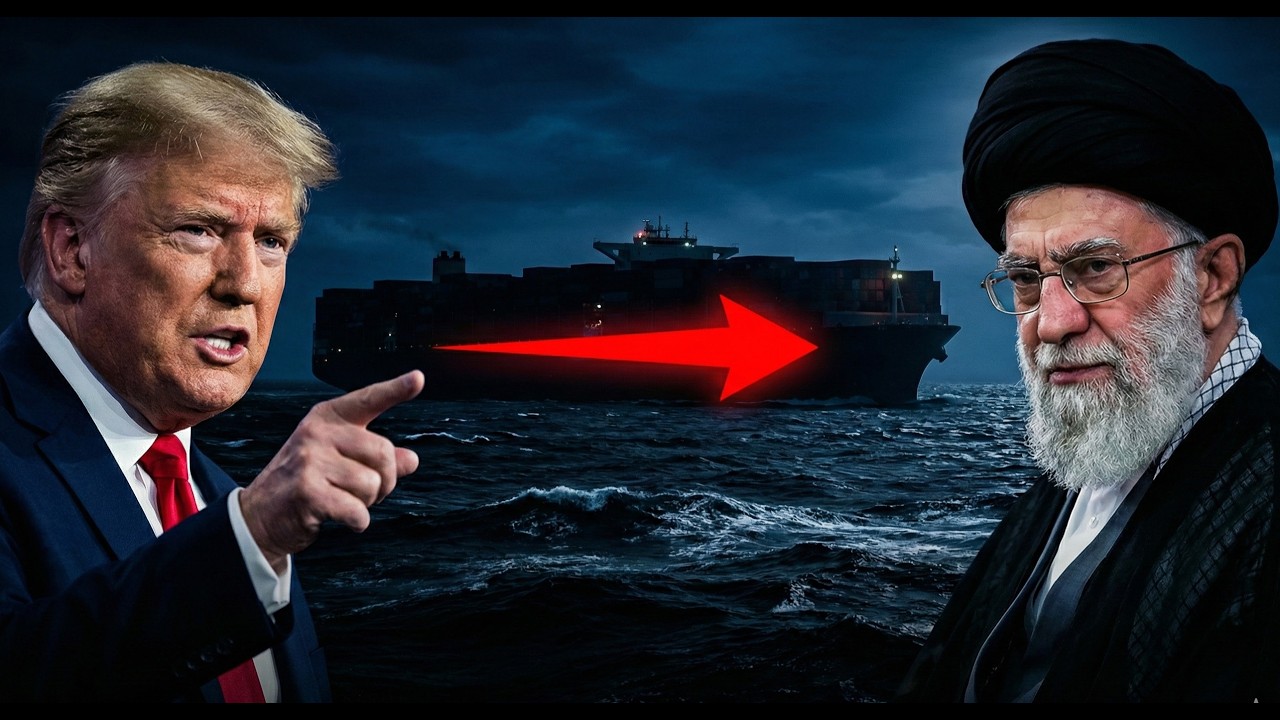
The video opens with a scene in the Indian Ocean where US special forces intercept a Chinese cargo ship carrying planetary mixers, essential for producing solid rocket fuel, destined for Iran. This event is presented as part of a larger, less visible conflict where supply chains and economic maneuvers play a crucial role. The video aims to uncover the logistics and economic architecture that sustains Iran's missile program, highlighting China's strategic positioning in the crisis.
Timeline of Escalation: Sanctions, Shipments, and Reconstruction
In late September 2025, the UN re-imposes sanctions on Iran, but Chinese cargo vessels quickly begin delivering essential materials, including 2,000 tons of sodium perchlorate, enough for 500-800 ballistic missiles. This rapid response demonstrates Iran's readiness. Israeli airstrikes previously destroyed Iran's missile mixing facilities, creating a dependency on foreign suppliers for planetary mixers. By November 2025, US forces intercepted a Chinese vessel carrying these mixers, but the question remains how many shipments went through undetected. Satellite imagery from January 2026 shows reconstruction at destroyed facilities, happening at an unexpectedly fast pace of just seven months, suggesting either successful circumvention of interdictions or a domestic workaround.
Domestic Crisis and Military Buildup
In December 2025, Iran faces severe domestic unrest due to economic collapse, leading to brutal crackdowns by the regime. By late January 2026, the focus shifts to external threats as Donald Trump announces a "maximum pressure" strategy, deploying a significant US naval presence to the Persian Gulf. During this military buildup, unusual cargo traffic arrives in Iran, potentially carrying replacement equipment and technical support, highlighting how Chinese logistics move in tandem with American military actions.
Diplomacy and the Closed-Loop Economy
As Trump announces the Istanbul summit for February 7th, key players like China are notably absent from the official guest list. China and Iran have a 25-year strategic partnership, potentially involving $400 billion in Chinese investment. Nearly 90% of Iran's crude oil exports go to China, approximately 900,000 barrels per day. Due to sanctions, Iran cannot transact in dollars, instead paying China in discounted oil, saving Beijing $8 to $15 billion annually. This revenue allows Iran to purchase Chinese goods and military equipment through barter arrangements, creating a closed-loop system that bypasses US Treasury sanctions.
Sanctions and Strategic Ambiguity
Despite US Treasury sanctions on Chinese entities supplying Iran's missile program, shipments continue through restructured corporate entities. China is not only supplying Iran but also positioning itself as a peacemaker, having brokered the Iran-Saudi normalization in 2023. This "lose-lose win" strategy means China benefits whether the US strikes Iran (reconstruction contracts) or diplomacy succeeds (credit as a stabilizing force). China's Chang Wuang Satellite Technology has even provided targeting data to Houthi forces for strikes on US military installations, and HQ9B air defense systems are delivered to Iran in exchange for oil shipments.
Gaming Out the Scenarios: Who Wins, Who Loses?
China benefits in all scenarios: continued oil imports at discounted rates, reconstruction contracts if the US strikes, and credit as a stabilizing force if diplomacy succeeds. The US risks losing sanctions enforcement credibility, strategic bandwidth, and alignment with Israel. Turkey benefits as the host of the Istanbul summit, potentially taking credit for any agreement. Israel faces uncomfortable realities as its security increasingly depends on Chinese supply chain decisions, and its missile defense capabilities could be overwhelmed by Iran's growing missile stockpile.
Historical Parallels and Trend Acceleration
Drawing a parallel to the Iran-Iraq War, the video highlights how Chinese and North Korean suppliers helped Iran build its missile capabilities despite international embargoes. Now, with existing infrastructure and modern logistics, Iran could reconstitute its pre-war production capacity within two to three years, much faster than the 10 years it took in the 1980s and 90s. The trend of Chinese support for Iran is accelerating, especially after the collapse of diplomacy.
Probability Estimates and Wild Cards
The video assigns probabilities to three scenarios: managed diplomacy (35%), limited strikes then talks (45%), and regional escalation (20%). Wild card events that could change everything include an Israeli preemptive strike, internal Iranian regime fracture, and a US-China naval incident.
Implications and What to Watch
Unstable Middle East conditions lead to oil price volatility, persistent inflation, and higher interest rates. Key indicators to watch in the next 72 hours include Chinese cargo traffic volume at Bandar Abbas port, oil price movements, B2 bomber deployments to Diego Garcia, Kushner-Netanyahu meetings, and the Iranian negotiating format. The video concludes by emphasizing that the Iran crisis is not just about uranium enrichment but about control of reconstruction, energy flows, and regional security architecture, urging viewers to watch insurance premiums as a key signal of future shifts.

