
Brief Summary
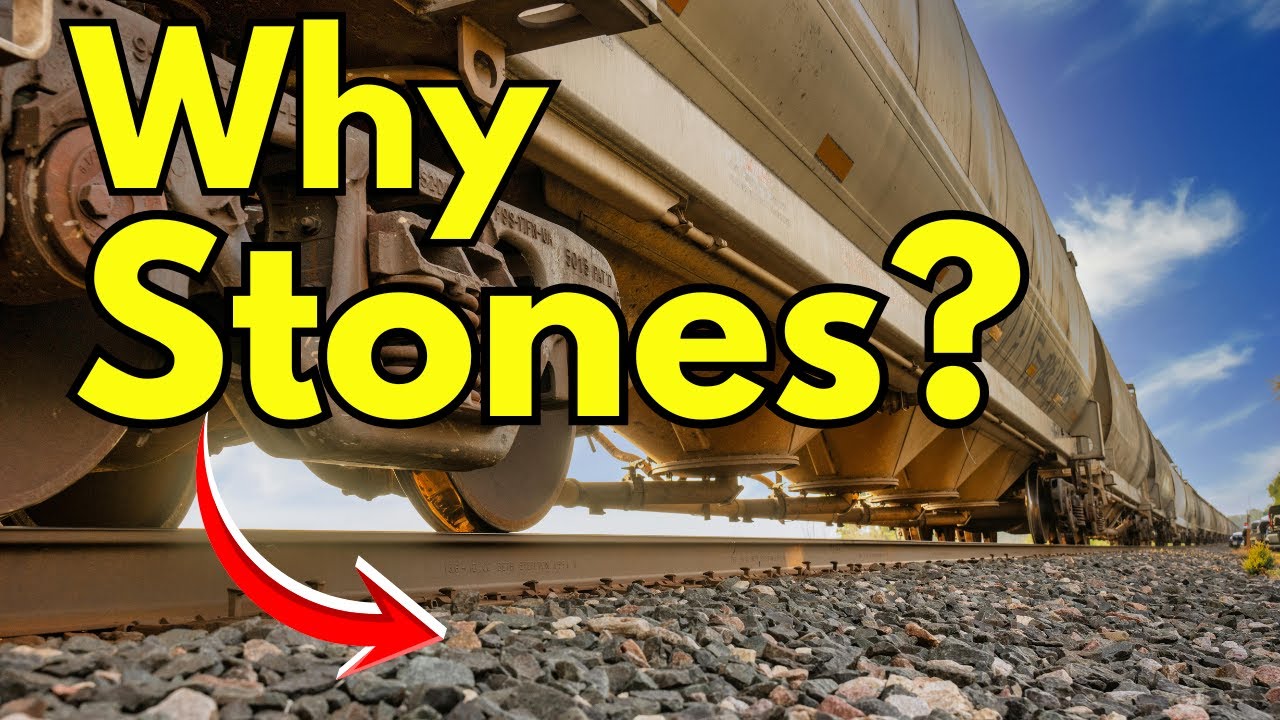
This video explains why railway tracks are built on stones, also known as track ballast. It highlights that using stones is a brilliant engineering solution that protects trains from sinking into the earth. The stones distribute the train's weight, prevent the tracks from sliding, provide drainage, and inhibit weed growth. The term "ballast" originates from the stones used to weigh down empty sailing ships.
- Track ballast is essential for distributing the immense weight of trains.
- The jagged shape of the stones prevents them from rolling and keeps the tracks in place.
- Ballast acts as a drainage system and prevents weed growth.
- The term "ballast" comes from the stones used in ships to add weight.
INTRO: The Infinite Gravel Path
The video introduces the concept of railway tracks being laid on stones, or track ballast, and poses the question of why this method is used instead of bolting the tracks to a solid concrete road. It suggests that the answer is not just about saving money but involves a clever engineering solution that prevents trains from sinking into the ground. The video aims to uncover the secret of these railway stones and their surprising history.
CHAPTER 1: The Floating Track
The chapter explains the primary function of track ballast, which is to support the immense weight of a loaded train. Without ballast, the pressure from the train would crush the soil, causing the tracks to sink and derail. The track ballast acts as a cushion, spreading the weight over a wide area and dissipating the pressure. The tracks are not fixed to the ground but "float" on the stones, relying on friction and the weight of the ballast to stay in place, allowing the track to absorb vibrations.
CHAPTER 2: The Secret of the Shape
This section describes why the stones used for track ballast are sharp and jagged rather than smooth and round. Smooth stones would roll over each other, causing the track to slide apart under the train's vibration. The crushed stones, typically granite or quartzite, have sharp, angular shapes that interlock when packed together. This creates a solid, immovable mass that prevents the track from sliding, even when a high-speed train is moving.
CHAPTER 3: The Enemies – Water and Weeds
The chapter discusses how track ballast helps manage water and weed growth, which are significant challenges for railway tracks. Unlike concrete or bare dirt, a pile of stones is porous, allowing water to drain away from the track and keep the ground dry. The sharp rocks also make it difficult for plants to take root, preventing them from breaking up the soil and compromising the foundation. Thus, the stones function as a weight-bearer, a drainage system, and a weed killer.
CHAPTER 4: A Nautical Surprise
This section reveals the origin of the term "ballast." In the past, empty wooden ships were filled with heavy stones to weigh them down for safe sailing. These stones were called ballast. When the ships unloaded cargo, the stones were discarded on the shore. Early railway engineers used these discarded stones to stabilize train tracks, and the name "ballast" was adopted for the track stones.
OUTRO
The outro summarizes the functions of the stones as a self-draining, weed-fighting, weight-bearing engineering marvel that has supported the world's railways for 200 years. It encourages viewers to like the video and subscribe for more stories hidden in plain sight.

