
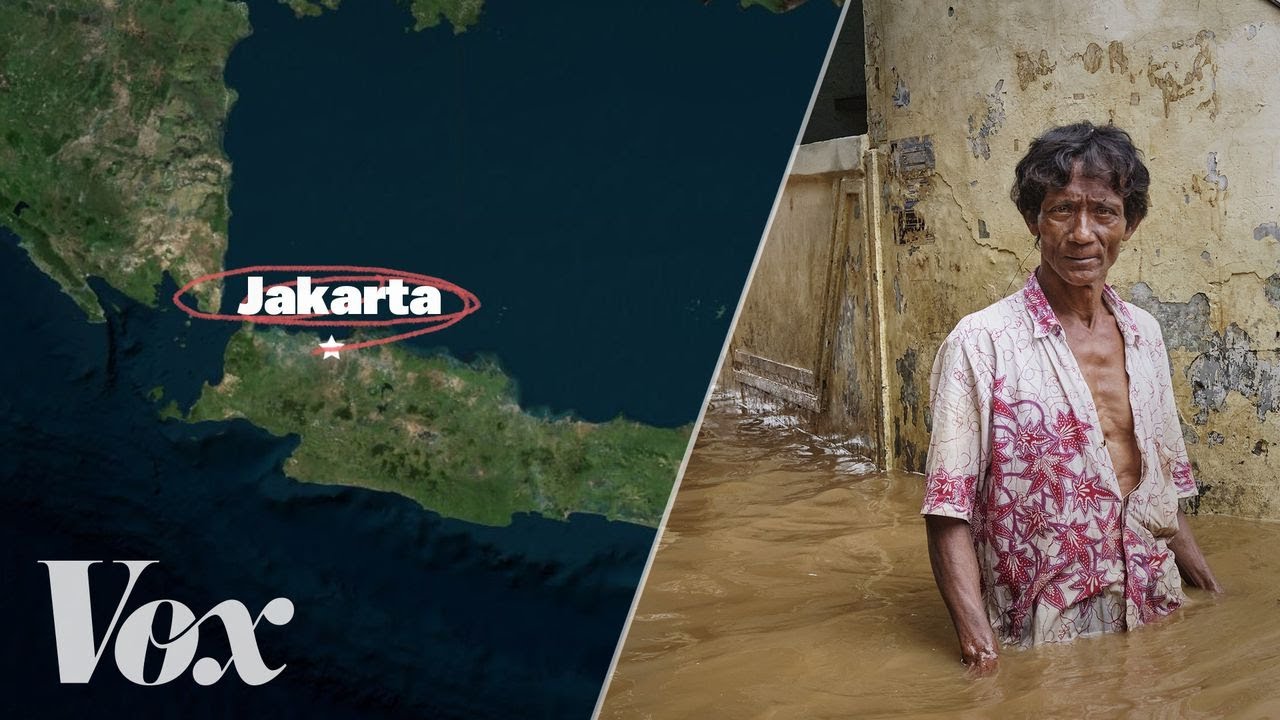
Brief Summary
Jakarta is sinking at an alarming rate due to excessive groundwater extraction, a problem exacerbated by rapid development and inadequate water infrastructure. The city's historical roots in Dutch colonization, which led to segregated water access, continue to impact the current crisis. While solutions like seawalls and a new capital city are being considered, providing piped water to all residents is crucial to stop the sinking.
- Jakarta is sinking by as much as 25 cm per year in some areas.
- Over-extraction of groundwater due to lack of piped water is the primary cause.
- Historical water segregation from Dutch colonial times still impacts the city today.
- Proposed solutions include seawalls and moving the capital, but providing piped water is essential.
Introduction: Jakarta's Sinking Crisis
The Waladuna Mosque in Jakarta serves as a stark reminder of the city's sinking crisis, with its ruined roof, moss-covered walls, and seawater intrusion. The mosque, last used in 2001, now stands as a warning of what could happen to Jakarta if the sinking continues. While many coastal cities face rising sea levels, Jakarta is sinking due to excessive groundwater extraction, with some areas sinking as much as 25 cm per year. This destabilizes the area, damages homes, and disrupts lives, particularly in the northern coastal regions where many residents are fishermen.
The Cause: Groundwater Extraction
Jakarta's sinking is primarily due to the over-extraction of groundwater. Most of Jakarta's 10 million residents lack access to clean, piped water and rely on digging wells to extract water from underground aquifers. This excessive pumping deflates the aquifers, causing the soil to compact and collapse, leading to the ground sinking. The problem is worsened by Jakarta's rapid development and extensive concrete cover, which prevents rainwater from replenishing the aquifers.
The Impact: Flooding and Displacement
The sinking has led to severe flooding, especially in coastal areas like Muara Baru, where residents have built makeshift bridges to navigate their neighborhoods. Combined with rising sea levels, this has made floods during high tide and rainy seasons much more dangerous, such as the devastating floods of 2007 that killed 80 people. Many residents, like Maksim and Nondho, have lost their homes and livelihoods due to the sinking and repeated flooding.
Historical Context: Dutch Colonial Legacy
To understand Jakarta's current water crisis, it's essential to look back to the Dutch colonial era. In the 1600s, the Dutch colonized Jayakarta, razing it and building Batavia, a city designed with canals for trade and defense. The Dutch segregated the population, confining different ethnic groups to specific city quarters, and controlled them by limiting bridges and movement. They developed a centralized piped water system in the 1870s, but it was primarily for the Dutch areas, leaving the indigenous population in "kampongs" without access to clean water.
Post-Colonial Challenges: Water Segregation
After Indonesia gained independence in 1949, Jakarta inherited a city built on marshland with segregated water access. Despite rapid population growth, the city's water infrastructure has not kept pace, with less than 50% of the population having piped water access today. This forces many residents to continue pumping groundwater, exacerbating the sinking.
Proposed Solutions and the Way Forward
The Indonesian government has considered moving the capital to Borneo, but this won't solve the problems for Jakarta's residents. In 2014, a project was announced to build and reinforce 120 km of seawalls, but only 10 km have been completed, and even the seawalls are sinking. An ambitious $40 billion plan to build a massive bird-shaped wall is also underway, but it could take 30 years to complete. The most effective solution is to provide piped water to all residents, as Tokyo and other cities have done to stop sinking. Until groundwater pumping stops, Jakarta will continue to sink, plagued by the legacy of its colonial past.

