
Brief Summary
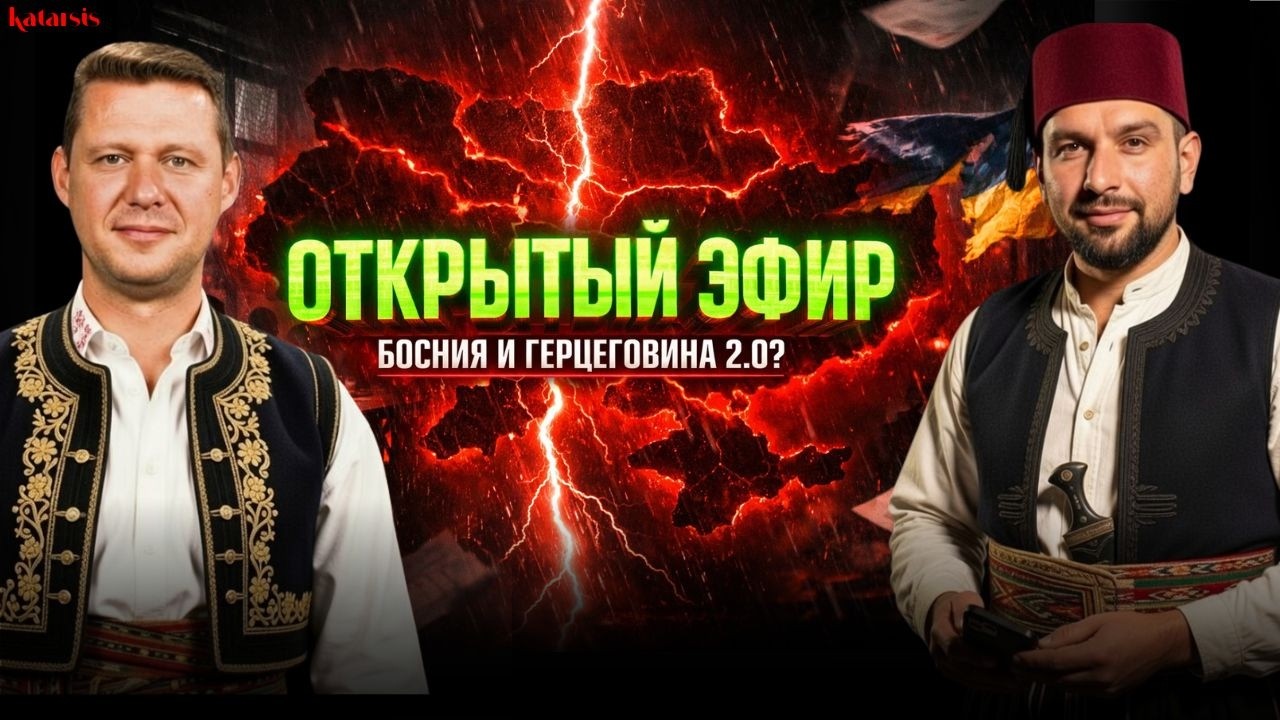
This YouTube video from Катарсис discusses the unique political structure of Bosnia and Herzegovina, its historical context, and parallels to potential solutions for ongoing conflicts, such as in Ukraine. It also touches on energy-related issues between Ukraine, Slovakia, and Hungary, and a controversial court ruling in Ukraine regarding price markups.
- Bosnia and Herzegovina's complex political system, established after the Bosnian War, involves a tripartite presidency and significant international oversight.
- The Dayton Agreement, which ended the Bosnian War, created a unique political system to prevent further conflict among Bosniaks, Serbs, and Croats.
- The video draws parallels between the situation in Bosnia and Herzegovina and potential solutions for the conflict in Ukraine, particularly concerning the Minsk agreements and the status of certain territories.
- Recent energy disputes between Ukraine, Slovakia, and Hungary highlight the complexities of regional energy dependencies and political leverage.
- A Ukrainian court ruling limiting price markups to 10% raises concerns about market viability and potential for corruption.
Introduction to Bosnia and Herzegovina
The video introduces Bosnia and Herzegovina as a country with a unique political structure, featuring a tripartite presidency and significant autonomy for its constituent parts. This structure emerged from the violent breakup of Yugoslavia in the early 1990s, where Bosniaks, Serbs, and Croats vied for power. The presenters highlight the risk of potential disintegration despite nearly 30 years passing since the end of the war.
Historical Context: The Breakup of Yugoslavia and the Bosnian War
The discussion shifts to the historical backdrop of Bosnia and Herzegovina's formation, starting with the dissolution of Yugoslavia. Bosnia and Herzegovina declared independence in 1992, which was contested by Bosnian Serbs, leading to a brutal war from 1992 to 1995. The war involved widespread destruction, ethnic cleansing, and the infamous Srebrenica genocide. The conflict ended with the intervention of NATO forces and the signing of the Dayton Agreement in 1995.
The Dayton Agreement and Bosnia's Unique Political System
The Dayton Agreement established a unique political system in Bosnia and Herzegovina, dividing the country into two autonomous entities: the Federation of Bosnia and Herzegovina and Republika Srpska. The central government includes a collective presidency consisting of a Bosniak, a Serb, and a Croat, each elected separately. A High Representative from the international community has the authority to oversee and intervene in the country's governance to ensure peace and stability.
Bosnia as a Model for Conflict Resolution
The hosts discuss the relevance of Bosnia and Herzegovina's experience to resolving other conflicts, such as the one in Ukraine. They explore whether the Dayton Agreement's model of power-sharing and international oversight could be applied to the situation in Ukraine. The discussion touches on the Minsk II agreements and the potential for a similar arrangement involving the Donbas region.
Personal Experiences and Perspectives on Bosnia
One of the hosts shares personal anecdotes from a visit to Sarajevo, highlighting the deep-seated memories and tensions that persist among the different ethnic groups. He recounts conversations with Bosniaks who expressed resentment towards the externally imposed political system. The host emphasizes that the Dayton Agreement was essentially forced upon the leaders of the warring factions, who were compelled to sign it at a U.S. military base.
The Role of Nationalist Battalions and External Control
The discussion reveals that the key figures brought to negotiate the Dayton Agreement were not politicians but commanders of nationalist battalions. These leaders were motivated by financial interests and were offered control over their respective territories in exchange for ceding geopolitical control to external powers. This arrangement effectively transformed the commanders into political parties, overseeing their communities under international supervision.
War Crimes and Justice in Bosnia
The video addresses the issue of war crimes committed during the Bosnian War and the efforts to bring perpetrators to justice. The International Criminal Tribunal for the former Yugoslavia (ICTY) was established to prosecute individuals responsible for mass atrocities, including genocide. High-profile figures like Radovan Karadžić and Ratko Mladić were convicted and sentenced to life imprisonment. The discussion also covers the prosecution of war criminals within Bosnia's national courts.
Parallels to Ukraine and the Role of Imposed Solutions
The hosts draw parallels between the situation in Bosnia and Herzegovina and the potential future of Ukraine. They suggest that any resolution to the conflict in Ukraine might involve a similar externally imposed framework, with significant roles for nationalist battalions and international oversight. The discussion emphasizes that such a solution would likely be a compromise, driven by the need to end the violence rather than a genuine desire for unity.
Energy Disputes and Political Leverage
The conversation shifts to recent energy-related disputes between Ukraine, Slovakia, and Hungary. Slovakia and Hungary have threatened to cut off diesel and electricity supplies to Ukraine, citing disruptions to transit routes and demanding concessions. The hosts discuss the implications of these actions for Ukraine's energy security and the broader geopolitical context.
Dependence on Russian Energy and Geopolitical Maneuvering
The discussion highlights Ukraine's continued dependence on Russian energy sources, even as it seeks to distance itself from Russia politically. The hosts point out that much of the electricity and gas imported from Slovakia and Hungary ultimately originates from Russia. They suggest that Ukraine is attempting to leverage its energy dependencies to pressure the U.S. and Europe to intervene on its behalf.
Controversial Court Ruling on Price Markups
The video addresses a controversial ruling by Ukraine's Supreme Court that limits price markups to 10%. The hosts express concern that this ruling could stifle business activity, encourage corruption, and create opportunities for law enforcement abuse. They argue that such a policy is unrealistic and unsustainable in a market economy.
Concluding Thoughts and Audience Engagement
In conclusion, the hosts summarize the key points of the discussion and encourage viewers to leave comments and feedback. They express interest in continuing to explore historical parallels and complex geopolitical issues in future episodes. They also thank viewers for their support and engagement.

