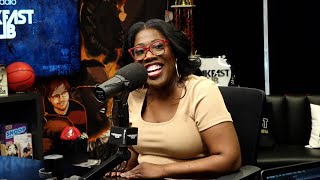
A Silicon Valley Legend’s Playbook for Founders | DevRev, Dheeraj Pandey

EO www.youtube.com

Bref Résumé

Dhiraj Pande, co-fondateur et PDG de DevRev, partage son parcours entrepreneurial, de son enfance dans l'état le plus pauvre de l'Inde à la création de Nutanix, une entreprise technologique à croissance rapide. Il souligne l'importance de la persévérance, de l'adaptation au changement, de la prise de risques calculés et de l'hospitalité déraisonnable envers les clients. Il met en évidence la nécessité de se concentrer sur la valeur à long terme et de ne pas se contenter de succès à court terme.

  • La persévérance et l'adaptabilité sont essentielles pour surmonter les défis et saisir les opportunités.
  • L'hospitalité déraisonnable et l'accent mis sur la satisfaction client sont des facteurs clés de succès.
  • L'innovation et la capacité à anticiper les tendances du marché sont cruciales pour une croissance durable.

Où Commence le Parcours d'un Fondateur - De l'État le Plus Pauvre à un Parcours Milliardaire

Dhiraj Pande a grandi dans l'état le plus pauvre de l'Inde, une région sujette aux inondations et à l'anarchie, avec un PIB par habitant comparable à celui de l'Afrique subsaharienne. Cette expérience l'a motivé à quitter cet état et à poursuivre une carrière dans l'ingénierie, une des rares professions valorisées à l'époque. L'émergence d'Internet dans les années 1990 a orienté son choix vers l'informatique, le propulsant vers une carrière façonnée par cette technologie en pleine expansion. Pour progresser dans ce domaine, il a compris qu'il devait quitter l'Inde pour s'immerger dans l'industrie technologique mondiale.

Comment une Enfance Dysfonctionnelle Façonne l'Esprit d'un Fondateur

Une enfance marquée par des difficultés, comme le divorce et des moments difficiles, peut paradoxalement renforcer la capacité d'un entrepreneur à gérer les hauts et les bas inhérents à ce parcours. La capacité à moduler ses émotions et à ne pas se laisser abattre par les échecs est essentielle pour faire face aux défis de l'entrepreneuriat. Cette résilience émotionnelle permet de rester stable et de prendre des décisions éclairées même dans des situations difficiles.

✨ EO partner highlight ✨

Taylor Rottwell, fondateur et PDG de Laravel, présente sa plateforme conçue pour aider les développeurs à créer, déployer et surveiller des applications de manière cohérente et efficace. Laravel offre un écosystème complet pour accélérer le processus de développement, du concept à la production, en fournissant des solutions élégantes et des outils de déploiement rapides. La plateforme alimente aujourd'hui près de 600 000 sites web, permettant aux développeurs du monde entier de concrétiser leurs idées plus rapidement.

Comment la Plus Grande Introduction en Bourse Tech Américaine l'a Ramené au Premier Jour

Lorsqu'on lance une entreprise, la seule direction possible est d'avancer. Nutanix, la première startup de Dhiraj Pande, visait à révolutionner la gestion des données en proposant une infrastructure logicielle performante et fiable, s'inspirant des géants comme Google et Amazon. L'entreprise a misé sur du matériel informatique standard provenant de Taïwan, associé à un logiciel sophistiqué, pour offrir une solution alternative aux infrastructures coûteuses des grandes marques. Les premières années ont été difficiles en raison de la fragilité du matériel, mais l'équipe a persévéré en améliorant constamment le logiciel pour compenser ces lacunes.

Les Fondateurs Marchent sur une Corde Raide - Ne Jamais Faire Demi-Tour

Dans le monde de l'entrepreneuriat, il est crucial de persévérer et de ne pas abandonner face aux difficultés. Dhiraj Pande compare la création d'une entreprise à la traversée d'une vallée sur une corde raide : une fois à mi-chemin, il est impossible de faire demi-tour. Bien que des ajustements soient nécessaires, il est essentiel de toujours avancer. L'adaptabilité est primordiale, et il faut être à l'écoute du marché pour anticiper les changements et effectuer des pivots en douceur. Reconnaître les tendances émergentes et s'y adapter rapidement est un atout majeur pour assurer la pérennité de l'entreprise.

N'Allez Pas Là Où est le Palet. Allez Là Où Il Va

L'idée initiale de Nutanix était axée sur la situation actuelle du marché plutôt que sur son évolution future. Dhiraj Pande avait pris un risque technologique, mais pas un risque de marché, car le cloud était déjà en plein essor en 2012. Les entreprises de cloud grand public montraient qu'il n'était plus nécessaire de posséder une infrastructure physique. Nutanix se situait alors dans un marché où la question de la propriété versus le streaming se posait constamment. Pour construire une entreprise valorisée à 100 milliards de dollars, il est impératif de prendre des risques de marché et d'anticiper les tendances futures.

Pour Bâtir une Grande Entreprise, Prenez des Risques de Marché

Les entrepreneurs doivent jongler avec les rôles d'investisseur et d'opérateur. Il arrive un moment où il faut dissocier ces rôles et investir dans une nouvelle idée tout en continuant à gérer l'entreprise actuelle. En 2020, l'émergence de GPT a créé de nouvelles opportunités dans le domaine des logiciels d'entreprise. L'entreprise de Dhiraj Pande avait déjà développé sa propre base de données vectorielle pour la recherche, anticipant ainsi le rôle clé de la recherche dans l'intelligence artificielle. La combinaison de la sagesse du langage naturel de GPT avec les données d'entreprise représente un potentiel énorme. Le plus grand défi consiste à intégrer les connaissances de l'entreprise dans un ensemble cohérent, ce qu'un graphe de connaissances permet de réaliser.

L'Adéquation Produit-Marché est un Voyage, Pas une Destination

L'adéquation produit-marché est un processus continu qui nécessite une réévaluation constante à chaque étape de la croissance de l'entreprise. Que ce soit à 1 million, 10 millions, 100 millions ou 1 milliard de dollars de chiffre d'affaires, il est essentiel de se projeter et d'anticiper les besoins futurs. Si l'on attend trop longtemps, la croissance peut stagner. Il est important de diversifier son portefeuille de produits, de clients et de régions géographiques pour assurer un équilibre et une croissance durable. L'objectif est de créer un portefeuille de clients suffisamment large pour compenser les fluctuations trimestrielles.

La Seule Chose Derrière Chaque Accord à 100 Milliards de Dollars

Il est important de comprendre le cycle de vie d'une idée, du concept initial à sa transformation en produit, puis en entreprise et enfin en activité pérenne. Transformer une simple fonctionnalité en un produit robuste capable de générer des revenus importants est un défi majeur. La clé réside dans la construction de relations solides avec les clients et dans la capacité à les accompagner lorsqu'ils en ont le plus besoin.

Sous-Promettre et Sur-Livrer – Le Cœur du Commerce Répété

L'une des clés du succès est de sous-promettre et de sur-livrer, ce qui est essentiel pour fidéliser la clientèle. Si les clients existants n'augmentent pas leurs dépenses, l'entreprise se contente de vendre et de courir, ce qui nécessite une prospection constante. L'équilibre entre l'acquisition de nouveaux clients et l'augmentation des revenus provenant des clients existants est crucial. Jeff Bezos appelle cela l'effet de volant d'inertie : il faut acquérir de nouveaux clients tout en augmentant les revenus provenant des clients existants.

L'Effet Volant d'Inertie d'une Entreprise

Pour qu'une entreprise prospère, il est essentiel d'avoir un produit authentique, un service client de qualité et des commerciaux capables de sous-promettre et de sur-livrer. Dhiraj Pande s'inspire du concept d'hospitalité déraisonnable de Will Guidara, un restaurateur renommé, qui consiste à offrir aux clients bien plus que ce qu'ils attendent. C'est ce qui différencie les grands entrepreneurs des médiocres.

Pourquoi Chaque Fondateur Devrait Pratiquer une Hospitalité Déraisonnable

L'entrepreneuriat ne se résume pas à vendre des rêves et des idées, mais surtout à assurer un suivi rigoureux. Peu d'entrepreneurs sont réellement capables de vendre et de rester présents pour accompagner leurs clients. L'hospitalité déraisonnable crée un effet de volant d'inertie positif : les nouveaux clients sont rassurés par les témoignages des clients existants, ce qui réduit les frictions.

Peur de Manquer Quelque Chose vs Peur de Se Tromper

Dans toute nouvelle relation commerciale, deux émotions sont à l'œuvre : la peur de manquer une opportunité (FOMO) et la peur de se tromper (FOMU). Si beaucoup pensent qu'il suffit de créer du FOMO, il est crucial de comprendre que la peur de se tromper est souvent plus forte, surtout dans le B2B, où les contrats sont importants. Il est donc essentiel de construire une relation de confiance, de pratiquer une hospitalité déraisonnable et de laisser les clients existants témoigner de cette qualité pour apaiser la peur de se tromper.

L'Avenir du SaaS d'Entreprise

La miniaturisation est un facteur de rupture majeur dans la technologie. Réduire la taille et le poids des produits est un avantage considérable. Le SaaS est devenu complexe et lourd à mettre en œuvre. La prochaine disruption viendra des modèles de consommation, qui remplaceront les modèles d'abonnement. Les modèles d'abonnement ont déjà disrupté les licences traditionnelles, et les modèles de consommation, comme ceux proposés par Snowflake, vont encore plus loin en facturant à l'usage.

La Pire Décision Qu'un Entrepreneur Puisse Prendre

La pire décision qu'un entrepreneur puisse prendre est de s'accrocher trop longtemps à des situations suboptimales : des employés incompétents, des produits médiocres, des clients insatisfaits, des dirigeants peu performants. S'accrocher à la médiocrité est un frein à la croissance. Il est essentiel de lutter contre l'inertie, qui est le principal concurrent de toute nouvelle idée. Le statu quo est l'ennemi de l'innovation et du progrès.


Summarize any YouTube video in seconds

Get summaries like this one for any video, in your language, with the free Summ app.

Download on the Apple Store
Get it on Google Play

Transcription

YouTube Transcript Generator

0:00 A feature alone is not going to get me $100,000 from a customer. One of the reasons for our success is underpromising and overd delivering. This is the core of repeat business. If your existing customers are not paying you more, then you're basically just selling and running, which means hunt, hunt, hunt. But the balance between hunting and farming, which is new customers versus getting more from existing customers. Jeff Bezos has called it like the flywheel effect of companies. You know, you need to add new logos, but you need to go make money from existing logos. I think that tests the real metal of a company. I'm a big fan of Will Gdara is a restaurant tour who actually had two of the most famous restaurants in the world and he talks about this concept of unreasonable hospitality giving people way more than they expect. That is where great

0:47 entrepreneurs differentiate from the mediocre ones. My name is Dhiraj Pande. I'm the co-founder and CEO of a company called DevRev. So we are in the business of blurring the lines between the public wisdom of the internet and natural language wisdom with the enterprise wisdom. That's basically what Devre is all about. Before this I had started a company nutanics. We were the fastest to a billion dollars in revenue and took it public in 7 years record time on NASDAQ was the largest tech IPO of 2016. I ran it as a public company CEO for almost 5 years. Then I realized there's a big opportunity opening up in AI which is how dead started almost 4 years ago. I also sit on Adobe's board. I'm on the

1:32 audit committee there. And last but not the least a big student of both AI and design. I had a fairly dysfunctional childhood. I grew up in the poorest state of India. The Himalayan rivers the seasonal rivers that would flood half the state. Half the year was flooded. It was the most lawless state but the poorest state. That state's GDP per capita is only as much as subsaharan Africa. So you can imagine the level of poverty that actually I saw. That's what catapulted me to actually get out of the state and do something. Back in the day you could only be a good engineer or a good doctor. There was no third profession. I picked engineering. Luckily when I was growing up and I had to pick uh the field of engineering the internet had

2:18 just happened. This is 1993 1994. computer science was going to be the next hot thing just like AI which is the new computer science is hot right now I built my entire career just being shaped around the internet I can't stay in India right now but back in the day the only option was to leave the country if you're an engineer I have to be in this bubble to know what working in the industry means a big part of this is to have seen dysfunction as a child divorced is not bad enough I mean if you've seen sad and disappointing days as a higher. I think it actually carries through with you. But it also means you can actually take care of tough situations and entrepreneurship is a lot of that. It's a lot of highs and lows and it's important not to get too sad with the lows which also means that you

3:03 can't be too happy with the highs and staying on that average line and how you modulate your emotion is the way you will deal with a lot of failures. >> I'm Taylor Rottwell, the founder and CEO of Laravel. Our mission is to help developers build, deploy, and monitor applications consistently and beautifully. Starting projects is great, but more importantly, you need to ship them. Great ideas mean nothing until they ship. That's exactly why I built Laravel, to bring your entire journey from idea to production into one seamless flow. It's more than a PHP framework. It's a complete connected ecosystem built for speed and confidence. We provide elegant, opinionated solutions for everything your modern web app needs.

3:50 And you can deploy in under a minute with Laravel Cloud, straight from Git. Zero config needed. Laravel now powers nearly 600,000 lab websites, helping developers worldwide ship their ideas faster. Build with elegance. Deploy with confidence. Monitor with precision. Stop configuring. Start shipping. Visit larave.com today. only direction when you start a company is forward. That's the best you can do. >> I can't thank you enough. I mean, I'm I'm not going to >> Nutanics was my first startup. I think the core of Nutanix was to really do something around data management. We said, look, we are good at data inensive

4:37 applications. We reliably manage data at fast speeds like no one else. Hey, we can ship software to you where your data centers will look like Google's and Amazons and Facebooks and so on. And we were also trying to bring commodity hardware which was Taiwanese equipment to the enterprise. Before that, people were buying hardware from Dell, HP, IBM, all these branded hardware companies, EMC, NetApp. So, they were all into shiny hardware. And he like no, no, no, no. You can take the same approach that Amazon, Google, Facebook take really source hardware from Taiwan, bring it to the US and put software on top. So you have a commodity hardware and a pure software running on top of it. First

5:22 four five years was extremely problematic because the hardware was flaky and unreliable and the software needed to overcompensate for that. So we took our time to really make the software compensate for a flaky fragile hardware. In fact, our company was always shut down three times. But at the core, the big thing in my head was that you are on a tight rope and you're walking a tight rope and you have to cross this valley. When you're halfway through, you can't turn around. You'll fall if you turn around. Any new product that you launch, any new initiative, you have to think about plowing through. Now, sometimes moving forward might mean shutting it down completely. But to actually say I want to go back this direction is the worst thing that entrepreneurs actually do. So we did

6:07 have a couple of big pivots. The only constant in building a company is change. So if you can embrace change and you can make it seamless and you can be a little bit ahead of the market and you have to be really good at looking around the corner and that means listening because when you hear something from the market the first time as a stubborn entrepreneur you'll say h that's an aberration. When you hear it the second time, now it's a coincidence. When you hear it a third time, it's a pattern. You need to understand how to recognize patterns and look around the corner. Be at least 6 months ahead of what eventually will be a hard pivot and see if you can make soft pivots into that direction. There's no point just making 90° turns or 180° turns if you can actually make softer turns to the same

6:54 degree that he would have otherwise achieved. I think if you look at the idea of nutanics, it was where the puck was as opposed to where the puck was headed because it my the first idea my first startup. I had started to really take technology risk but not a market risk cuz the market by 2012 had already seen cloud and the fact that consumer cloud companies were saying look you don't need to own infrastructure if you can stream the infrastructure. It's like what happened with music eventually was like you don't need to own songs. market for Spotify was already happening and the public cloud was that version for infrastructure. So the puck was headed to streaming and we were still at iTunes and on software was basically headed in that challenge market where you would

7:39 constantly have to think about do I need to own or can I stream do I need to own can I stream so the idea of nutanics was where the puck was and it was a technology risk and we got paid for it for 1020 $20 million that's the valuation of nanic but to really build a hundred billion business you had to take a market risk This is something that all entrepreneurs will actually face being an investor but also being an operator and when you do your company you're doing both in one at some point you might have to decouple those where you become an investor in your current idea and you become an operator of a new idea around 2020 when co happened is when you're like okay what's the next chemistry we can bring together and it really happened to be around business software when GPT came about by this time we already had our

8:27 own vector database. We had built our own vector database to actually do search because we knew search was the first killer app for anything intelligent. Now what GPT has given us is the ability to ask it questions and bring the natural language wisdom that otherwise we would have struggled to build. But at the core of it, the enterprise data piece of it is the biggest challenge cuz I can't do anything in the in the business in a in an enterprise software environment with Wikipedia's knowledge or internet's knowledge. I need to bring the knowledge of the enterprise in a coherent hole which is what a knowledge graph actually brings. And to take this knowledge graph and mix it up with the wisdom of the internet is what we really do. So the

9:12 biggest bang for AI is building a perplexity like thing for all enterprise assets. And that to me was the light bulb moment. In the absence of the public cloud, we could have been a hundred billion company. But in the presence of the public cloud, we'd be hovering around the $20 billion range, you know, because the market has moved. If technology doesn't integrate things, bring the chemistry as opposed to just new features and new ideas, it has not done its job. A big ideas are about alchemy. It's about mixing things together and making it look like a more robust solution. Even like a chemical solution is about bringing chemistry together. And bringing a lot of these things together is where a lot of uh value gets created.

9:58 Product market fit is actually a journey, not a destination. You'll need to struggle with that. At 1 million, at 10 million, at 50 million, at 100 million, at a quarter billion, at half a billion, a billion, every such milestone, you have to keep thinking again. You have to think ahead of the curve because if you waited too long, you might start to sputter at 100 million. You might have needed a new product for going from 100 million to 250 million. And you might need have needed to see the new region of the world to do sales and marketing. I think this idea of PMF is relative and it's not a destination. Every time you think you have product market fit, you will start to sputter at the next threshold. So at 10 million, you're like, "Okay, I have PMF." That means that you not thought through that at 50 million, you will stall because you didn't have a pipeline that was large enough for more

10:45 features, more capabilities, bigger deals, bigger customers, or you didn't think hard enough about the other regions of the world, which will now create a portfolio effect. Because what he keep me to doing is to create a portfolio of products of customers of regions of the world, geographies around the world that will give you that balance every quarter because not every existing customer will pay you every quarter. So you need to find a portfolio of large customers so that they can all balance each other every quarter. I think that to me is a journey more than a destination. We take a step back and think about the funnel of idea and the life cycle of an idea. There's a lot of ideas up there at the top of the funnel and then they become concepts. From concepts when it

11:31 becomes a little bit real, it's still a feature. You talk about all these companies that are basically building agents, but at best they're features and you can get some early wins by showing a feature to your customer, but how do you take a feature to a product? A feature alone is not going to get me $100,000 from a customer. How do you organize all this into a robust product and a product to a company and a company to a business? That is the real test of entrepreneurship. Going from a company to a business is now really building relationships with customers, making sure that you don't leave customers in the lurch when they need the most amount of help. One of the reasons for our success is underpromising and overd delivering, you know, and this is the core of repeat business. If your existing customers are not paying you more, then you're basically just selling and running, which means hunt, hunt,

12:18 hunt. But the balance between hunting and farming, which is new customers versus getting more from existing customers, is at the core of building large businesses. You know, Jeff Bezos has called it like the flywheel effect of companies. You know, you need to add new logos, but you need to go make money from existing logos. I think that tests the real metal of a company. Do you have a product that is authentic? You have customer support that's really good and finally you have salespeople who really know how to underpromise and overd deliver. I'm a big fan of Will Gdara is a restaurant tour who actually had two of the most famous restaurants in the world and he talks about this concept of unreasonable hospitality giving people way more than they expect. That is where great entrepreneurs differentiate from

13:03 the mediocre ones. I think a lot of people think that entrepreneurship is about selling, selling, selling your dreams and ideas to prospective candidates who become employees of your company, but also prospective customers and partners. Very few people, I would say less than a percent of the people are really good at following through. They'll sell and they'll move on and they'll sell some more and they'll move on as opposed to selling and staying. I think that idea of unreasonable hospitality is what really creates the flywheel. When you go to a new customers, they hear from existing customers and that's how you reduce the friction. At the end of the day, there's two emotions going on in a new relationship. The fear of missing out, but also the fear of messing up. FOMO and FOMO as we call it. And a lot of people think that they just need to create for more with prospects. But they

13:51 don't realize that most customers, especially in B2B, I'm talking about B2B software, when you're really doing larger deals like $50, $100, $200,000. A lot of it is actually based on faux mean, which is fear of messing up. So building that critical relationship and providing that unreasonable hospitality and letting your existing customers speak of that unreasonable hospitality is the only way to blunt that emotion of fear of messing up. To me, entrepreneurship is about building that authenticity at every level of the way because the market is actually smarter than you think. What is disruptive in technology? The biggest disruptor to technology is miniaturization.

14:36 Big things into small things. Literate sits in a pocket. No one on a desk. I mean, even the idea of infrastructure was like that. Oh, we buying things for 5 years. big metal monolithic purchases like just come and use the compute for 2 hours if that's what it takes for you when you make things smaller and lighter weight that is the biggest disruptor to incumbents SAS has become extremely heavyweight extremely complex in terms of implementation so the disruption that will happen is consumption we go from subscription to consumption and consumption models is what will disrupt subscription models remember subscription Subscription models disrupted licensing models of the last 20 years before that where people are buying 5 years enterprise license

15:22 agreements we move to subscription we said hey you can pay by the user then slack comes in there you don't have to pay by the user you can pay by the monthly active user making it even more lightweight and a little bit more towards consumption snowflake coming in saying everything consumption based I think all SAS will probably become consumptionbased and that will disrupt legacy SAS And the worst decision that people should not take is sit on things for too long. Sit on people who are not a good fit for too long. Bad products, unhappy customers, unhappy employees, mediocre leaders. So to me, sitting on the suboptimal thing for too long is the worst thing that can happen. It's the

16:07 tyranny of mediocrity. not changing and do nothing. Which is exactly what you have to go and fight when you go and sell your new idea to customers because customers most comfortable thing is to do nothing. And your biggest competition is not that other idea, the other competitor. Your biggest competitor is inertia. And that is also the biggest enemy within a company. Do nothing. That's the worst thing uh an entrepreneur can do. That's the worst thing a company can do.

Share

Résumés de vidéos YouTube