“Wang Yi India Visit was about Tactical Reset”的完整文字稿。点击时间戳即可从该位置打开视频。想要其他视频的字幕?试试 YouTube 字幕提取工具。
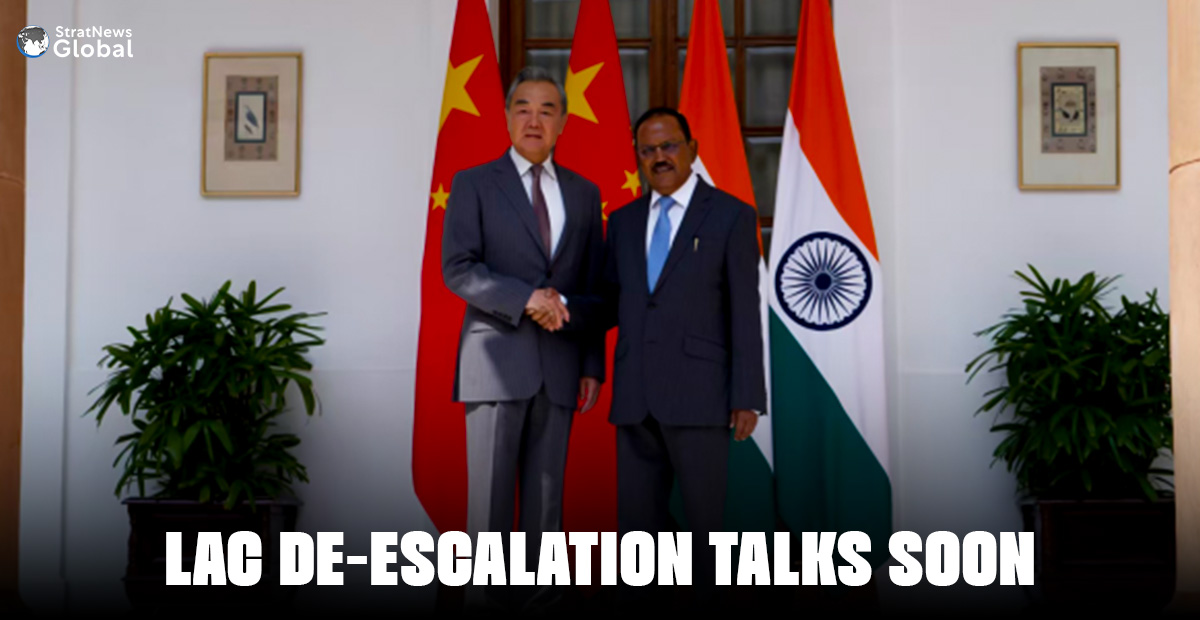
0:00 [Music] Good day friends. In today's video, I'll talk of three-day visit of Chinese foreign minister Wongi to India where he met with Prime Minister Modi, National Security Adviser Dohul and external affairs minister J. Shankar. My four observations on Wongi's India visit are number one, the two countries have done a tactical reset only. Why tactical? I'll explain in a while. Second, India and China do not have strategic relations. They do not have it now and they will not have at least as long as the Modi government is in power. Third, India remains committed to
0:45 strategic relations with America notwithstanding Trump's tantrums. Fourth, all the talk by defense analysts and strategic thinkers in India and outside the country who say that Trump's tariffs have pushed India to China are wrong. The two issues are not linked at all. Now, why do I say that India and China do not have strategic ties? Because when we talk of strategic relationship, we are talking about long-term commitment for mutual gains. And for that it is important that the two countries have normal relations with one another which is not the case with either country. Let me take them one by one. Let's start with China. For China,
1:33 one China policy is the basis of India China ties. This was said by outgoing Chinese ambassador in India Sunong in October 2022. And why he said this was because starting 2010 China India had publicly stopped endorsing one China policy something that was inunitiated as early as 1949. And the reason why India stopped was because starting 2009 China had started giving stapled visa to Indian residents of Jammu and Kashmir. Ladak was part of JNK d then as well as the residents of Arunachal Pradesh.
2:22 In one year's time, China stopped this practice of issuing stapled visa for Jammu and Kashmir and Ladak but continued for the residents of Arunachal Pradesh which continues till today because they say Arunachal Pradesh is South Tibet and it belongs to China. So this subject came up in the formal interaction between Wongi and J Shankr where Wongi asked J Shanka if India uh considered Taiwan as a part of China to which J Shanka replied that India has trade technology and cultural ties with Taiwan. The release of the Ministry of External Affairs later clarified that India's
3:09 position on Taiwan remains unchanged. So the point to make is that for the last 15 years starting 2010, China India has formally stopped endorsing one China policy which is extremely sensitive and a prickly issue with China. But China is willing to overlook this because it sees the big picture. It looks at the big picture which was crafted as early as 1988 when Prime Minister Rajiv Gandhi went to China and he met up with the Chinese leader Dang Sha Ping and the two leaders agreed that it was necessary that India
3:54 and China work together for the Asian century. So that spirit of the Asian century from Chinese perspective despite numerous ups and downs it has prevailed over the decades and today Chinese President Xi Ping talks about the two countries working together to stabilize bricks because bricks is at the heart of the new world order that is being crafted. So this is the Chinese position. they are looking at the big picture and not really at the strategic problems that they have at the fundamental level with India. Now India's narrative is entirely different. The Indian narrative as
4:39 articulated by J Shankar is that both the countries have risen. China has risen, India has risen which is true but what is also true is that the rise of the two has been disproportionate. China has risen so much that today it's a great power and is singly responsible for the change in global geopolitics what we call the once in a century change which is not the case with India but India wants to believe and tell its people that because it has also risen it is in a regional geopolitical competition with China and there is a excuse for that because that can't be said So the excuse has been found for not having normal ties
5:26 with China in the border issue. So when we look at the border issue because J Shanka repeatedly says that unless this is resolved normal ties cannot happen. Border issue is really in two parts. One is the resolution of the border which is extremely complex issue and that is the responsibility of the two SRs special representatives of the two countries uh Ajit Dowel and Wongi and the other issue that J Shanka refers to is about the line of actual control where once again there are two issues here. One is about having peace and tranquility on the line of actual control which both sides have acknowledged exists today. And the
6:14 second issue which was brought up in J Shankar's meeting with Wong he was asking him that the deescalation process at the line of actual control must go forward. So what India is saying is that the deescalation must happen at the line of actual control which is not possible. It is not possible because what by saying this India has uh shifted the goalpost. If we look at the 10th September 2020 joint statement signed by J Shankar and Wongghi in Moscow in the presence of Sergi Lavarov for peace and tranquility on the border on the line of actual
6:59 control. It only talks about disengagement. It does not mention deescalation or de-induction of forces which is the PLA because deescalation would mean that PLA go back to where it was uh in May of 2020 which will not happen. It is not also formally there in the joint statement. So this makes the whole thing very complex from the Indian point of view. And as I said that India wants to show that it is in a competition with China. So J Shankar once again uh made this point to Wongghi that the competition should not become conflict. He did not talk of cooperation at all
7:44 between the two countries. Now when you say competition you start wondering where exactly is the competition between India and China that J Shankar keeps talking about. As far as the two countries are concerned, you look at the hard part, there's hardly any room for competition. Hard power has three elements. One is economy. Today the Chinese economy is five times that of India. So where is the competition? Second is technology. China today is already a leader in green technology and one of the leading countries in big technology. So where's the competition? Third is military power. Undeniably PLA today is at the cutting edge of modern warfare. Once again
8:30 there's no competition here of the PLA with the Indian military. So the competition that J Shankar repeatedly talks about is as far as the smaller countries of South Asia are concerned. India has the colonial mindset where it sees everything as a zero sum game and it believes that it wants to retain its area of sphere of influence that all the smaller countries of South Asia should remain as they traditionally have been in the sphere of influence of India. Notwithstanding the fact that except for India and Bhutan, all the South Asian countries today are on board the belt and road initiative of of China.
9:19 So this is where he talks about the competition. That means let's take the example if we talk about Nepal. So if the Nepal prime minister comes to India then India believes that it has pulled Nepal from the sphere of influence of China that it should not go there. But this is not the way the Chinese see that. Chinese fully understand that Nepal should have both from both the neighbors whatever it wants to get because the whole thinking is entirely different. So this is the competition that he wants and he does not want this to become conflict as far as cooperation is concerned which is the fundamental to strategic relationship
10:05 that India does not want with China despite the fact that the two countries they have signed for cooperation at the at the first informal summit which was held in Wuhan in 2018 where Prime Minister Modi and President President Xiinping agreed to the Chinese formula of China India plus that the two countries should work in cooperation to help plus means a smaller neighbor like Nepal but India pulled out of it. Nothing has been done from the Indian side after agreeing to the agreement there. Similarly, at the second informal summit which was held in Chennai in October 2019, Xiaping had proposed to Modi the concept
10:51 of triangular peace that India, China, Pakistan have peace. They work together for there as well as the peace and development and progress of the entire South Asian country. Once again, the Modi government has not taken any action on this. So the entire focus then as I said is on the tactical reset and tactical reset is something which India has been forced to make the adjustment and I can see two reasons why India has done this adjustment or the tactical reset in my opinion the first one is India's compulsion to be to go to the SEO summit prime
11:37 minister Modi will go there he has accepted the invitation of Xiinping to attend that because the compulsion is that brick's presidency for next year 2026 is with India and without China's support it cannot be a successful presidency. So I see this as one reason for the tactical reset and the other is that everybody knows that all the global supply chains they end up in China. China has the ecosystem, the manufacturing ecosystem. So the other thing is trade that is important. Uh let's see the fact that despite no normal ties between the two countries, today the bilateral trade
12:23 stands at $130 billion which is slightly more than the bilateral trade India has today with America. So the Chinese here looking at the bigger picture have made certain concessions. The sanctions have been lifted from India on fertilizers, tunnel boring machine and rare earth mineral and magnets. And India also has agreed to the Chinese request to have direct flights sued. And as far as trade is concerned, India has said that Chinese companies will not be allowed in critical infrastructure, telecommunication and sensitive areas implying areas concerning national security and defense
13:09 and all the projects which come from China, they will be cleared at the highest level, the prime minister level. So the point is that the whole relationship is really tactical right now. It should not be read any more than that. And as I said, the Modi government is fully committed to strategic ties with America, not withstanding Trump's tantrums. You see the point is that the Modi government has invested so much uh in the in the American system uh in terms of military in terms of technology foreign policy diplomacy defense people-to-people contact the commitments and the investment is huge that India will not pull out from there and also
13:55 remember that America happens to have the uh the largest diaspora the RSS diaspora in the world. So there is no way I mean India in my opinion uh as far as the Modi government is concerned will like to wait out even the presidency of President Trump uh but it will not pull out its commitments from America. This is the way I see the whole relationship and the visit of uh Chinese foreign minister Wongi. Thank you so much.