
Brief Summary
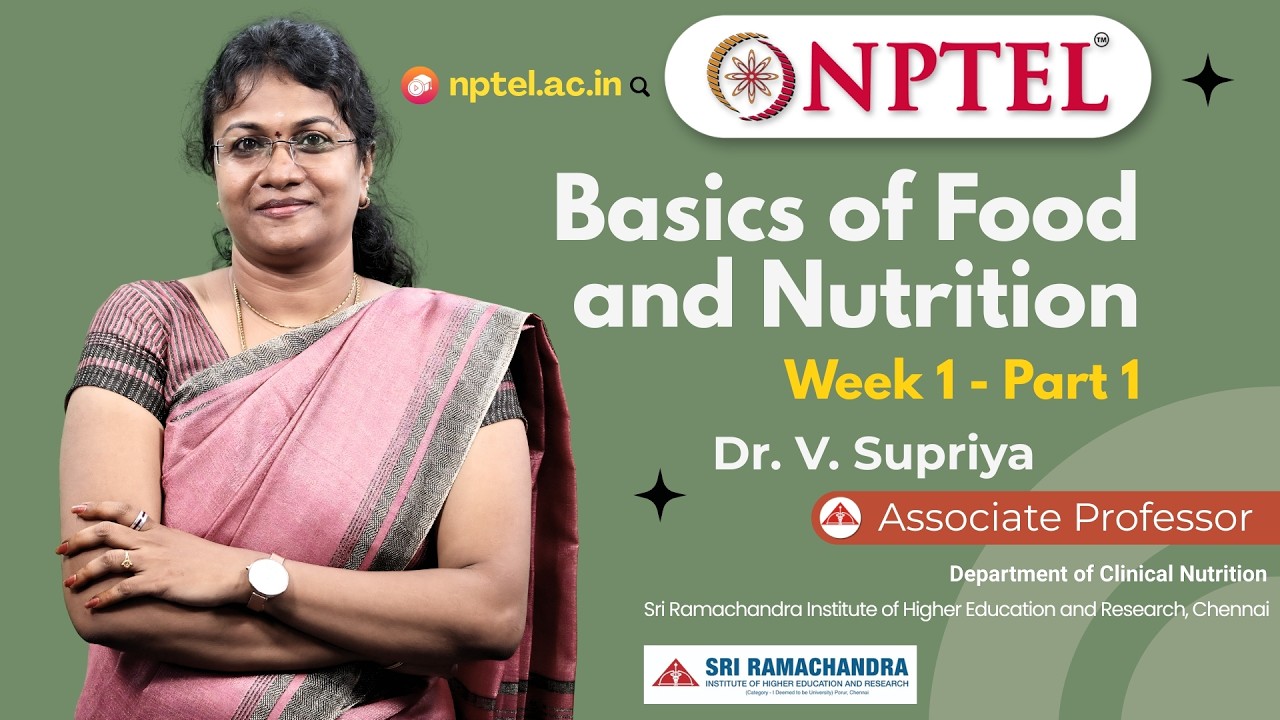
This video introduces the basics of food and nutrition, covering essential terminologies, concepts, and the historical background of nutrition science.
- Nutrition is vital for maintaining health, growth, and the repair of body tissues.
- The video discusses food groups, the significance of proper nutrition, and outlines macronutrients and micronutrients.
- Historical milestones in nutritional science are highlighted, including contributions from notable figures like Hippocrates and Antoine Lavoisier.
- Definitions of health, digestion, and malnutrition are provided, along with dietary reference intakes and their significance.
Introduction to Nutrition and Its Importance
Dr. Supriya welcomes viewers to the course on food and nutrition. The focus of week one is on nutrition-related terminologies and the history behind them. The video highlights the importance of food as a necessity for life, essential for survival, maintaining health, and providing energy for daily activities. It emphasizes that nutrition is crucial not just for physical growth but also for overall well-being. The major purpose of food is sustaining life and promoting health while preventing diseases through a balanced diet.
Food Sources and Groups
The video explains various food sources cultivated by humans, which include grains, fruits, vegetables, nuts, and animal products. These food sources are vital for providing essential nutrients. A diverse array of food ensures a balanced diet, highlighting that consuming all five food groups is key to achieving this balance. Food is defined, and its classification into cereals, pulses, vegetables, fruits, dairy, and fats is elaborated upon.
Understanding Nutrition
Nutrition is discussed as the process by which the body receives and utilises food. This section outlines the methods of nutrient intake, digestion, absorption, and utilisation. It emphasizes how proper nutrition supports growth, maintenance of bodily functions, and good health. The relationship between nutrition and health is reinforced, with a focus on the necessity of a balanced and adequate food intake for maintaining well-being.
History of Nutritional Sciences
A historical overview of nutritional sciences is shared, tracing its origins back to the 18th century with contributions from figures like Antoine Lavoisier, considered the father of nutrition, and Hippocrates, who linked food and health over 2400 years ago. Further milestones include discoveries related to vitamin C by James Lind and the scientific foundation of metabolism established by Lavoisier. This section highlights the evolutionary nature of nutritional science and its ongoing relevance.
Concepts of Nutrition
Proper nutrition's role in health maintenance and disease prevention is highlighted, noting that the body requires continuous nutrient supply. Various definitions around food and nutrients are provided, including the World Health Organization's definition of health, which encompasses complete physical, mental, and social well-being. The video describes the process of digestion, explaining how food is broken down and absorbed in the body, while emphasizing the essential roles of macronutrients (carbohydrates, proteins, fats) and micronutrients (vitamins and minerals).
Malnutrition and Its Forms
Malnutrition is introduced, detailing both overnutrition and undernutrition. Undernutrition leads to insufficient nutrient supply and weakened immune function, while overnutrition can lead to obesity. This section explains the consequences of both forms of malnutrition and their impacts on health, stressing the importance of adequate nutrition and proper food utilization.
The Five Food Groups and Balanced Diet
The five food groups are illustrated using a food pyramid, which visually represents their significance and serving recommendations. The concept of a balanced diet, which contains all five food groups in appropriate amounts, is introduced along with the "eat well plate" concept. Individual dietary needs vary based on factors like age, sex, and physical activity levels.
Dietary Reference Intake (DRI)
This section covers Dietary Reference Intake (DRI), defining it as a collective term comprising several nutrient recommendations. It includes adequate intake, estimated average requirements, recommended dietary allowances, and tolerable upper intake levels. Each of these parameters helps in assessing nutritional adequacy and preventing deficiencies among populations.
Importance of Monitoring Nutrient Intake
The significance of tracking nutrient intake levels according to dietary recommendations is emphasised to ensure health and prevent adverse effects. The tolerable upper intake level is explained as the maximum daily intake considered safe, after which the risk of toxicity increases. This section also discusses the importance of knowing and adhering to upper limits for various nutrients, particularly with supplements.
Conclusion and Assignment
The video concludes with a reminder for viewers to thoroughly engage with the content and complete the assigned tasks, encouraging further exploration of the subject in upcoming sessions.

