
Brief Summary
This video focuses on the classification, origin, composition, and health benefits of spices and condiments. It highlights their functional roles in food, processing, and quality standards, as well as the health benefits of key bioactive compounds.
- Spices and condiments are essential for flavour, preservation, and enhancing the nutritional value of food.
- Key bioactive compounds such as curcumin, capsicin, and allisonin present in these ingredients are associated with various health benefits.
Introduction to Spices and Condiments
The session introduces spices and condiments, explaining their classifications and significance in food preparation. At the end of the session, students should understand their botanical origins, compositions, and functional roles including preservation, antioxidant activity, flavour enhancement, and digestion. The video clarifies the difference between spices, naturally plant-derived ingredients rich in bioactive compounds, and condiments, which are processed mixtures that include spices and other ingredients.
Types and Processing of Condiments
Condiments, including vinegar, tomato ketchup, sauces, and pastes, are detailed with descriptions of their origins and ingredients. For instance, vinegar is produced through acetic acid fermentation, and tomato ketchup is made from tomatoes. The storage of condiments involves using airtight containers and keeping them away from sunlight to maximise shelf life. The importance of proper storage, especially for opened condiments, is highlighted to prevent spoilage and maintain quality.
Health Benefits of Condiments
Various condiments provide multiple health benefits. Vinegar acts as an antimicrobial and helps control glycemic index, while tamarind has antioxidant properties and serves as a laxative. Asapotida promotes digestion, mustard paste has anti-cancer properties, and soya sauce offers antioxidant benefits. Additionally, tomato ketchup contains lycopene and vitamin C, contributing to a cardiovascular protective effect.
Introduction to Spices
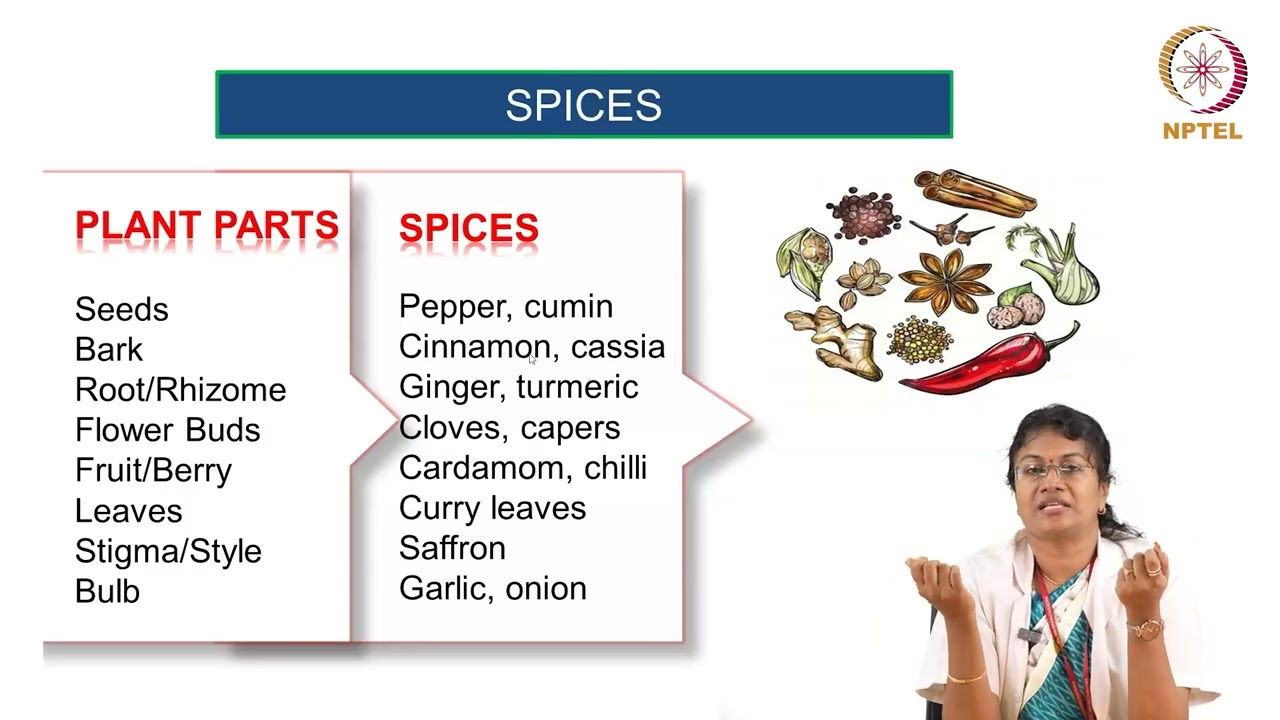
The session transitions to spices, classifying them based on the parts of plants from which they originate, such as seeds, roots, and fruits. Various spices are identified by their flavour profiles—mild spices like coriander and cumin, pungent spices like ginger and mustard, and sweet spices like cinnamon and cardamom.
Active Principles of Spices
The video discusses key active compounds found in various spices, such as piperine in black pepper, capsicin in chili, and curcumin in turmeric. Each compound is linked with specific health benefits, including anti-inflammatory and antioxidant effects, enhancing the understanding of how these spices can contribute to health.
Common Spices and Their Uses
The characteristics and uses of common spices are highlighted. Black pepper from Kerala and chilies offer pungency and vitamin benefits. Turmeric, rich in curcumin, is noted for its antioxidant properties. Ginger aids digestion, cloves provide antiseptic benefits, and cinnamon is highlighted for its blood sugar regulation effects.
Culinary Applications and Health Benefits of Spices
Spices significantly impact flavour, colour, and preservation in food. They enhance appetite and stimulate digestion while providing numerous health advantages, including anti-cancer and anti-inflammatory properties. Regular consumption of these spices can be beneficial for overall health, contributing to functional food development.
Storage and Adulteration of Spices
Proper storage practices for spices are necessary to maintain quality. They should be kept in airtight containers away from light and moisture, with whole spices lasting longer than ground ones. Adulteration risks are discussed, outlining common adulterants used to dilute the quality of spices, which can be identified through specific tests.
Conclusion and Final Thoughts
The video concludes by reaffirming the significant role spices and condiments play in both culinary and health contexts. Their active compounds contribute to flavour, health benefits, and overall quality in food science. Adherence to proper storage and quality standards ensures that these ingredients remain beneficial for consumers.

