
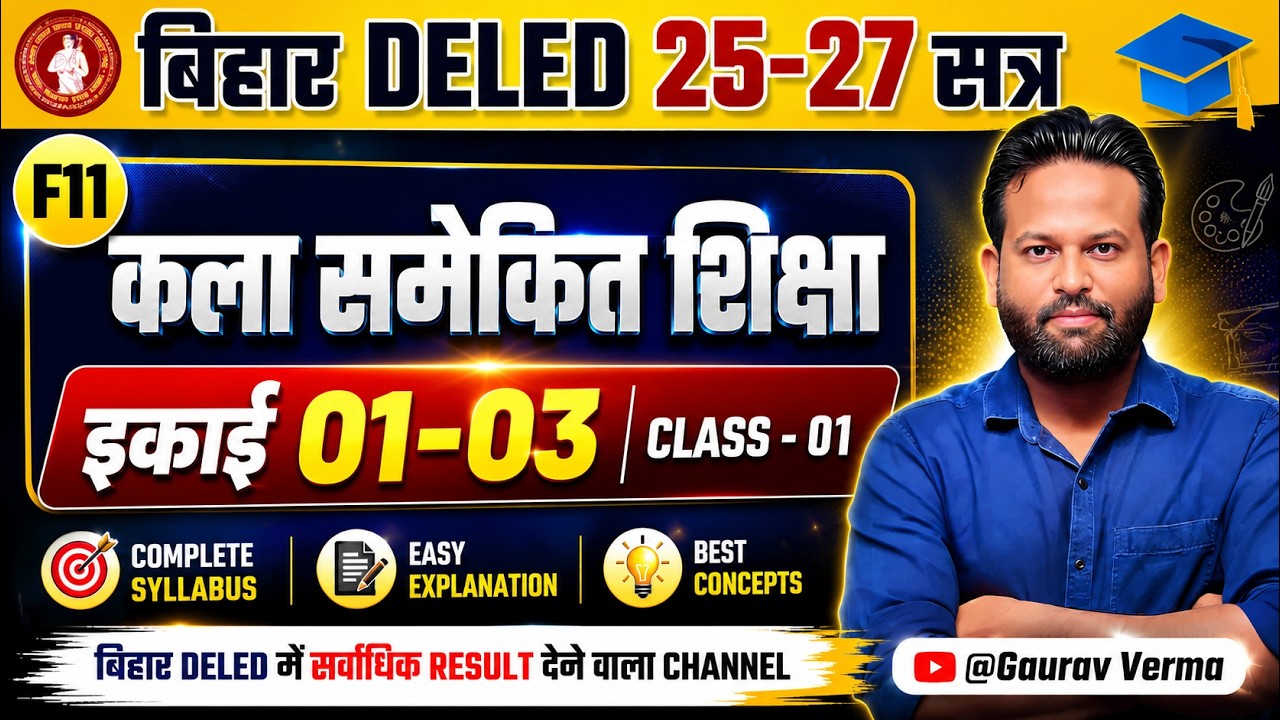
Brief Summary
The video provides a comprehensive overview of the topic of Integrated Arts Education (कला समेकित शिक्षा) as covered in the session. It discusses the meaning and significance of arts within education, distinguishing between different types of arts and their applications in teaching.
- Integrated Arts Education enhances creativity and cognitive skills in students.
- The session highlights the importance of engaging students through both visual (रूपात्मक) and performing arts (गत्यात्मक).
Introduction and Session Start
The lesson begins with the instructor confirming that there are no issues among the students and that they should focus on their attendance. The session starts promptly at 8:30 am, with an emphasis on the importance of punctuality. This time, they will continue from the previous topic covered earlier in the morning, which was about the F10 subject, now moving on to F111, titled Integrated Arts Education.
Meaning of Arts
The instructor explains that arts are fundamentally an enjoyable process, not confined to singing or dancing but encompassing all skills-related activities. The essence of art, according to the teacher, is beauty and creativity, which provides joy and satisfaction when engaged with one's interests. Students are encouraged to reflect on their understanding of art's meaning in the context of education.
Types of Arts
The discussion transitions into the classification of arts into visual arts (रूपात्मक कला) and performing arts (गत्यात्मक कला). Visual arts include activities like painting and sculpture, while performing arts comprise dance and music. Each type is explored in detail, with examples provided, illustrating the breadth of activities that fall under these categories.
Integrated Arts Education Definition
The teacher defines Integrated Arts Education as an approach where a teacher employs various forms of art to convey complex concepts in subjects like Mathematics. The integration of arts aids in developing a deeper understanding and retaining knowledge, enhancing students’ creativity and engagement.
Benefits of Integrated Arts Education
The instructor emphasizes the benefits of integrating arts into education, such as improved cognitive skills, creativity, and expressive abilities among students. The process creates an enriching environment where artistic activities promote not only learning but also the joy of exploring subjects through different mediums.
Significance in Early Education
The importance of integrating arts right from early education stages is discussed. The National Education Policy 2020 emphasizes creating an engaging school environment where children can grow fond of their school through artistic activities. A creative approach helps children connect with their surroundings through hands-on experiences.
Implementation in Classroom
Techniques for effectively implementing Integrated Arts Education in classrooms are presented. Educators are encouraged to utilize teaching aids and materials to facilitate arts-based learning, making lessons more dynamic and interactive.
Performing Arts Overview
The focus shifts to Performing Arts, defining it as the manifestation of culture and creativity through live expression. It includes drama, music, and dance, serving as an essential medium for students to express themselves while enhancing teamwork and social skills.
Conclusion and Future Lessons
As the session wraps up, the instructor confirms the key points covered and the importance of arts in education. There’s an indication of continuing this discussion in future sessions, encouraging students to remain engaged and curious about the topics being taught.

