
Brief Summary
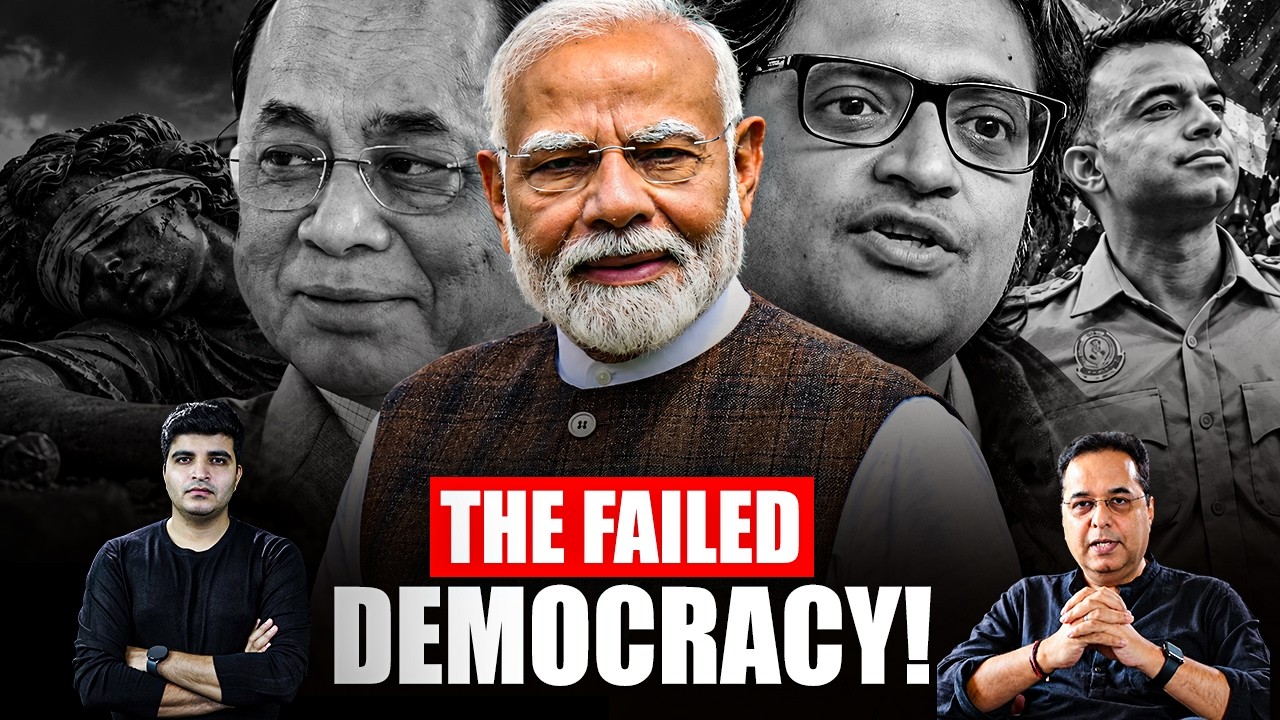
This video discusses the current state of democracy in India, highlighting the concerns raised by the opposition about the threat to democratic values under Narendra Modi's governance. The speakers explore the erosion of democratic institutions, including the judiciary, executive, legislature, and media, and emphasize the importance of restoring accountability in these systems for a healthy democracy.
- Democracy is seen as under threat due to the current government's actions.
- The discussion covers the corruption in governance and the decline in public trust in institutions.
The Threat to Democracy
The video begins with the claim that democracy in India is under threat due to the manner in which Narendra Modi operates. Discussions center around why democracy is essential and what constitutes its foundation. There are concerns regarding corruption, particularly mentioning how people aim to pass exams like UPSC for corrupt practices. The narrative shifts to discuss the ideological influences on democracy, suggesting that the country has devolved into a state of chaos without meaningful checks on power.
The Role of Institutions
The speakers discuss the four pillars of democracy – judiciary, executive, legislative, and media – and illustrate how these institutions have lost their integrity. They argue that the system has largely become commercialized, where money drives the functioning of these pillars, undermining the original purpose of serving the public. The discussion also points out that the corruption within these institutions has escalated since 2014.
Experience and Corruption
The conversation continues with personal experiences regarding the UPSC examinations and how candidates often enter the civil service with ideals but succumb to corruption. The discussion highlights moral decay, suggesting that this behavior is symptomatic of a larger societal problem. The contrast between the past and present in public service is emphasized, indicating a shift towards self-serving motives.
Judiciary and Justice
Focus turns to the judicial system. The speakers express a lack of trust in the judiciary, asserting that people believe they cannot achieve justice due to the systemic corruption. They reference judicial controversies and judgments as examples of a biased system that fails to deliver justice impartially.
Media's Role in Democracy
The role of media in shaping democratic discourse is examined. The discussion labels various media outlets as compromised and suggests that they no longer fulfill their duty to inform the public accurately. The influence of government advertising on media narratives is critiqued, highlighting a significant departure from journalistic integrity.
Restoring Democracy
The need for restructuring democratic institutions is emphasized as an urgent task. The speakers argue that a complete overhaul is necessary to revive true democratic values. They discuss the importance of public activism and sensitivity towards injustices faced by various community members to restore faith in democracy.
Reflections on the Future
In conclusion, the discussion reflects on the need for the public to become more aware and involved in safeguarding democracy. The speakers urge viewers to consider their social responsibilities and the interconnectedness of various societal issues as pivotal in reinstating a more humane and sensitive approach to governance.

