
Brief Summary
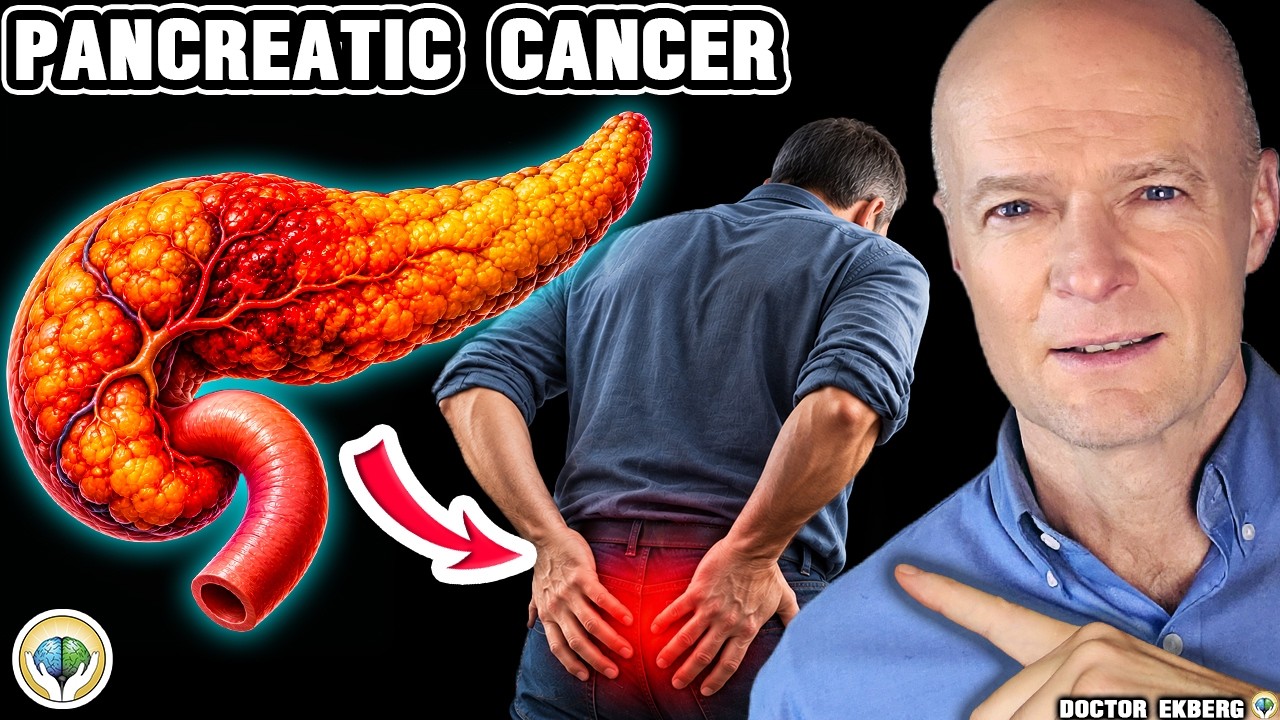
Pancreatic cancer has one of the lowest survival rates primarily because early detection is rare due to subtle signs. Dr. Ekberg outlines the complex anatomy of the pancreas, explaining why cancer symptoms often remain unnoticed until later stages. He details early signs such as sudden diabetes onset, unexplained weight loss, early satiety, vague discomfort, and mild nausea. As the disease progresses, he discusses more serious signs, including painless jaundice, pale stools, midback pain, migratory blood clots, and severe weight loss accompanied by muscle degradation. Understanding these signs is crucial for early detection and intervention.
- Early detection of pancreatic cancer is critical for improving survival rates.
- The signs are subtle and can easily be overlooked, emphasizing the importance of awareness.
Understanding Pancreatic Cancer
Pancreatic cancer is challenging to detect early, accounting for its low survival rates. Over 80% of cases are caught at a late stage due to the insidious nature of the signs. The video emphasizes the importance of recognizing early symptoms, discussing how pancreatic tumors grow slowly and often remain asymptomatic until significant complications arise.
Anatomy and Pain Sensation
The pancreas's location behind the stomach and its proximity to other organs contribute to the difficulty in detecting cancer. It has minimal pain sensation, making it hard to identify tumors in their early stages when they are small. Early-stage tumors typically do not cause pain until they grow large enough to exert pressure on surrounding structures.
Sign One: Sudden Onset of Diabetes
The first sign of potential pancreatic cancer is the sudden onset of diabetes after the age of 50. This can occur when a tumor disrupts the insulin-producing beta cells in the pancreas. Unlike typical type 2 diabetes, this form results in low insulin production, which often goes unrecognized as doctors attribute it to more common diabetes risk factors.
Sign Two: Unexplained Weight Loss
Unexplained weight loss suggests underlying health issues, particularly when it's not associated with any lifestyle changes. It may stem from loss of insulin impacting nutrient absorption or inflammation due to tumor growth, which can increase metabolic rates and lead to weight loss unnoticed at early stages.
Sign Three: Early Satiety
Early satiety occurs when individuals feel full sooner than expected, potentially indicating a tumor in the pancreas. As tumors press on the duodenum, they slow gastric emptying, leading to a rapid feeling of fullness. While not definitive alone, this symptom alongside others raises the potential for serious health concerns.
Sign Four: Vague Upper Abdominal Discomfort
A vague discomfort in the upper abdomen, described as dull or pressure-like, may be a sign of a larger tumor causing pressure on surrounding organs. Often mistaken for common digestive issues, this discomfort can indicate something more significant, necessitating attention if persistent.
Sign Five: Mild Intermittent Nausea
Mild intermittent nausea, which does not occur consistently, can arise from various causes, including slow gastric emptying and inflammation from tumor growth. This sign often goes unreported to medical professionals, making it another subtler symptom that could signal pancreatic issues.
Sign Six: Painless Jaundice
Painless jaundice occurs when bile ducts become blocked due to tumor growth, leading to the accumulation of bilirubin in the blood. Unlike jaundice caused by gallstones, which is often painful and sudden, the tumor-induced jaundice develops gradually, often going unnoticed for an extended period.
Sign Seven: Pale Stool
Pale or greasy stools indicate bile blockage, potentially from a tumor. When bile cannot efficiently enter the intestines, stool lacks the usual brown color, and undigested fat can make stools appear greasy. This symptom indicates advanced stages of tumor growth.
Sign Eight: Midback Pain
Midback pain that worsens when lying flat can indicate recalcitrant invasion of nearby nerves due to an enlarged tumor. Unlike general discomfort, this pain is sharp, well-defined, and has specific positions that exacerbate it, signifying progression in pancreatic cancer.
Sign Nine: Migratory Blood Clots
Migratory blood clots can signal pancreatic cancer as tumors may release tissue factors that induce clotting. Patients may experience swelling and pain in limbs during these episodes, particularly if they occur without common risk factors for clotting, raising concern for underlying malignancy.
Sign Ten: Severe Weight Loss and Cachexia
Severe weight loss, or cachexia, is a later-stage symptom associated with advanced pancreatic cancer. This significant loss of muscle and fat is driven by systemic effects from the tumor that hijack body metabolism, causing rapid tissue breakdown irrespective of dietary intake or appetite issues. This striking change marks advanced disease severity.

