
Brief Summary
The video discusses children and family life in the American colonies, focusing on the Enlightenment's impact on education and childhood. It highlights how colonial attitudes, especially in Puritan New England, led to revolutionary ideas about early childhood education and literacy.
- Education in colonial New England was compulsory and publicly funded.
- Enlightenment thinkers like John Locke and Jean-Jacques Rousseau significantly influenced attitudes toward childhood and education.
Education in the American Colonies
The video begins by outlining children's education as a notable aspect of colonial life, particularly in Puritan New England. In 1650, laws were established mandating public primary schools in towns with 50 households or more, marking the first instance of compulsory education in the world. These schools focused on early literacy and were driven by the Puritan desire for children to read the Bible. This progressive education approach led to dramatically higher literacy rates compared to Europe, with statistics detailing literacy among different groups in the colonies just before the American Revolution.
The Enlightenment Discovery of Childhood
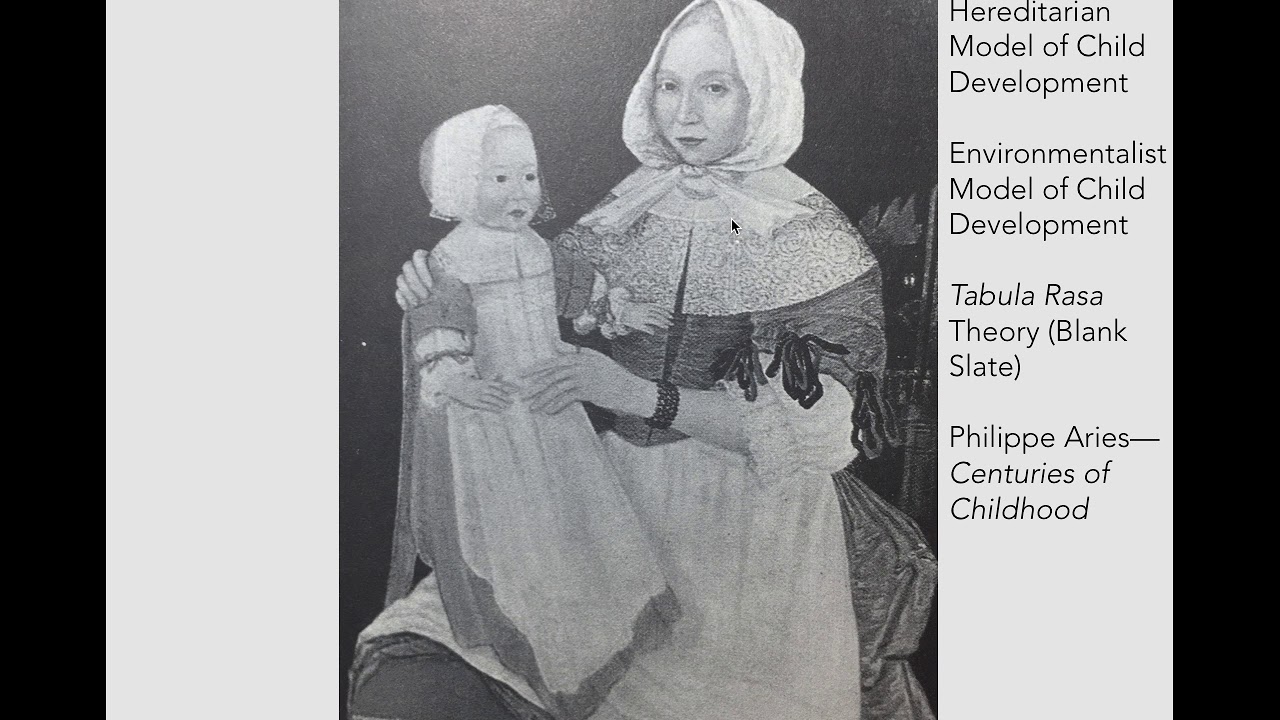
The subsequent chapter discusses the Enlightenment's role in redefining childhood. Prior to this period, children were viewed as small adults expected to labor and conform quickly to adult roles. Enlightenment thinkers, including Locke and Rousseau, introduced the idea that children are blank slates, shaped by education and environment rather than hereditary traits. This shift marked a transformation in societal perceptions, leading to a greater emphasis on nurturing children and providing them with education that recognized their unique developmental stage.
John Locke's Educational Theory
The video then delves into John Locke's ideas from his book "Some Thoughts Concerning Education," which revolutionized childhood education. Locke challenged previous notions that children were inherently sinful and advocated for treating children as rational beings who learn through reason. He emphasized the importance of educational environments over harsh punishment and encouraged making learning enjoyable. Locke's concept of the "tabula rasa" shaped the belief that children were full of potential, and his educational methods stressed the value of nurturing their development instead of enforcing strict discipline.
Rousseau's Radical Approach
Jean-Jacques Rousseau's "Emile," written in 1762, builds upon Locke's ideas but presents an even more radical approach to education. Rousseau criticized Locke for focusing on intellectual training and argued that children should enjoy a natural state of freedom without forced learning. He favored education through experience, allowing children to learn by doing rather than through traditional teaching methods. Rousseau’s emphasis on the child's right to play and explore their emotions contrasts with Locke's structured approach and highlights the evolving ideas about childhood in the Enlightenment period.
Impact on American Colonial Life
The concluding chapter discusses how the philosophies of Locke and Rousseau influenced life in the American colonies. By the mid-1700s, many parents adopted new teaching methods encouraged by these Enlightenment thinkers. Changes in children's clothing and the introduction of furniture designed for children marked a recognition of childhood as unique. The video illustrates how these concepts of childhood and education became integrated into American culture after 1700, leading to a new understanding and celebration of childhood as a distinct stage of development, ultimately influencing family life in the colonies.

