
Brief Summary
This lecture discusses the events leading to the American Revolution, focusing on the series of acts and taxes that escalated tensions between the American colonies and the British Parliament. Key points include the role of class grievances, particularly how colonial elites redirected lower-class anger towards Britain, the imposition of various taxes, the response to the Townshend Acts, the Boston Massacre, and the eventual movement toward independence culminating in the Declaration of Independence.
- Tensions between colonies and Parliament escalated through a series of taxes and legislative acts.
- The Boston Massacre highlighted class conflicts and fueled revolutionary sentiments among the colonists.
- The Tea Act led to significant protests, including the Boston Tea Party, which prompted punitive measures from the British.
- The First and Second Continental Congresses set the stage for independence as colonists increasingly rejected British authority.
Introduction & Overview
The lecture introduces the subject, marking the final part of a series on the road to revolution. It emphasizes the importance of understanding the progression of events that led to the American Revolution, focusing on key acts and taxes that aggravated relations between the American colonies and the British Parliament.
Class Tensions and Acts
In this segment, the speaker discusses the class tensions evident during the pre-revolutionary period. Howard Zinn's perspective is presented, highlighting how colonial elites diverted working-class grievances away from themselves and towards the British government. Zinn argues that the radicalized lower classes were manipulated to preserve the elite’s privileged position, setting the stage for revolution, which notably excluded women, slaves, and Native Americans in its call for independence.
Stamp Act and Other Legislation
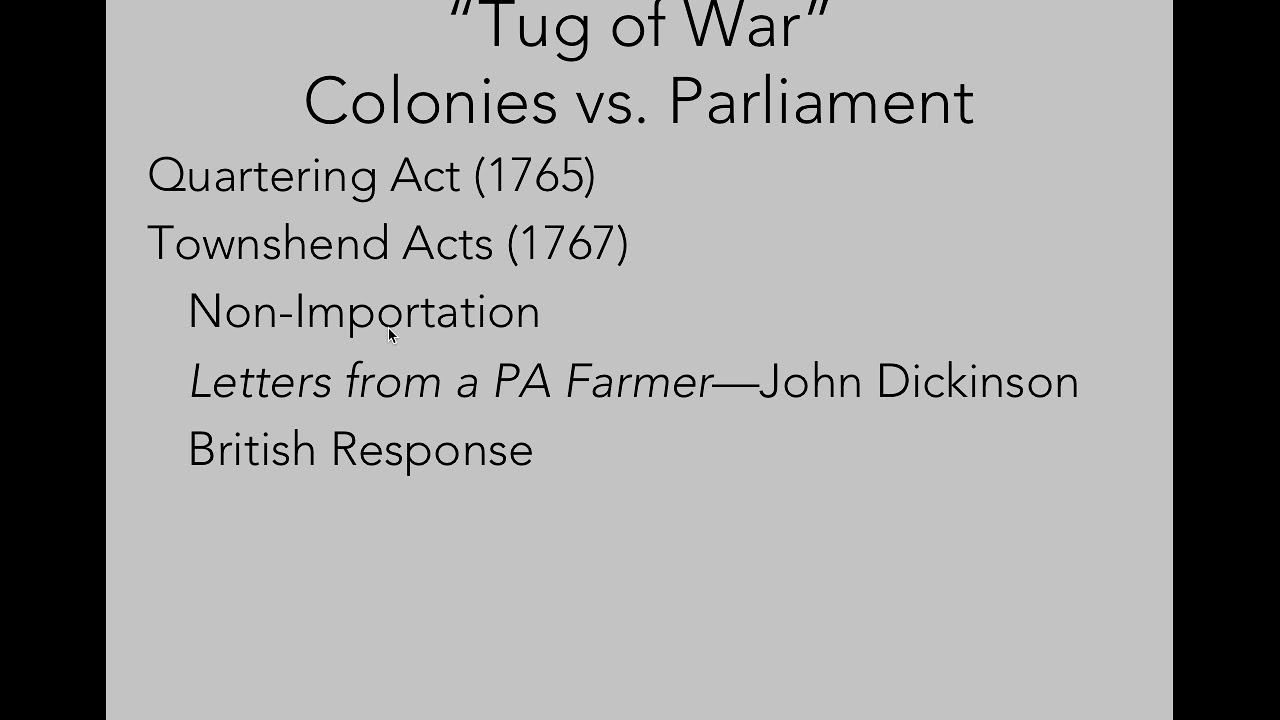
This chapter focuses on the Stamp Act and its repeal, followed by the Declaratory Act, asserting Britain’s authority to tax the colonies. The anger from the repeal of the Stamp Act transitioned into resentment towards new oppressive legislation, such as the Quartering Act, which required colonists to provide housing for British soldiers. The inability of colonies to comply with these acts, particularly New York, further intensified tensions.
Taxation and the Townshend Acts
The narrative continues with an examination of the Townshend Acts, which included various taxes on imports like glass and tea. By the time these acts were introduced, public sentiment had radicalized, and many colonists vehemently opposed both internal and external taxes. The widespread boycotts of British goods, organized notably by the Daughters of Liberty, significantly impacted British merchants and contributed to the repeal of most Townshend duties, except for the tax on tea.
The Boston Massacre
The Boston Massacre is explored as a pivotal moment in escalating revolutionary fervor. The event, precipitated by tensions between British soldiers and local laborers competing for jobs, resulted in the death of five colonists and galvanized anti-British sentiment. Despite a temporary calming in relations following the incident, radical leaders used the event to further their cause through pamphlets and groups like the Committees of Correspondence.
The Tea Act and Boston Tea Party
The chapter discusses the Tea Act of 1773, designed to assist the struggling East India Company. However, colonists viewed it as a veiled attempt to assert Parliament's tax authority over them. The ensuing Boston Tea Party, where colonists dumped tea into the harbor as a protest, incited severe British retaliation through the Intolerable Acts.
The Intolerable Acts and Colonial Response
In response to the Boston Tea Party, the British enacted the Intolerable Acts, which aimed to punish Massachusetts and suppress dissent. These laws included the closing of Boston Harbor and altering Massachusetts's governance structure, stripping it of democratic elements. This led to increased unity among the colonies in support of Massachusetts.
Quebec Act and Continental Congress
This section covers the Quebec Act and its perceived threat to colonial interests by extending Quebec's borders. The increasing demands for a colonial assembly culminated in the First Continental Congress, where delegates expressed opposition to British rule and proposed collective action against the Intolerable Acts.
Second Continental Congress and Independence
The Second Continental Congress convened with more radical ideas as all thirteen colonies were represented. As King George III ignored their Olive Branch Petition, sentiments toward full independence gained traction. Thomas Paine's pamphlet "Common Sense" played a critical role in swaying public opinion towards declaring independence, which was ultimately proposed by Richard Henry Lee.
Declaration of Independence
The lecture concludes with the drafting and signing of the Declaration of Independence on July 4, 1776. This pivotal document, influenced by Enlightenment thinkers like John Locke, articulated the colonies' justification for seeking independence, despite its exclusions of women, slaves, and Native Americans. The Declaration set a historical precedent for future movements, highlighting the ideologies shaping the American Revolution.

