
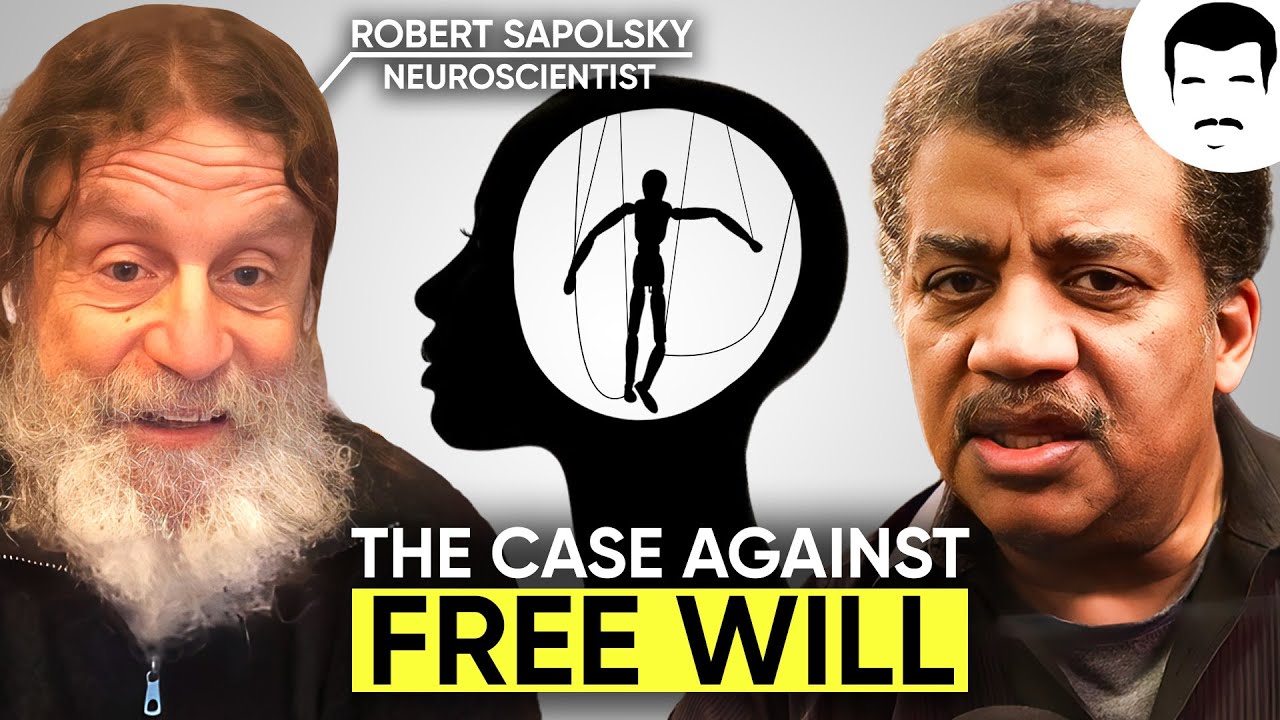
Brief Summary
In this episode of StarTalk, Neil deGrasse Tyson engages with neuroscientist Robert Sapolsky to explore the concept of free will, discussing its implications on society and morality. They investigate how biological and environmental factors shape human behavior and challenge the traditional views of individual accountability.
- Free will is questioned in light of biological determinism and environmental influences.
- Societal and moral implications arise if free will is deemed an illusion.
- Neuroscience and chaos theory provide insights into decision-making processes.
Introduction: Free Will
Neil deGrasse Tyson introduces the topic of free will with guest Robert Sapolsky, emphasizing how previous discussions on the subject led to deeper inquiries about personal responsibility and morality. The conversation begins with Sapolsky sharing his early realization about the non-existence of free will, which framed his scientific and philosophical outlook.
The Impacts of Biology & The Hungry Judge Effect
Sapolsky discusses how biological factors, such as hunger and lack of sleep, influence decision-making, citing the "hungry judge effect." Studies reveal that judges tend to deliver harsher sentences when they are hungry, illustrating how external states can inadvertently affect judgment, thus raising questions about the fairness of decisions. This challenges the notion of individual accountability, as subtle physical conditions can skew perceived objectivity.
The Physicist Perspective on Free Will & Chaos Theory
The discussion shifts to a physicist's view, explaining the cause-and-effect chain of actions and determinism in behavior. Sapolsky connects chaos theory to human actions, illustrating that small changes in initial conditions can lead to unpredictable results, thus complicating the idea of free will. This perspective emphasizes how historical moments and biological predispositions shape every decision.
Is It Good To Think We Have Free Will?
Sapolsky argues that believing in free will can have detrimental societal effects, as it suggests individuals are solely responsible for their fate. This belief can justify inequality and harsh treatments for those who struggle, diverting attention from systemic issues and the influence of biology on behavior. Acknowledging a lack of free will might foster compassion and understanding instead.
Free Will in Big Decisions vs. Small Decisions
Tyson and Sapolsky differentiate between major life choices and daily decisions. They argue that while the allure of free will feels apparent in minor choices, deeper influences create an illusion of autonomy. This perspective underlines how various factors, including upbringing and societal pressures, shape preferences and decisions.
Quantum Physics & Randomness
Quantum physics is introduced into the discussion, highlighting the role of randomness in the universe. Sapolsky notes that quantum randomness does not equate to free will, as it only introduces unpredictability rather than the conscious choice. Recognizing the limits of randomness and its difference from free will is crucial for understanding human behavior.
Does Lack of Free Will Explain Everything?
The conversation explores whether the absence of free will can clarify human actions and social issues. Sapolsky suggests that recognizing biological influence helps understand behaviors historically condemned, shifting societal focus from punishment to rehabilitation. This re-evaluation prompts a more nuanced understanding of morality and justice.
How Does Society Need to Change?
Sapolsky advocates for societal changes in response to the belief that free will is an illusion, calling for compassion and understanding toward individuals shaped by uncontrollable factors. The conversation emphasizes the need for a system that prioritizes nurturing rather than punishment, ultimately fostering a more humane approach to justice and rehabilitation.
What If You Could Do Anything You Want?
Tyson questions what would happen if individuals had absolute freedom with no consequences. Sapolsky asserts that most people would not engage in harmful behaviors, highlighting the importance of societal norms, personal values, and ecological influences that govern behavior beyond mere legal constraints.
How Do Change a Culture If There’s No Free Will?
The dialogue transitions to cultural transformation, emphasizing the intertwined nature of biology and culture in shaping societal behaviors. Sapolsky suggests focusing on education and understanding the roots of behaviors, proposing that promoting compassion can lead to cultural shifts, while acknowledging existing biological precursors.
Giving Up Meritocracy
Sapolsky challenges the traditional notions of meritocracy, arguing that success is often influenced by factors beyond personal control, such as socioeconomic background. Acknowledging this complexity invites a reevaluation of societal structures that reward or punish individuals based on circumstances they did not choose.
Factoring in Accountability
The need for redefining accountability arises in the context of recognizing the limits of free will. Sapolsky discusses how understanding biological and environmental influences demands a shift in attitudes toward personal responsibility while also allowing for appropriate measures to manage harmful behaviors.
Do We Have Free Will To Determine Whether We Believe in Free Will?
The conversation concludes with a reflection on the paradox of believing in free will. Tyson and Sapolsky explore how individuals may question their beliefs and choices while acknowledging that underlying biological and cultural factors drive perceptions of agency. This cyclical contemplation highlights the intricate relationship between belief and understanding in the context of human behavior.

