
Brief Summary
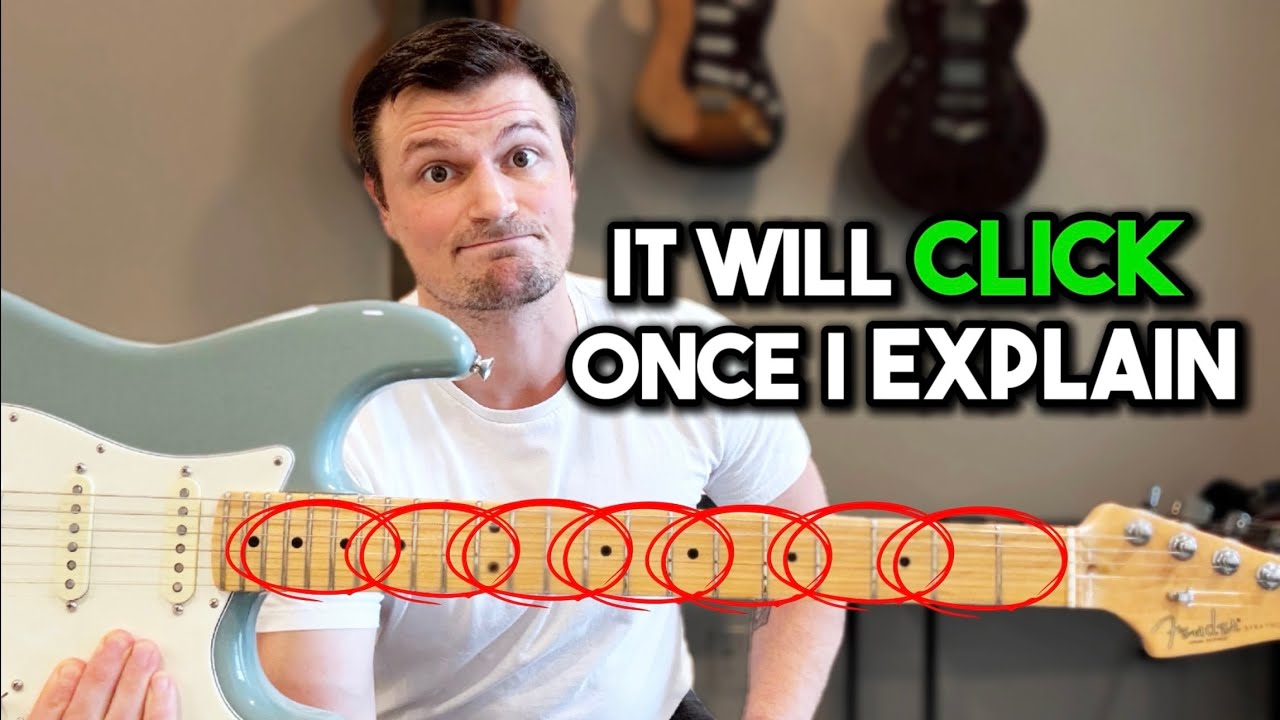
This video offers a comprehensive guide on how to effectively map out the guitar neck for better navigation during soloing and improvisation. It breaks down the process into four key steps:
- Learning simple shapes to create a framework for the neck.
- Reinforcing the understanding of each position thoroughly.
- Using these shapes to improvise and create lead lines.
- Moving the shapes across the neck for versatility in playing.
Introduction
The video starts with an introduction to the concept of mapping the guitar neck. The presenter expresses a desire for this knowledge earlier in their playing journey, emphasizing its potential to enhance skills significantly. They highlight the importance of the lesson for players struggling to navigate the fretboard while soloing and outline the four steps to be covered in the video.
Step 1: Learning The Shapes
The first step involves learning five essential pentatonic shapes within the key of G major, which corresponds with E minor. The presenter explains the significance of recognizing these shapes as foundational elements for improvisation. They encourage viewers to practice each shape individually, providing a variety of finger positions to solidify familiarity. The shapes connect together, making it easier to transition through different parts of the neck.
Step 2: Reinforce Each Position
In this step, the focus is on reinforcing the learned shapes. The presenter stresses the importance of embedding these shapes into muscle memory for better fluidity when playing. They recommend using a metronome to practice shifting between shapes, highlighting the need for consistent repetition. The goal is to develop an understanding of how the shapes connect across the neck, facilitating smoother transitions during performances.
Step 3: Use The Shapes To Improvise
The third step discusses applying the learned shapes to improvisation. The presenter suggests using a backing track, particularly in G major or E minor, to experiment with integrating small licks. They recommend practicing connecting two shapes at a time to build confidence in improvisation, eventually increasing the complexity by adding more shapes. This encourages creativity while developing personalized lead lines.
Step 4: Move The Map Around The Neck!
The final step emphasizes the importance of transposing shapes to other keys. The presenter explains how to quickly adjust shapes for different keys, enhancing versatility while playing with other musicians. They demonstrate how understanding the relationship between major and minor keys can simplify this process. Mastering this ability allows guitarists to participate seamlessly in various musical contexts, boosting their confidence and skill level.

