
Brief Summary
In this video, the instructor teaches a simple method for soloing over various types of songs focusing on major and minor tonalities using minimal music theory. This approach allows for effective improvisation across different musical styles.
- The soloing system uses two basic categories: major and minor.
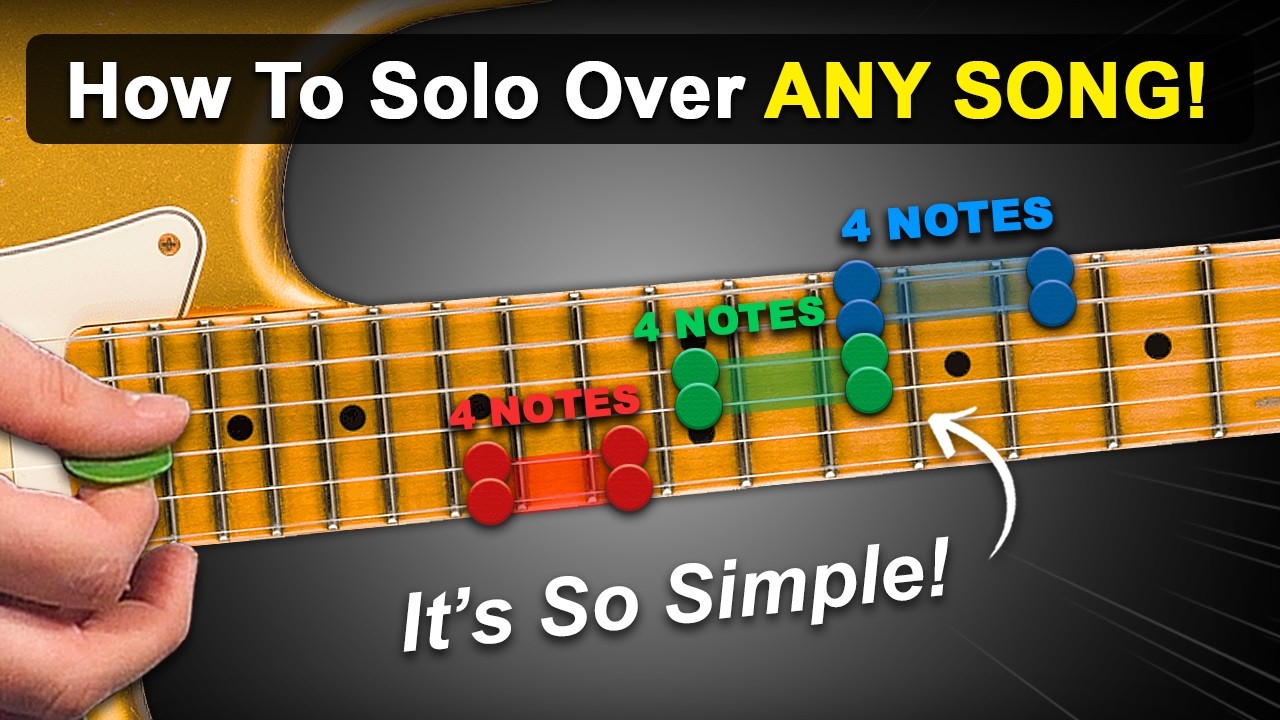
- The fretboard technique utilizes four-note groups expanded across three octaves.
Introduction to Soloing
The instructor introduces a method for soloing with minimal music theory, emphasizing the effectiveness of major and minor tonalities. He encourages viewers to stay until the end for a free gift related to the lesson.
Understanding Tonalities
The soloing system focuses on major and minor tonalities, which allow for extensive musical expression. This section explains how to determine the appropriate tonality for a given track, using the key of A as an example.
Minor Tonality Technique
The video details the minor tonality, starting with a four-note grouping from the minor pentatonic scale. The instructor demonstrates how to map these notes across three octaves on the fretboard, providing a solid foundation for crafting solos.
Expanding to Major Tonality
Transitioning to major tonality, the instructor explains how to find the corresponding notes for the major scale using the same four-note system across three octaves. He shows where these notes are located on the fretboard.
Applying the System in Musical Context
The instructor demonstrates his method by soloing over a blues track, illustrating the balance between major and minor tonalities. He highlights the importance of varying note patterns and adding embellishments to enhance musicality.
Major vs. Minor in Different Styles
Using different backing tracks, the instructor showcases how to lean into major or minor tonalities depending on the music style. He emphasizes the adjustments made for pop rock tracks as compared to straight-ahead rock, noting the differences in tonal properties.
Summarizing the Method
The instructor wraps up by reinforcing the method's versatility across any musical key, acknowledging that players can trust their instincts when experimenting with major and minor tonalities. He introduces a free gift, the "fretboard conveyor belt," to help viewers learn the fretboard better.

