
Brief Summary
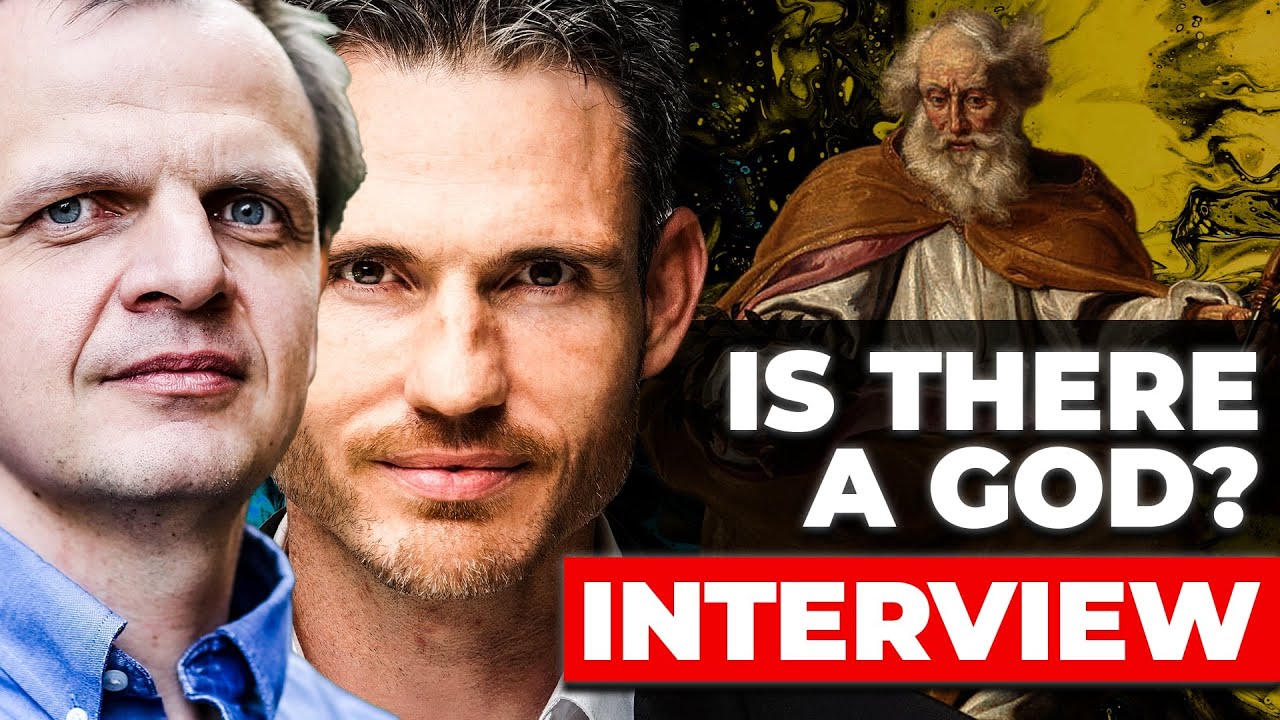
In this video from the Majesty of Reason channel, Joe Schmidt engages with Dr. Alexander Puce and Dr. Josh Rasmannson about their upcoming book on the concept of a "perfect existence." The discussion revolves around the "perfect theory," which proposes that the fundamental nature of reality is that of a perfect being possessing all perfections. They explore various philosophical arguments surrounding the existence of a necessary foundation for reality, the nature of perfection, and implications for theism, including cosmological arguments and the characteristics of a necessary being.
- The discussion focuses on the nature of perfection and its implications in defining reality.
- They explore arguments for the existence of a necessary foundation and its relevance to theism.
Introduction of the Perfect Theory
Joe Schmidt introduces Dr. Alexander Puce and Dr. Josh Rasmannson, who are collaborating on a book about the fundamental nature of reality, termed the "perfect theory." Josh mentions waiting for a response from a publisher before they can proceed with writing. He reveals that the book aims to explore the notion that fundamental reality is perfect in a specific sense, which both he and Dr. Puce further delve into throughout the discussion.
Defining Perfection
Alex presents his idea of perfection, suggesting there exists something (X) such that if any property (P) represents perfection, then X possesses P. The conversation shifts to how to define perfection, where they agree that it entails value but may not have a singular definition, suggesting that it relates to properties that contribute to greatness.
Justification for the Perfect Theory
Alex argues that a simple theory describing fundamental reality as perfect is preferred. They acknowledge that the theory must be logically coherent and not predict false phenomena, such as evil and suffering. Josh raises concerns over whether the perfect theory can predict the existence of benevolent and intelligent beings, balancing between explanatory and predictive successes of the theory.
Weaknesses of the Perfect Theory
Josh elaborates on the lack of overwhelming probabilities related to intelligent beings under the perfect theory but maintains that it does not render the theory completely inadequate. He suggests that the perfect theory may hold a decent chance of existence when compared to alternative theories which could predict outcomes with less coherence.
Cosmological Arguments
The group discusses cosmological arguments as a way to bridge the gap between necessity and divine nature. Josh highlights that contingent things require explanations, leading to the conclusion that there must be a necessary foundation. Alex mentions that without a principle of explanation, predictions about reality would be impossible, undermining empirical reasoning.
Explaining Contingent Existence
The conversation includes the idea that non-entitative explanations might suffice for the existence of contingent things. They question whether mere absence of explanation can lead to understanding the necessity of dependent things without invoking an entity to do the explaining, discussing various potential theoretical frameworks that could support this idea.
The Nature of the Necessary Foundation
Discussion shifts to the characteristics of a necessary foundation, where Josh outlines that a foundational reality could not merely adopt arbitrary forms, such as a shoe, but rather would embody a uniquely perfect essence. This establishes a foundation for why such an entity can be considered distinct from mere dependent entities.
Exploring Perfection in Theology
The group weighs in on whether the nature of the necessary foundation must also be perfect. Alex contemplates how perfection could be a relevant differentiator in terms of theistic interpretations, examining how arbitrary features might flow from a deeper understanding of reality and its foundations.
The Trinity and Arbitrary Features
Josh questions if the characteristics of the Trinity present an arbitrary limit on God's nature and how this interacts with arguments for perfection. Alex counters that a lack of deeper explanations might prompt theological revisions, citing classical interpretations of the Trinity among various philosophers, potentially offering non-arbitrary explanations for its three-personal nature.
Final Thoughts & Wisdom in Philosophy
In closing, Josh expresses the importance of having fun in philosophical discussions, reiterating the strangeness of reality and how it can inspire new and interesting ideas. They finish with a light-hearted conclusion, emphasizing camaraderie and the enjoyment of philosophical inquiry.

