
Brief Summary
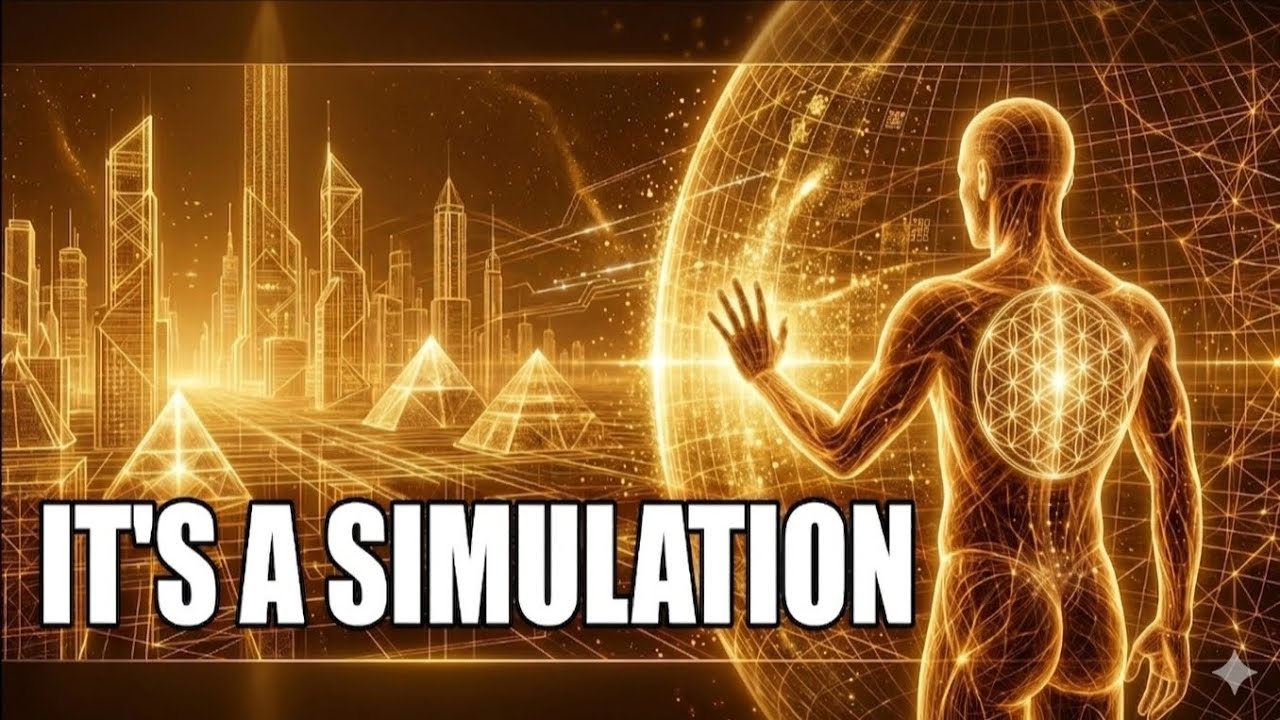
This video explores the concept of the holographic principle, highlighting its implications for understanding reality and consciousness. Key takeaways include:
- The universe may function as a hologram, with three-dimensional experiences emerging from two-dimensional information.
- Observers play an active role in rendering reality through their attention and perception.
- Conscious observation can alter the quality of experiences and interactions with the perceived world.
Introduction: Dissecting the Structural Density of the Holographic Lattice
The video begins by presenting a common experience where reality feels less solid, suggesting that our perception of the world may not reflect its true nature. This feeling hints at a deeper understanding of reality supported by theoretical physics over the past few decades. It introduces the idea that the universe functions more like a hologram than a solid three-dimensional space. This principle is not merely speculative; it has emerged as a significant proposition within the scientific community, reshaping how we understand consciousness and existence.
Rendering Mechanics: How the Core Observer Projects Physical Geometry
The narrative shifts to focus on the observer's role in shaping reality, emphasizing that traditional physics views observation as passive. In contrast, quantum mechanics reveals that observation actively affects the system being observed. This is exemplified through the double-slit experiment, which illustrates that measurement alters the behavior of particles. Therefore, consciousness and observation are central to reality's construction, reinforcing the idea of an interconnected relationship between observers and the universe.
The Participatory Framework: Dismantling the "It From Bit" Data Architecture
The video discusses John Archibald Wheeler's "it from bit" doctrine, suggesting that physical reality originates from information rather than matter or energy. This participatory universe posits that reality is co-created through observation, meaning observers are integral to the ongoing process of reality formation. The notion that observation creates information challenges the traditional view of passive existence, suggesting a more active role in generating reality.
Real-Time Modulation: Calibrating the Local Screen from Internal Metrics
Emphasis is placed on how individual perspectives influence reality. Two people can experience the same event differently based on their internal states and focus. When consciousness dwells on positive possibilities, the projections of reality reflect those optimistic aspects, while fear or negativity leads to a limited viewpoint. This highlights the role of sustained patterns of attention in shaping one's reality and experiences.
Biological Decoders: How Neural Pathways Construct Environmental Fields
This chapter describes how neural pathways affect our perception and experience by forming sensory representations of the environment. It discusses the process through which the brain encodes information, linking our physiological responses to the non-physical aspects of reality. By understanding this connection, it's proposed that we can consciously influence our perception and, thus, our reality.
Final Synthesis: Establishing Total Sovereignty Outside the Render Loop
The video culminates by stressing the importance of conscious observation and the transformative power it holds. It advocates for the practice of acknowledging one's current state without judgment, allowing for a clearer connection to the deeper self beyond the immediate projections of reality. This practice leads to a more profound level of awareness that can shift perceptions and experiences, altering the way individuals interact with the world. The relationship between observation and reality is confirmed, emphasizing the power of conscious rendering in shaping life experiences.

