
Brief Summary
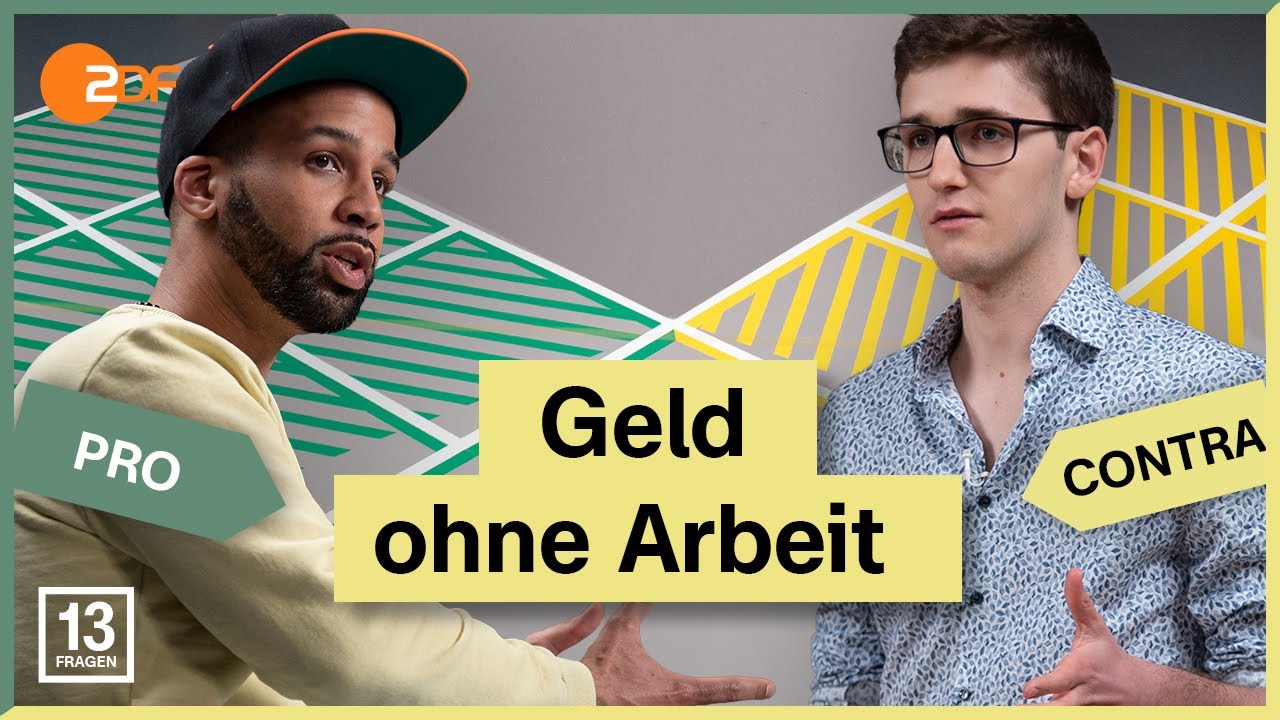
This YouTube video from ZDFheute Nachrichten explores the concept of a universal basic income (UBI) through a series of 13 questions posed to a panel of guests with differing viewpoints. The discussion covers various aspects, including the potential impact on employment, the economy, social justice, and individual freedom. Key points of contention include the feasibility and fairness of UBI, its potential effects on work motivation, and whether it would lead to a more equitable society. The video also explores compromise solutions, such as improving the existing Hartz IV system or providing a one-time financial boost to young adults.
- The core idea of UBI is to provide a regular, unconditional income to all citizens, regardless of their employment status or income level.
- Concerns are raised about the potential for UBI to disincentivise work, particularly in low-paying or undesirable jobs.
- Proponents argue that UBI could empower individuals, reduce bureaucracy, and foster a more innovative and productive society.
- The discussion explores alternative solutions, such as reforming the existing social welfare system or providing targeted financial support.
Intro
The video introduces the concept of a universal basic income (UBI) as a system where every citizen receives a monthly payment of €1200 from the state, regardless of their income or employment status. The central questions explored are who would pay for it and whether people would still work. The host encourages viewers to share their opinions and aims to find compromises on this complex issue.
Frage 1 // Brauchen wir ein bedingungsloses Grundeinkommen?
The video starts by asking whether a UBI is needed. The core idea behind UBI is presented as reducing existential anxiety and increasing freedom. The concept involves the state paying every citizen €1200 per month without any requirements or bureaucracy. The fundamental questions raised are: Who will pay for this? And will anyone still work?
Frage 2 // Würdest du aufhören zu arbeiten?
Karsten, a fourth-generation baker, is asked if he would stop working if he received a UBI. He responds that he would not, as baking and running his business are his passion. However, he acknowledges that some employees might choose not to work or demand better conditions, which could pose challenges for small businesses.
Frage 3 // Welche Auswirkungen würde ein bedingungsloses Grundeinkommen auf deinen Betrieb haben?
Karsten elaborates on the potential impact of UBI on his bakery. He anticipates that some employees might opt out of working, especially those who dislike the early hours. He also foresees employees demanding better working conditions, which he might struggle to provide. Karsten expresses concern that UBI proponents may not fully consider the challenges faced by small businesses and tradespeople.
Frage 4 // Kannst du die Sorge nachvollziehen, dass weniger Menschen eine Ausbildung machen wollen?
Tonia addresses the concern that UBI might disincentivise young people from pursuing apprenticeships, especially given the relatively low pay. She suggests that UBI could actually attract older individuals looking to change careers and pursue vocational training. However, the question remains about how to motivate younger generations to enter apprenticeships when a UBI might seem more appealing.
Frage 5 // Werden bestimmte Jobs nicht mehr erledigt?
Ole acknowledges that UBI could lead to a shortage of workers in low-paying and less desirable jobs, such as cleaning services. He argues that people in these roles might choose not to work if they have a guaranteed basic income. Mark counters that this could force employers to offer better wages and working conditions or redistribute the workload. He highlights that UBI could empower individuals to reject exploitative employment.
Frage 6 // Könnte ein bedingungsloses Grundeinkommen dazu führen, dass Arbeitgeber Dumpinglöhne zahlen?
Mark addresses the concern that employers might exploit UBI by paying lower wages, arguing that this can be prevented through political will and the enforcement of minimum wage laws. Ulrike suggests that instead of pursuing UBI, efforts should focus on raising the minimum wage to improve the situation for low-income earners.
Frage 7 // Ist das bedingungslose Grundeinkommen ungerecht?
Ole argues that UBI is inherently unfair because it provides the same amount of money to everyone, regardless of their individual needs. He uses the example of a person with a disability who requires more financial support. Mark counters that UBI should be seen as a basic human right, ensuring everyone's existence is secured, but it doesn't necessarily mean abolishing the existing social system that addresses specific needs.
Frage 8 // Sorgt ein bedingungsloses Grundeinkommen für weniger Bürokratie und mehr Sicherheit?
Tonia discusses how the COVID-19 crisis highlighted the need for a UBI, citing the bureaucratic hurdles and stigma associated with existing social safety nets. She notes that many self-employed individuals who were eligible for assistance during the pandemic did not apply due to fear of repercussions. Ulrike argues that implementing a UBI during a crisis would be impractical and too expensive, as it would also benefit those who are already employed.
Frage 9 // Was ist die Vision hinter dem bedingungslosen Grundeinkommen?
Mark clarifies that UBI is not about giving everyone more money but about redistributing existing wealth through higher taxes. He argues that UBI would provide people with security, ensuring they never live in poverty. The hope is that this security would enable people to make wiser decisions. Ulrike raises concerns about the potential for people to reduce their working hours and rely on UBI, which could strain the system.
Frage 10 // Seid ihr verbissen in Details und Umsetzbarkeit und seht die Vision hinter dem bedingungslosen Grundeinkommen nicht?
Karsten is asked if he is too focused on the practical challenges of implementing UBI and not seeing the bigger picture. Karsten acknowledges his concerns and anxieties, while Mark emphasises that his arguments are based on facts and research. He stresses that UBI should not be portrayed as a way to live a luxurious life without working, as this could lead to an inflationary spiral.
Frage 11 // Soll Hartz IV mit einem bedingungslosen Grundeinkommen ersetzt werden?
The discussion shifts to potential compromises, such as replacing the existing Hartz IV system with a UBI. While there is some support for this idea, Ulrike insists on maintaining the principle of "fordern und fördern" (challenging and supporting), which involves actively helping people find employment.
Frage 12 // Vorschlag Gelb: Der Hartz IV-Satz soll deutlich angehoben werden.
Ole proposes a compromise of radically improving the Hartz IV system, increasing the payment rate, and eliminating degrading practices by job centres. Ulrike agrees that the system needs improvement but insists on maintaining some level of control and conditionality to ensure that people are genuinely in need of assistance.
Frage 13 // Sollte jeder zum 18. Lebensjahr ein bedingungslosen Geldbetrag von 30.000 Euro bekommen?
As a final compromise, the idea of providing every 18-year-old with a one-time payment of €30,000 is introduced. Some panellists support this idea, arguing that it would provide young people with a sense of security and opportunity. Others criticise it as an unfair "watering can principle" that doesn't account for individual needs.

