
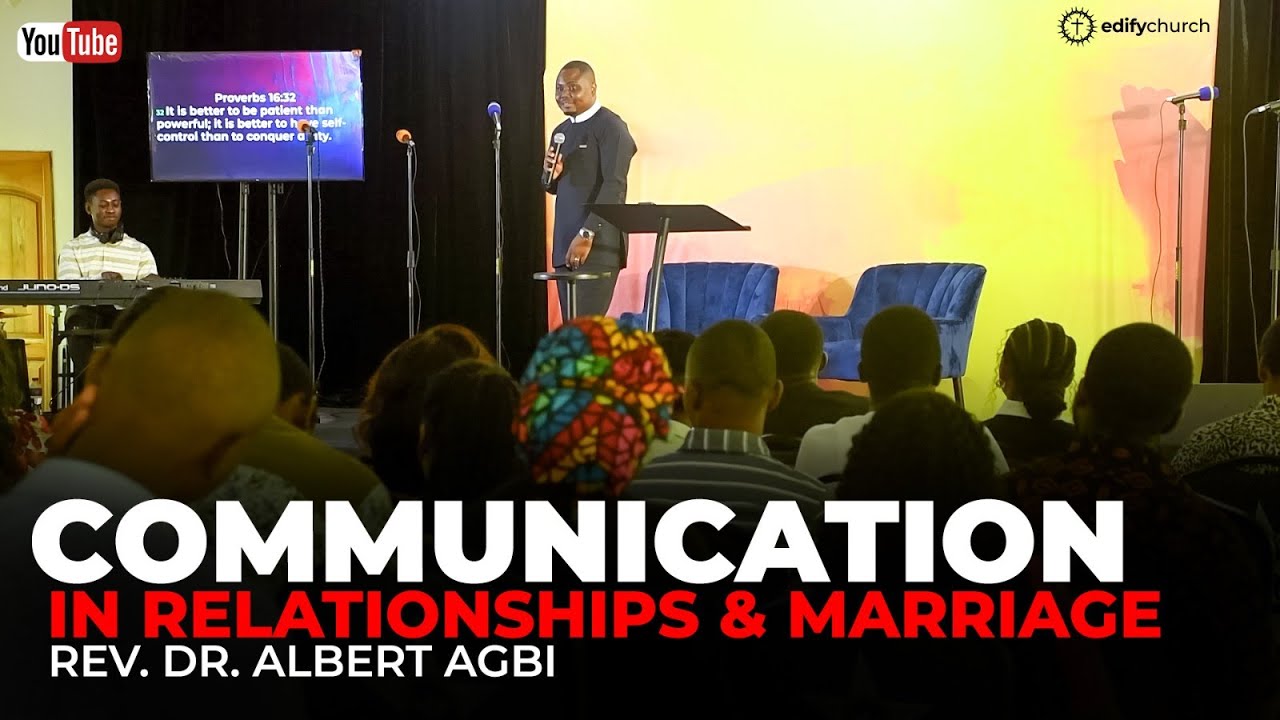
Brief Summary
This video discusses the critical role of communication in relationships and marriage, highlighting that it's the lifeline and oxygen that keeps them alive. It covers verbal and non-verbal communication, listening, honesty, conflict resolution, and emotional intelligence as key components. The importance of choosing a compatible partner and working on personal growth to foster better communication is also emphasized.
- Communication is the oxygen of relationships.
- Words have the power to build or destroy relationships.
- Listening is a crucial part of healthy communication.
- Honesty, spoken with love, is essential for building trust.
- Emotional intelligence helps in controlling reactions and understanding feelings.
Communication: The Lifeline of Relationships and Marriage
Communication is presented as the lifeline and oxygen of any relationship, including marriage, emphasizing that relationships begin to fail when communication ceases. Proverbs 18:21 is cited to highlight the power of words to either create life or destroy relationships. It's noted that only 7% of communication is verbal (words), while 38% is the tone of voice, and 55% is nonverbal cues. The average couple spends only 17 minutes per day in meaningful conversation, and miscommunication accounts for 70-80% of marital conflicts. Communication involves the intentional exchange of thoughts, emotions, desires, and understanding, going beyond mere talking to connecting with one another.
The Power of Verbal Communication
Verbal communication involves the words we use, which significantly shape the emotional environment of a relationship. Drawing a parallel to how God created the world with words, it's argued that our words create our personal world, including our marriages. The tongue can either build up or break down, heal or hurt, as highlighted in Proverbs 18:21. It's important to speak to one's spouse in a way that reflects the kind of marriage desired, as words are seeds that determine the nature of the home. Speaking positively and proactively about the desired family dynamic is encouraged to manifest that reality.
Understanding Non-Verbal Communication
Non-verbal communication involves communicating without words through facial expressions, body posture, gestures, and energy. Statistics show that 90% of conflicts escalate due to tone and body language, not the words themselves. Women are encouraged to embrace femininity, while men are urged to understand that masculinity is expressed through leadership and wisdom, not aggression. A smile is presented as more powerful than makeup, capable of diffusing tense situations. Isaiah 3:9 is referenced to show that one's countenance can testify against them.
The Importance of Listening
Listening is a critical component of communication, enabling love to transform into understanding. It is more powerful than speaking, yet many people are quick to speak and slow to listen. James 1:19 advises being quick to hear, slow to speak, and slow to anger. Problems often arise not from what is said, but from what is not heard. Listening is equated to loving, and many relationships need ears more than advice.
Honesty and Truth in Communication
Honesty is essential in communication, but it must be delivered with love. Many people avoid honesty to prevent hurting others' feelings, but it's crucial to communicate the truth in a loving manner. Speaking one's mind without considering the impact can damage relationships. Speaking the truth in love involves delivering criticism with recognition of the person's positive qualities. Ephesians 4:15 encourages speaking the truth in love, as truth builds trust while lies create distance.
Conflict Resolution in Relationships
Conflict resolution is a vital skill, as disagreements are inevitable in any relationship. It's important to remember that the other person is not the enemy. Healthy marriages involve opposing views, and mature marriages are defined by how conflict is resolved. Ephesians 4:26 advises not letting the sun go down on one's anger, meaning issues should be addressed promptly. Unresolved conflict leads to resentment, and it's important to resolve conflicts quickly.
Emotional Intelligence in Communication
Emotional intelligence is crucial for effective communication, involving controlling one's reactions rather than trying to control one's partner. It means understanding one's own feelings and those of one's spouse and responding with wisdom. Proverbs 16:32 states that he who controls his spirit is mightier than he who takes a city. The ability to manage one's emotions is key, as much of communication involves expressing emotions.
Choosing Wisely and Personal Growth
The video touches on the concept of submission and the importance of women choosing their "head" wisely, emphasizing that one has the opportunity to choose their spouse. It's a lifelong journey, so it helps to be with someone you like. The teachings are meant to encourage thoughtful choices rather than following social media trends. Ultimately, one is marrying for themselves, not for their friends' approval.

