
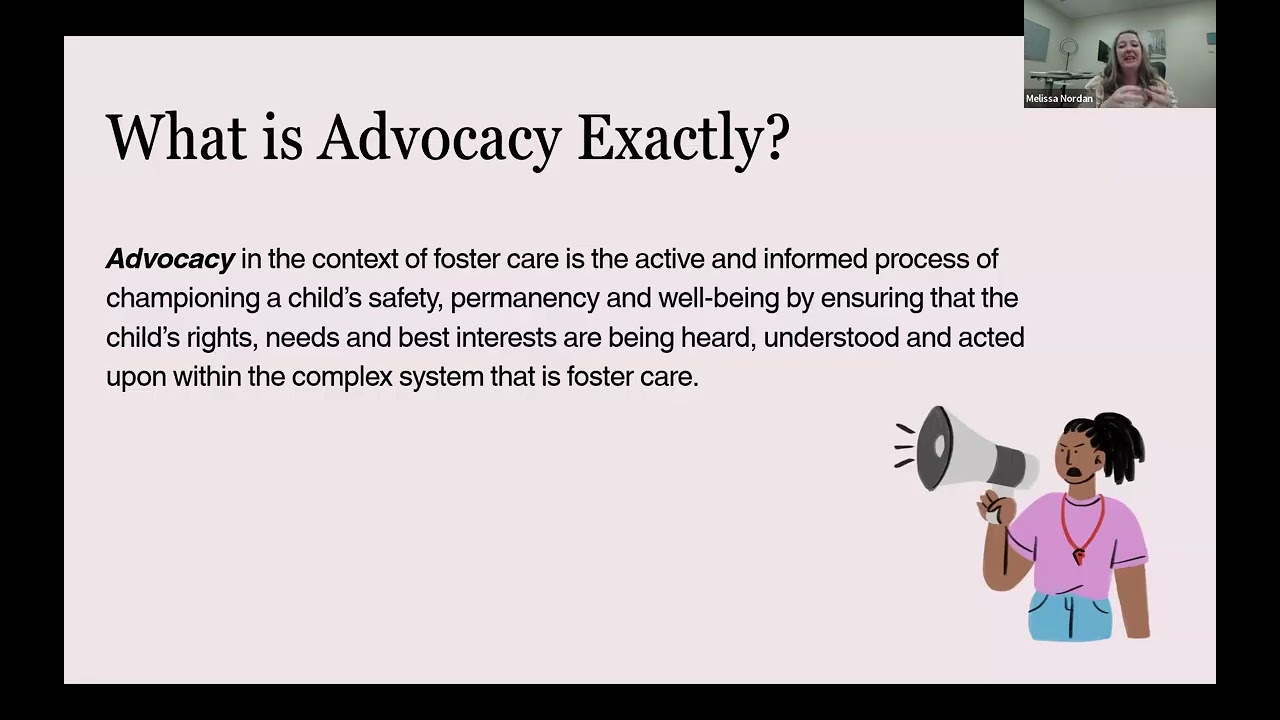
Brief Summary
The video presents a training session on advocacy for foster parents, led by Melissa Styac from Methodist Home for Children. It covers the importance of understanding one’s role in advocating for children in foster care, key stakeholders involved, common challenges, and effective strategies for communication and advocacy.
- Advocacy is crucial for a child's safety, permanency, and overall well-being.
- Understanding the roles of key stakeholders in the foster care system enhances effective collaboration among team members.
Introduction to Advocacy in Foster Care
Melissa introduces herself and sets the context for the discussion on advocating for children in foster care. She shares her experiences in child welfare and highlights the significance of advocacy from foster parents in ensuring that the children's rights and needs are prioritized within the foster care system.
Understanding Key Stakeholders
The session outlines the various stakeholders involved in a child's case, including foster parents, birth parents, social workers from the Department of Social Services (DSS), child placement agencies, guardians ad litem (GALs), judges, and medical and mental health providers. Each stakeholder has distinct roles and responsibilities that contribute to the child’s welfare and permanency.
The Role of Resource Parents
Foster and kinship parents play a critical role as they provide daily care and supervision. They observe and communicate a child’s needs, allowing them to advocate effectively based on firsthand experiences. Melissa emphasizes that although foster parents may lack legal authority, their voices and observations are vital for the child’s well-being.
Common Challenges in Advocacy
The discussion addresses common barriers foster parents face when advocating, such as communication gaps among team members, power dynamics, role confusion, and emotional strain. Melissa underscores the importance of recognizing these challenges to foster effective advocacy and collaboration within the team.
Effective Strategies for Communication
Key strategies for successful advocacy include being informed about the child's case, documenting concerns, clearly communicating about the needs of the child, and maintaining a child-focused approach in discussions. Melissa encourages foster parents to ask questions and clarify any uncertainties to ensure everyone is on the same page.
The Importance of Professional Persistence
Melissa introduces the concept of "push back" or persistent advocacy when initial needs are not met. She stresses the need to frame any pushback respectfully and professionally, without personal attacks, while maintaining focus on the child's welfare. Key questions are suggested to evaluate when it is necessary to escalate concerns.
Conclusion and Final Thoughts on Advocacy
In concluding remarks, Melissa highlights that advocacy is essential and should be approached thoughtfully. The emotional investment of foster parents is crucial for effective advocacy, but it is important to communicate in a way that promotes constructive dialogue. Advocating for the child’s needs with respect and collaboration is critical in navigating the complexities of the foster care system.

