
Brief Summary
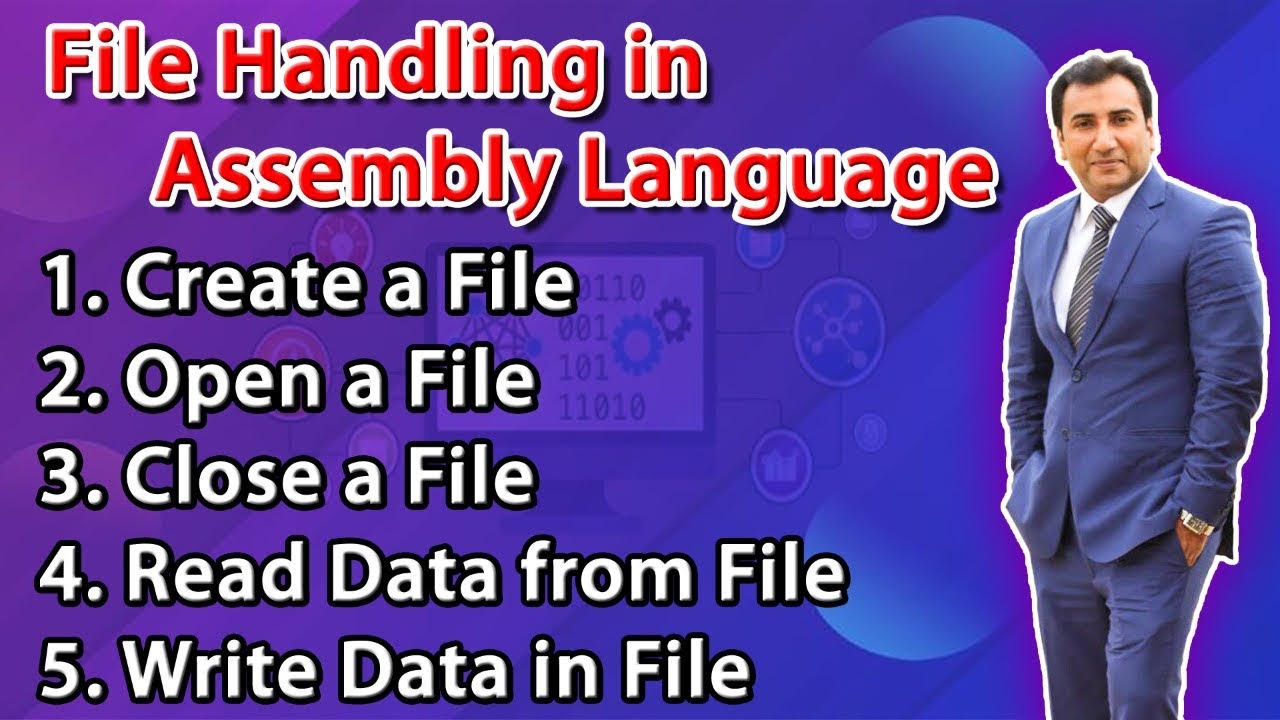
This video from Zeeshan Academy covers essential file handling techniques in assembly language, building on prior knowledge from C and C++. The tutorial provides detailed steps for creating, opening, writing to, and reading from text files. It emphasizes practical implementation through programming examples.
- File handling processes with assembly language.
- Steps to create, open, write, and read files using programming examples.
Introduction to File Handling in Assembly Language
The video introduces the topic of file handling in assembly language, a crucial skill for programming. The presenter outlines the objectives of the lecture, focusing on how to manage files effectively.
Creating a New File
In this section, the video explains the requirements for creating a new file in assembly language. It discusses the service number needed to create the file, specifying the file name and necessary attributes. The presenter highlights creating a file in read-only mode and emphasizes checking for successful creation.
Opening a File
The video then guides viewers on how to open a file using the appropriate service number. It explains the distinction between opening a file for reading, writing, or both, and shares a coding example to demonstrate the process. The importance of displaying a message upon successful opening is also emphasized.
Writing to a Text File
Here, the tutorial details how to write text to a file that has been opened. The presenter outlines the steps involved, including declaring a variable for the data to be written. The process includes error handling to ensure that the data is written successfully.
Reading from a Text File
In this chapter, the focus shifts to reading text from an existing file. The video explains how to set up the appropriate structures and service numbers to read data from a file into the program. It also covers how to display this data on the screen to confirm successful reading.
Conclusion and Summary of Key Operations
The video concludes by summarizing the five basic operations of file handling that were covered: creating, opening, writing, and reading files, and reinforcing the practical application of these techniques in assembly language programming. The presenter encourages viewers to implement these methods in their systems for effective learning.

