
Brief Summary
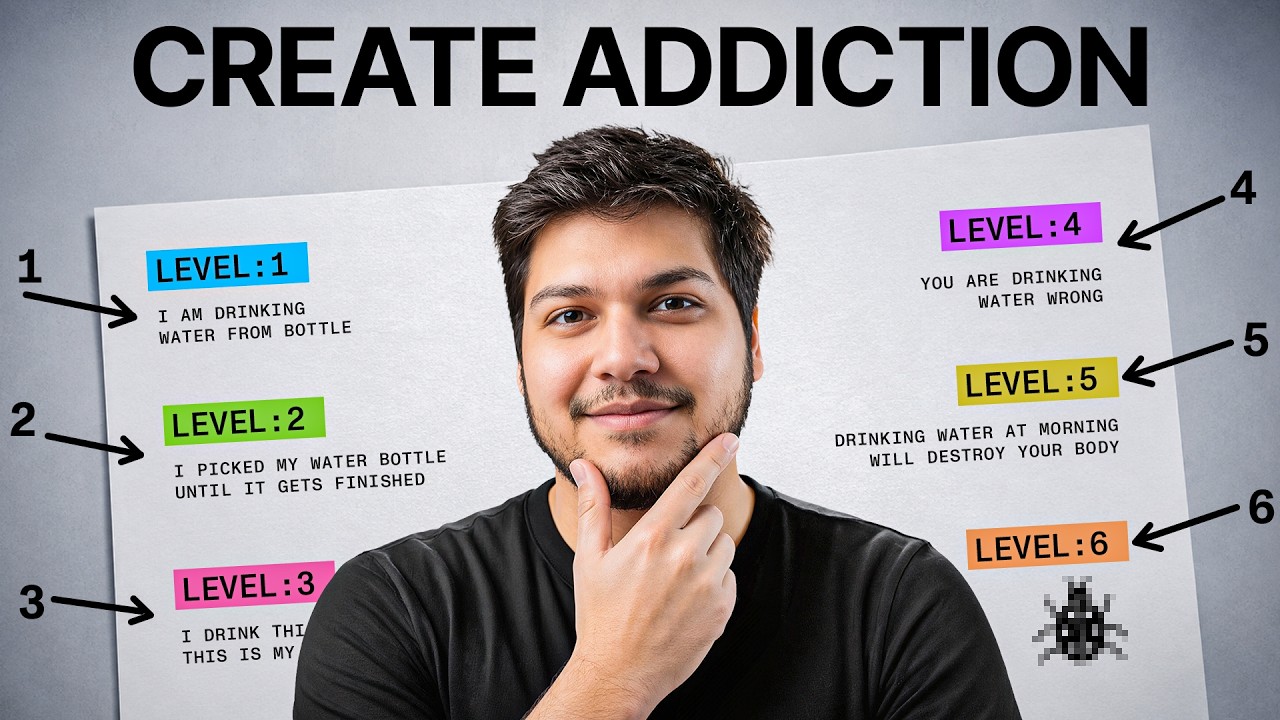
This video explores the different levels of storytelling and content retention strategies, using the story of Rohit, a boy who transforms from failing job interviews to being a successful businessman. Each level of storytelling enhances engagement, retention, and emotional connection with the audience. The key points covered include the importance of different storytelling approaches and how they impact viewer engagement.
- The storytelling for Rohit exemplifies a progression from basic reporting to advanced emotional and cultural depth.
- Each level adds complexity and engagement techniques that are vital for effective storytelling.
Retention Telling
The video begins by discussing how to increase video retention by using the right words in the right places. It poses a question about love versus rejection and relates it to childhood games to illustrate how these concepts can enhance storytelling and writing. Rohit’s journey is introduced — a boy who fails a major job interview and opens a chaat (snack) stall, which later transforms him into a businessman. The narrative focuses on how different levels of storytelling can depict this journey uniquely.
Lvl 0
At this introductory level, there is no formal structure. The speaker emphasizes the importance of understanding the various storytelling levels that can be utilized. This provides a foundation for recounting narrative elements, although no specific content is provided at this level.
Lvl 1 (DD)
In Level 1, the storytelling resembles a report, presenting facts without emotional depth. Rohit’s story is summarized: he fails a final corporate interview and opens a stall, struggling initially. The focus is purely on the sequence of events without emotional engagement, resembling a news report where connection and lessons are lost within mere information.
Lvl 2 (Systematic Baccha)
Level 2 employs systematic storytelling, focusing on the timeline of events in Rohit’s life, connecting his failure to his eventual success. It portrays the chronological struggles Rohit faces, such as his initial lack of customers and competition. The emphasis on sequential storytelling highlights that it becomes predictable and may lack viewer engagement due to its linear flow.
Lvl 3 (Architect)
Level 3 focuses on breaking the linearity in storytelling to avoid predictability. Rohit’s story is presented in a more impactful manner, highlighting key moments like receiving a rejection letter juxtaposed against future successes. This level introduces a new format where unexpected turns add intrigue and keep the viewer invested in the narrative progression.
Lvl 4 (Psychologist)
Level 4 emphasizes creating empathy and engagement through high stakes. The use of dopamine loops helps the audience emotionally connect with Rohit's struggles, such as the pressure of public failure. Techniques discussed include raising stakes, posing significant questions, and using 'fake ends' to keep the viewer guessing and invested in the outcome.
Lvl 5 (Wordsmith)
In Level 5, known as "Wordsmith," storytellers utilize emotional triggers like survival, approval, and comfort to craft relatable narratives. Rohit's emotional turmoil after rejection is illustrated with vivid imagery and impactful language that resonates with viewers. The focus on visceral verbs enhances audience engagement by making the storytelling relatable and memorable.
Lvl 6 (Magnifico Illusionist)
Level 6 is the pinnacle of storytelling, combining all previous levels while introducing cultural nuances and cinematic elements. This level significantly transforms how stories are perceived, creating deeper connections through intricate details that resonate with varied audiences. It emphasizes the importance of human elements and cultural relevance in storytelling, ultimately leading to a new way of thinking for the audience.

