
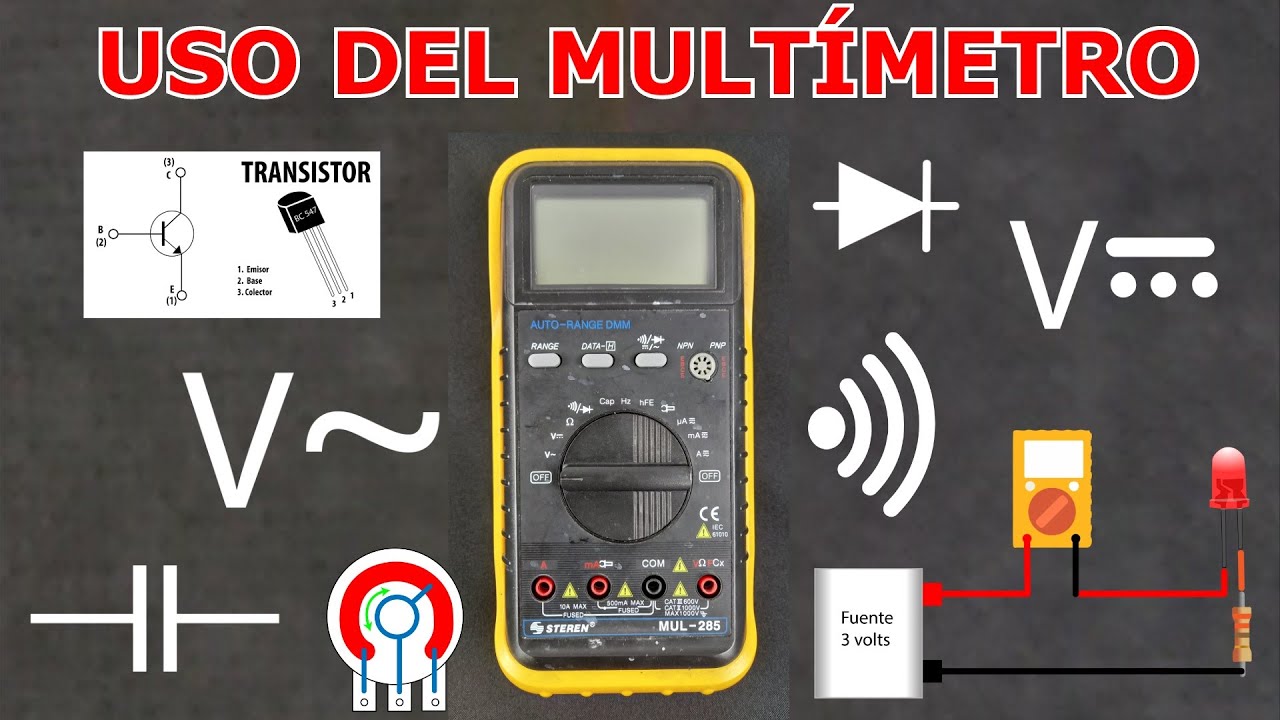
Brief Summary
The video provides a comprehensive guide on how to use a multimeter, explaining its various functions and practical applications. Key points include:
- Different measurements such as voltage (AC and DC), resistance, continuity, capacitance, diode testing, current (AC and DC), and transistor testing.
- Safety precautions and the importance of correctly connecting terminals based on the measurement type.
- Hands-on demonstrations for measuring batteries, resistors, and testing electronic components.
Introduction to Multimeter Use
The video starts with an introduction to using a multimeter and understanding its various functions. It outlines the different types of multimeters - digital and hook-type - and explains the importance of selecting the correct measurement mode.
Understanding Multimeter Symbols
Next, it reviews the symbols commonly used on multimeters and demonstrates how to connect the black and red terminals properly. The black terminal is consistently connected to the COM port, while the red terminal may vary based on the measurement type.
Measuring Alternating and Direct Voltage
The video proceeds to measure both alternating current (AC) and direct voltage (DC), using batteries as examples. It explains how to set up the multimeter for each type of voltage measurement and emphasizes the significance of terminal connections for accurate readings.
Resistance Measurement
The next section covers measuring resistance, including different types of resistors such as ceramic and color-coded resistors. The video demonstrates how to use the multimeter to confirm the resistance value aligns with the expected readings according to color codes.
Continuity Testing
The continuity measurement section explains how to check if materials or circuits conduct electricity. It showcases how to use the multimeter to determine broken wires or faulty electrical connections.
Capacitance Measurement
Discussing capacitance, the video illustrates measuring capacitors and identifies that not all multimeters can perform this task. Several types of capacitors are tested, highlighting limitations in capacitance measurements with general multimeters.
Diode Testing
The video also covers testing diodes, clarifying the function of diodes and how to properly test them using the multimeter. This part details identifying the positive and negative sides of the diode for accurate measuring.
Measuring Current
In measuring current, the video demonstrates how to set the multimeter to measure direct and alternating current. It illustrates interrupting circuits to measure the flow of electrons and discusses the use of a clamp meter for quick measurements.
Transistor Testing
Lastly, the video walks through testing transistors, explaining the differences between NPN and PNP types. The multimeter's settings for transistor testing are demonstrated, showing how to determine if a transistor is functioning correctly.

