
Brief Summary
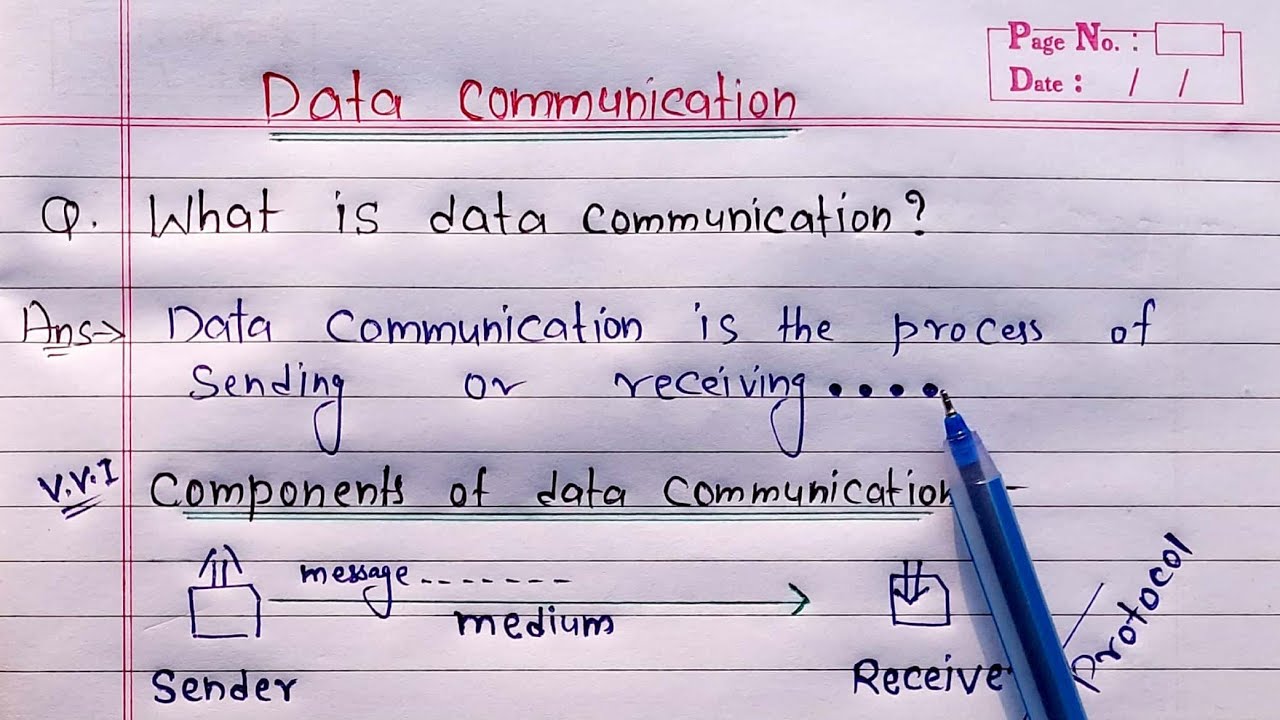
This video introduces data communication, a crucial aspect of networking. It explains data communication as the process of sending and receiving digital data between two or more computers using a transmission medium. The video outlines the five essential components required for data communication: sender, receiver, medium, message, and protocol.
- Data communication involves sending and receiving digital data between systems.
- Five key components are essential: sender, receiver, medium, message, and protocol.
- Protocols are the rules that govern data transmission between systems.
Introduction to Data Communication
The video begins by defining data communication as the process of sending or receiving digital data between two or more computers through a transmission medium, which can be wired or wireless. This process enables systems to communicate with each other by exchanging data. The discussion distinguishes data communication from data transmission, clarifying that data communication encompasses the broader process of how systems communicate, not just the methods of data transfer.
Components of Data Communication
The video highlights the five essential components of data communication. The sender is the device that sends the data, while the receiver is the device that receives it. The medium is the channel through which data is transmitted, such as a cable (optical or fibre optic) or a wireless connection. The message is the actual data being sent, which can be in various forms like text, audio, or video. Lastly, the protocol is the set of rules governing how data is transmitted and received, ensuring proper communication between systems.
Importance of Protocols
Protocols are essential for data communication because they establish the rules and regulations that govern data transmission. Without protocols, systems cannot connect or exchange data effectively. Protocols ensure that data is sent and received correctly, maintaining the integrity of the communication process. The video emphasises that understanding these five components is crucial for anyone involved in data communication.
Recap of Data Communication
The video concludes by summarising data communication as the exchange of data between systems. It reiterates the importance of the five components: sender, receiver, medium, message, and protocol. The explanation provides a clear and concise overview of data communication, making it accessible to viewers seeking to understand the fundamental concepts of networking.

