
Brief Summary
This video explores the misleading claims made by food products in India, highlighting issues in regulation and consumer awareness. Investigative journalist Shri Girish reveals that many packaged foods continue to use deceptive labels despite scrutiny from India's food safety authority.
- Some fruit juices claim to be 100% juice but contain only a fraction of actual fruit concentrate.
- The food safety regulatory system has failed to act effectively, allowing misleading claims to persist in the market.
- The government has not made significant progress in regulating ultraprocessed foods, which are linked to rising health issues.
Introduction to Misleading Food Claims
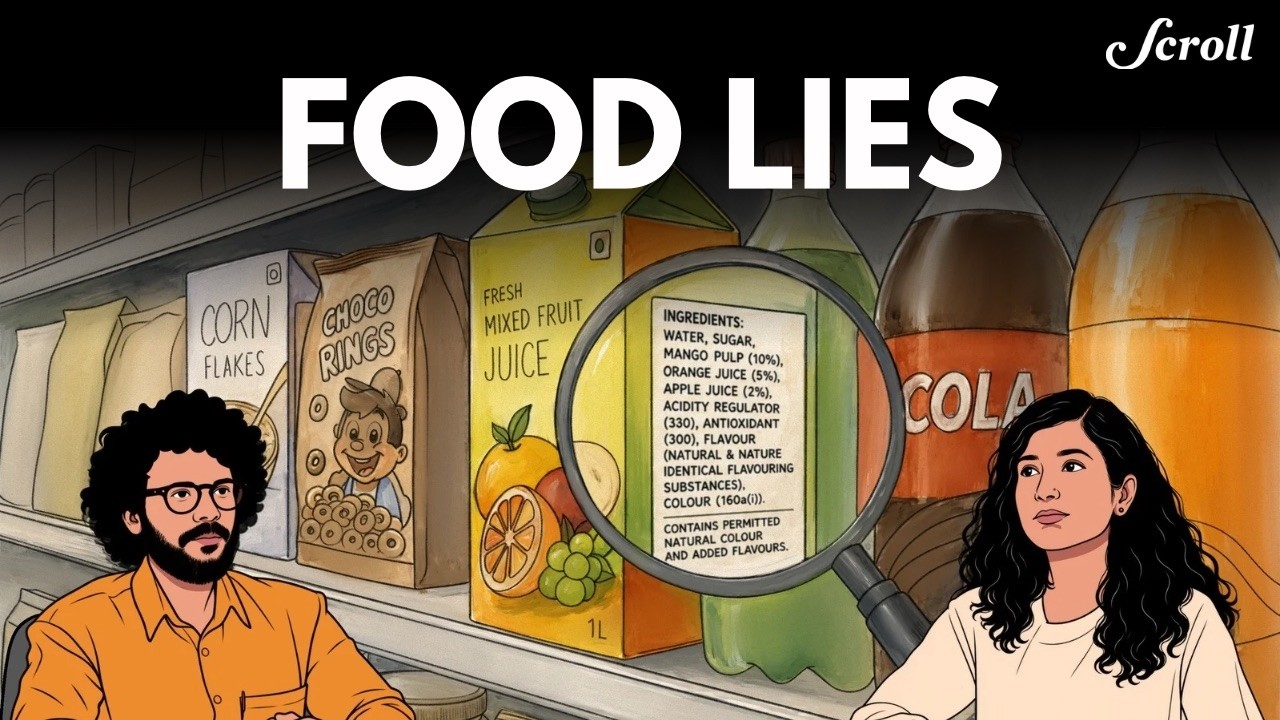
The discussion begins with the unveiling of a public database that reveals misleading claims made by companies about their food products. An example is a juice brand that claims to be real but only consists of 18.6% fruit concentrate. The video also mentions other products such as herbal concoctions with unproven health benefits.
The Role and Responsibility of Indian Food Regulators
It explains the responsibilities of the Food Safety and Standards Authority of India (FSSAI) to ensure truthful claims from food companies. The authority is supposed to verify that claims are truthful and scientific, maintaining transparency and consumer trust. The process involves monitoring advertisements and label claims to uphold healthcare standards.
Investigating Misleading Claims of Food Products
Shri Girish details his investigation where he obtained over 200 pages of internal correspondence from the FSSAI regarding misleading claims. In March 2024, 160 products were reviewed, with 136 sending improvement notices to companies. However, despite these actions, many claims remain unchanged years later.
Specific Cases of Misleading Products
The investigation highlights specific products, such as Britannia biscuits claiming to have energy equivalent to homemade meals, a misrepresentation the FSSAI identified as misleading. Additionally, there are concerns regarding other products like 'real fruit juice,' which claims to be 100% juice but is primarily concentrated fruit.
Responses from Food Companies
In response to inquiries about these misleading claims, companies often cite confidentiality in their communications with regulators. For example, Britannia has not fully disclosed its revised marketing strategies even after being flagged for misleading advertising.
Healthcare Misleading Claims
The discussion expands to health claims, revealing that major brands are also implicated. Teas are marketed with claims of improving various health issues without substantiation. Patanjali's honey product claims to purify blood and has not faced consequences despite being flagged by health authorities.
Government Inaction and Regulation Gaps
The government’s National Multisectoral Action Plan (NAP) aimed to regulate high-fat, sugar, and salt products has not shown progress since its inception in 2017. There is no legal binding definition of HFSS, hindering effective regulation of these products.
Comparative Analysis with Other Countries
Comparisons with regulations in high-income countries like the UK highlight the lack of stringent advertising controls in India. The UK has established definitions for HFSS and imposes restrictions on marketing to protect children, which India has not yet achieved.
Conclusion and Call to Action
The video concludes with the assertion that consumers need clarity and transparency regarding food product claims, urging the government to take responsibility for public health. It calls attention to the urgent need for better regulation to protect consumers from misleading information in the food industry.

