
Brief Summary
This video examines the trend where players leaving Liverpool often underperform at their new clubs, while Liverpool continues to thrive without them. The analysis focuses on notable examples, including Trent Alexander-Arnold, Philippe Coutinho, Michael Owen, and Fernando Torres, exploring various factors such as injuries, system fit, and environment that contribute to players' declines after departure.
- Players leaving Liverpool often struggle to replicate their form at new clubs.
- Environmental changes and injuries play significant roles in their performance.
- Liverpool frequently benefits from the transfers, successfully rebuilding their team.
Trent Alexander-Arnold's Struggles After Leaving Liverpool
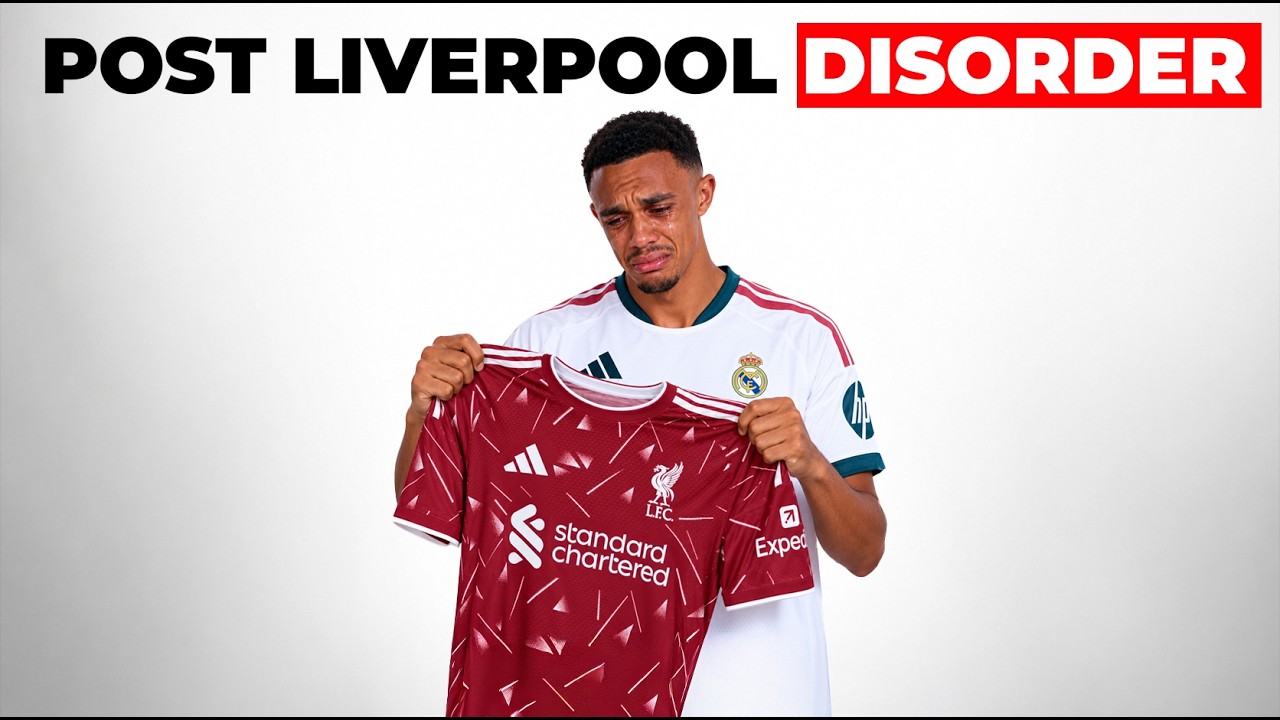
Trent Alexander-Arnold was viewed as a standout player at Liverpool, but his move to Real Madrid did not meet expectations. Despite bright moments, injuries hampered his first season, limiting his playing time and affecting his performance. At Liverpool, he was a key player; at Madrid, he finds himself further down the selection list and facing criticism from the media. The change from being a beloved local talent to a high-profile signing has altered the support he receives, revealing weaknesses in his game when isolated defensively.
Philippe Coutinho: The Perils of Leaving Liverpool
Coutinho's transfer from Liverpool to Barcelona epitomises the phrase "the grass isn't always greener." He thrived at Liverpool, showcasing incredible talent and scoring ability, but when he moved to Barcelona, he struggled to find his role. The club's expectations did not align with his strengths, leading to a decline in performance and confidence. His journey from a star player to a loaned-out figure illustrates the risks associated with leaving a supportive environment like Liverpool's.
Michael Owen's Decline After Liverpool
Michael Owen's time at Liverpool ended with a series of injuries that significantly affected his career post-transfer. Although he moved to Real Madrid to join the Galacticos, he was no longer the explosive player he was at Liverpool due to ongoing fitness issues. His productive scoring contributed to his legacy, but the injuries ultimately hampered his impact, especially during subsequent stints at Newcastle and beyond.
Fernando Torres: A Fallen Star
Fernando Torres was once a formidable striker at Liverpool, but after his knee injuries, his transition to Chelsea was disappointing. Despite the high transfer fee, he never recaptured his peak form, having scored far fewer goals at Chelsea than he did with Liverpool. His physical decline directly impacted his performance, and the once-dominant forward struggled to adjust to the demands of a different playing style.
The Importance of System: Sadio Mané and Gini Wijnaldum
Sadio Mané and Gini Wijnaldum represent players who thrived in Klopp’s system at Liverpool but found challenges after their departures. Mané's success relied on the team structure that provided him space, which was lost upon joining Bayern. Wijnaldum failed to adapt at PSG, where his role conflicted with the star-studded lineup. Their experiences highlight how crucial the Liverpool system was for their success and the difficulties they faced in less cohesive environments.
Ian Rush: Historical Perspective on Departures
Ian Rush’s experience serves as evidence that the pattern of players underperforming after leaving Liverpool is not new. His move to Juventus in 1987 was marked by a severe drop in performance due to the contrasting playing style in Italy. Rush subsequently returned to Liverpool, where he quickly regained his form. This underscores that Liverpool's system has had a long history of supporting player development and maximising potential.

