
Brief Summary
In this video, the focus is on three water-soluble vitamins: pantothenic acid (vitamin B5), biotin (vitamin B7), and vitamin C. Each vitamin's definition, function, dietary requirements, bioavailability, toxicity, food sources, and stability are discussed in detail.
- Pantothenic acid is essential for co-enzyme A, involved in energy metabolism and fatty acid synthesis, with rare deficiency.
- Biotin plays a key role in various metabolic processes, particularly in fatty acid synthesis and gluconeogenesis, with deficiencies linked to hair loss and skin problems.
- Vitamin C is a potent antioxidant critical for collagen synthesis, immune function, and iron absorption, with deficiency leading to scurvy.
Pantothenic Acid (Vitamin B5)
Pantothenic acid, also known as vitamin B5, is critical for the formation of co-enzyme A (CoA) and an acyl carrier protein, both essential for energy metabolism and fatty acid synthesis. It is vital for synthesizing steroid hormones, neurotransmitters, and hemoglobin. The body maintains minimal storage of pantothenic acid, primarily in the liver, adrenal glands, and brain. Deficiency is extremely rare and usually occurs only in cases of severe malnutrition. Its functions include energy production via the citric acid cycle and fatty acid oxidation, and it aids in the synthesis of cholesterol and steroid hormones. The primary food sources rich in pantothenic acid are beef liver, chicken liver, and several plant-based foods like avocados and whole grains.
Biotin (Vitamin B7)
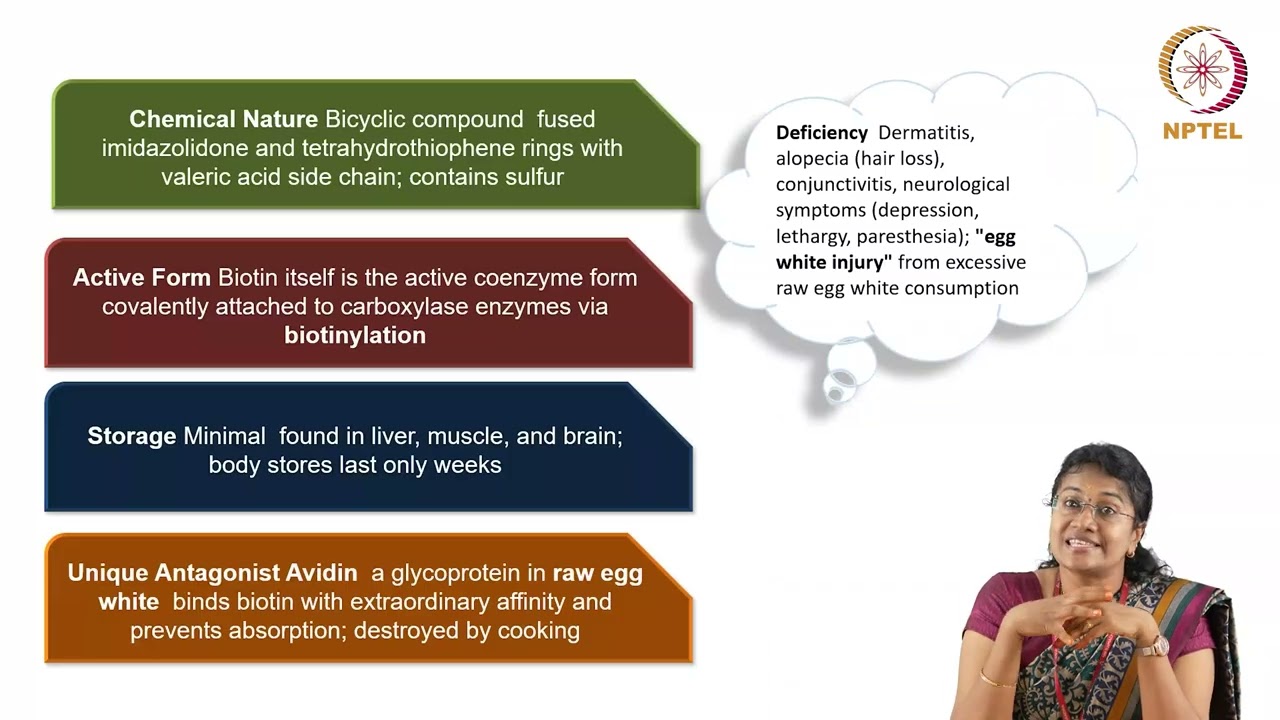
Biotin is essential for functioning as a co-factor for carboxylase enzymes involved in fatty acid synthesis, gluconeogenesis, and amino acid metabolism. Its structure includes a bicyclic compound and it binds covalently to certain enzymes. Although it's stored in minimal amounts in liver and muscles, its deficiency can lead to hair loss, dermatitis, and neurological symptoms. Biotin's absorption occurs in the small intestine, and it is more bioavailable when cooked. Food sources include eggs (when cooked), beef liver, fish, and certain vegetables like sweet potatoes. Despite its stability to heat in normal cooking, raw egg whites contain avidin, which can inhibit biotin absorption.
Vitamin C (Ascorbic Acid)
Vitamin C, or ascorbic acid, serves as a potent antioxidant and is crucial for collagen synthesis, immune function, iron absorption, and neurotransmitter production. Unlike most animals, humans cannot synthesize vitamin C and must obtain it through the diet, primarily from fruits and vegetables. Deficiency leads to scurvy, characterized by symptoms like bleeding gums, poor wound healing, and fatigue. Vitamin C facilitates the reduction of ferric iron (Fe3+) to ferrous iron (Fe2+), enhancing non-heme iron absorption. It is relatively unstable during cooking, especially with boiling, leading to significant losses. Significant dietary sources of vitamin C include citrus fruits, kiwi, strawberries, and Indian gooseberry. The recommended dietary allowance varies and increases for pregnant and lactating women, as well as smokers who require additional amounts due to increased oxidative stress.

