
Brief Summary
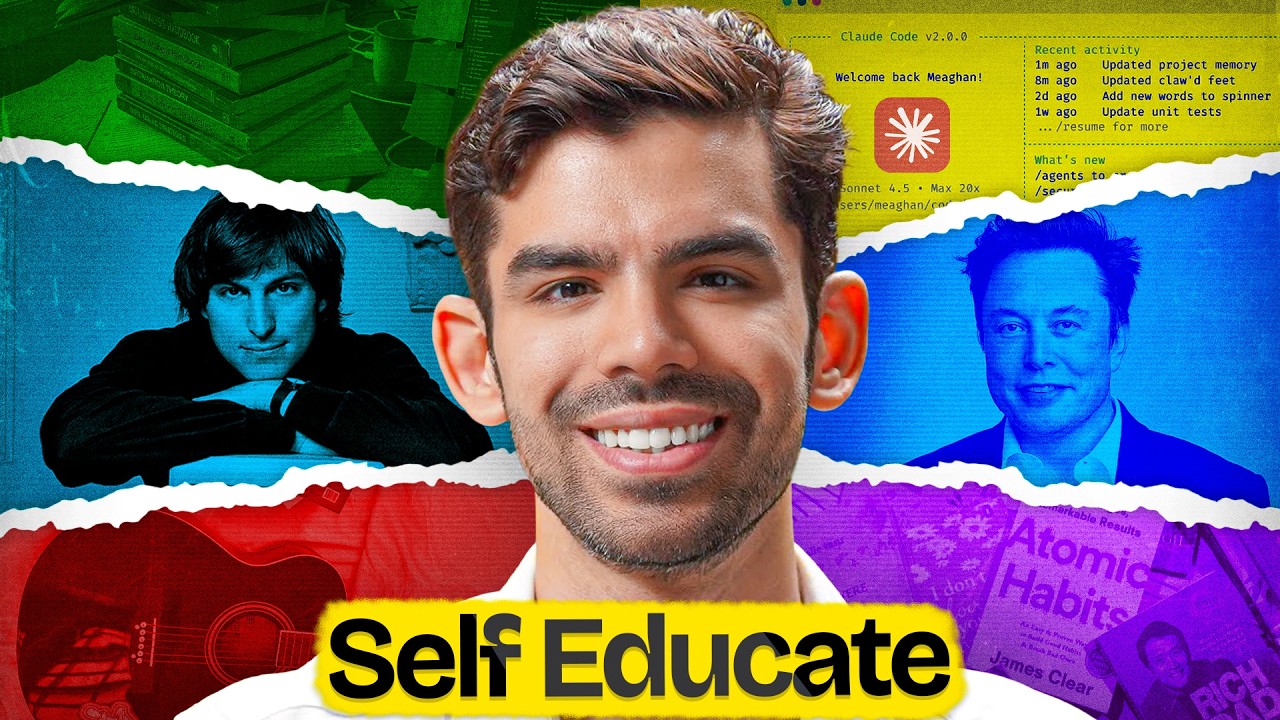
The video discusses the importance of self-education, highlighting how successful individuals like Nikl Kat, Dirohayamani, and Gautam Madani became billionaires without formal education in their fields. The speaker outlines three main reasons people fail in self-education and provides a checklist for effective learning and behaviour change. The emphasis is on understanding differences between information and education, learning the foundational concepts of a subject, and practicing divergent thinking for genuine learning.
- Self-education can lead to significant success.
- Key mistakes in self-learning can hinder progress.
- A practical checklist can help translate information into actionable knowledge.
Understanding Self-Education
The video opens with examples of billionaires who succeeded without formal education, stressing the importance of learning how to learn independently. The speaker shares their own experience of attaining success despite not yielding benefits from formal education, highlighting the necessity of being in the right situations and asking the right questions. They introduce a list of three significant reasons for failure in self-education, encouraging viewers to avoid these pitfalls to achieve self-sufficiency and a better lifestyle.
Difference Between Information and Education
The first primary reason for failing in self-education is misunderstanding the distinction between information and education. The speaker explains that merely reading and collecting information is not genuine learning, as it does not lead to behavioural change. They argue that education should result in an altered mindset or action, using their own experience of note-taking without practical application as an example. In a world flooded with information, the ability to transform data into actionable knowledge becomes crucial.
Learning Origin Stories and Classics
The second failure point is not learning the origin stories or foundational concepts of any subject. The speaker remarks that historical knowledge can inform current learning, asserting Jeff Bezos's idea of betting on timeless principles. When self-educating, it's essential to prioritize understanding core concepts that remain constant over trends. The use of AI tools for gathering recommendations based on specific educational needs is suggested, emphasizing the necessity of refining these inputs by personal judgement.
Practicing Divergent Thinking
The speaker identifies a third failure as the lack of practice in divergent thinking, which entails generating multiple solutions for a single problem. They recount how educational systems typically encourage convergent thinking, narrowing down to a single solution. The importance of balancing divergent and convergent thinking is highlighted to enhance intelligence and creativity. Personal experience in building a business emphasises the need for timely convergence after sufficient exploration of ideas, advocating for deep focus in specific niches.
Practical Checklist for Self-Education
Finally, the video provides a checklist for translating information into actionable learning. The process begins by identifying a primary pain point in personal life, whether in health, wealth, or relationships. Viewers are encouraged to shortlist relevant topics and spend time researching resources. Setting limits on consumption and implementing learned information within 24 hours is essential for creating meaningful connections in the brain. Commitment to this process over time promises to elevate one's self-education significantly, fostering growth and development in the chosen subject area.