
Brief Summary
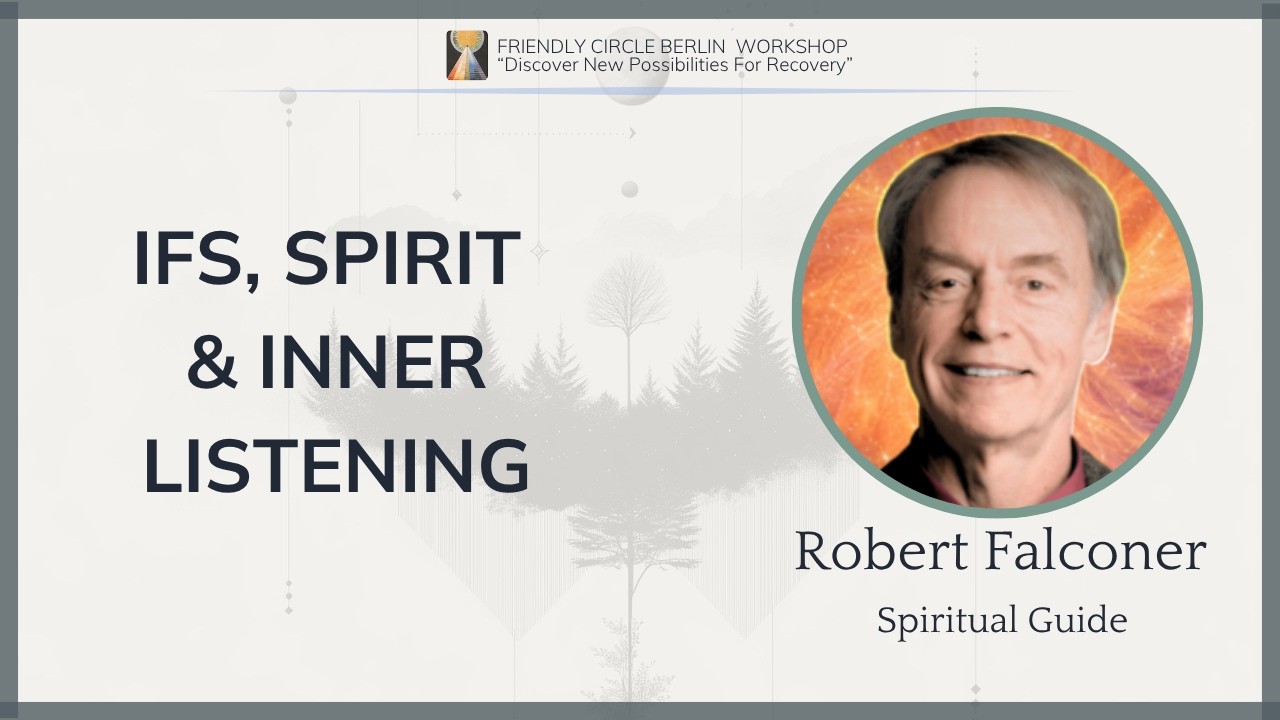
In this video, Patrick hosts a workshop with Bob Faulkner, focusing on the significance of spiritual connection in healing, particularly in recovery programs like the 12 Steps. Bob discusses various aspects of spirituality, the role of curiosity in psychotherapy, and introduces concepts from Internal Family Systems (IFS) that involve the relationship between different parts of ourselves. He emphasizes that true healing often involves a connection to spirit and outlines practical approaches for cultivating this inner sense and reconnecting with spirit.
- Importance of spiritual connection in healing.
- Overview of Internal Family Systems (IFS) and its components.
- Strategies for cultivating inner sense and curiosity.
Introduction
Patrick introduces the workshop and underscores the importance of trusting guidance beyond self-will. He welcomes Bob Faulkner, an IFS practitioner and author, who is there to discuss his latest book focused on spirituality and inner dialogue.
We don't heal without spirit
Bob argues that healing from trauma or addiction requires a connection to spirit. He references the 12 Steps, citing a passage asserting the necessity for a spiritual basis for living. He shares that without this spiritual connection, deep healing from psychological distress is unlikely.
The 12 Steps as a spiritual foundation
Bob outlines the first three steps of the 12-Step program, emphasizing their focus on establishing a relationship with a higher power. He stresses the importance of turning one’s life over to this spiritual essence and continues by raising the question of how to effectively form this relationship.
Why spirit is taboo in psychotherapy
Bob comments on the taboo nature of discussing spirit in psychotherapy, noting that discussions around spirituality are often dismissed in favor of other topics. This neglect, he suggests, strips away a fundamental aspect of the human experience necessary for healing.
Two kinds of curiosity
Bob elaborates on two forms of curiosity: one that narrows focus (like Sherlock Holmes) and another that opens us up to wonder and awe. He argues that the latter is crucial for fostering genuine relationships, especially in therapeutic contexts.
IFS basics
Bob provides an overview of Internal Family Systems (IFS), explaining that individuals are composed of various parts that work together. He distinguishes between exiles (wounded inner children) and protectors (parts trying to shield us from pain), emphasizing the importance of integrating these parts.
Self as spirit
Bob discusses the concept of ‘Self’ within IFS, describing it as the witness that can connect with a broader spirit outside of personal experiences. He relates this to the idea of universal Self, suggesting that spirit can manifest in many ways through personal experience.
Swedenborg and the place of inflow
Bob references Emanuel Swedenborg, who he regards as an important figure for understanding spiritual inflow. He shares Swedenborg's belief in an undamaged inner core that receives divine flows, emphasizing the continuous nature of spiritual connection.
How the modern world lost the inner world
Bob critiques modern society's neglect of inner worlds, pointing out that historical events, particularly around the Reformation, led to disconnection from spirituality. He suggests that this shift contributes to contemporary mental illness and addiction crises.
How do we reconnect to spirit?
Bob proposes ways to reconnect with spirit, highlighting the 12 Steps as a flexible framework that encourages ongoing exploration of spirituality without a rigid structure. He underlines the importance of personal interpretation and the open-ended nature of spiritual practices.
Inner sense cultivation
Bob introduces the concept of cultivating inner sense, drawing on anthropological insights that support the practice. He asserts that this skill can be developed through various methods, including prayer and mindfulness.
Personalism
Bob highlights the importance of personalism, suggesting relationships should be approached in a personal, relational way rather than merely as abstract processes. This approach deepens interactions with inner experiences and spirits.
Spectrum of spiritual practice
Bob discusses the spectrum of spiritual practices, contrasting total surrender with structured spiritual practices. He expresses the need for flexibility in spiritual approaches, suggesting that individuals must explore different practices throughout their lives.
Active imagination and dialoguing with spirit
Bob explains the practice of active imagination, where individuals interact with inner guides and spirits. He emphasizes that this dialogue should be a personal exchange rather than passive reception, allowing for deeper understanding and integration of spiritual insights.
Written dialogue practice
Bob shares a simple writing practice for engaging with spirit through dialogue. He encourages continuous writing without judgment, which can lead to profound insights and an understanding of one's spiritual perspectives.
Readings from Spirit
Bob concludes with readings from his dialogues with spirit, sharing insights that emphasize humility, the importance of humor, and the significance of maintaining a learning mindset in spiritual practices. These readings reflect the relational nature of spirituality.

