
Brief Summary
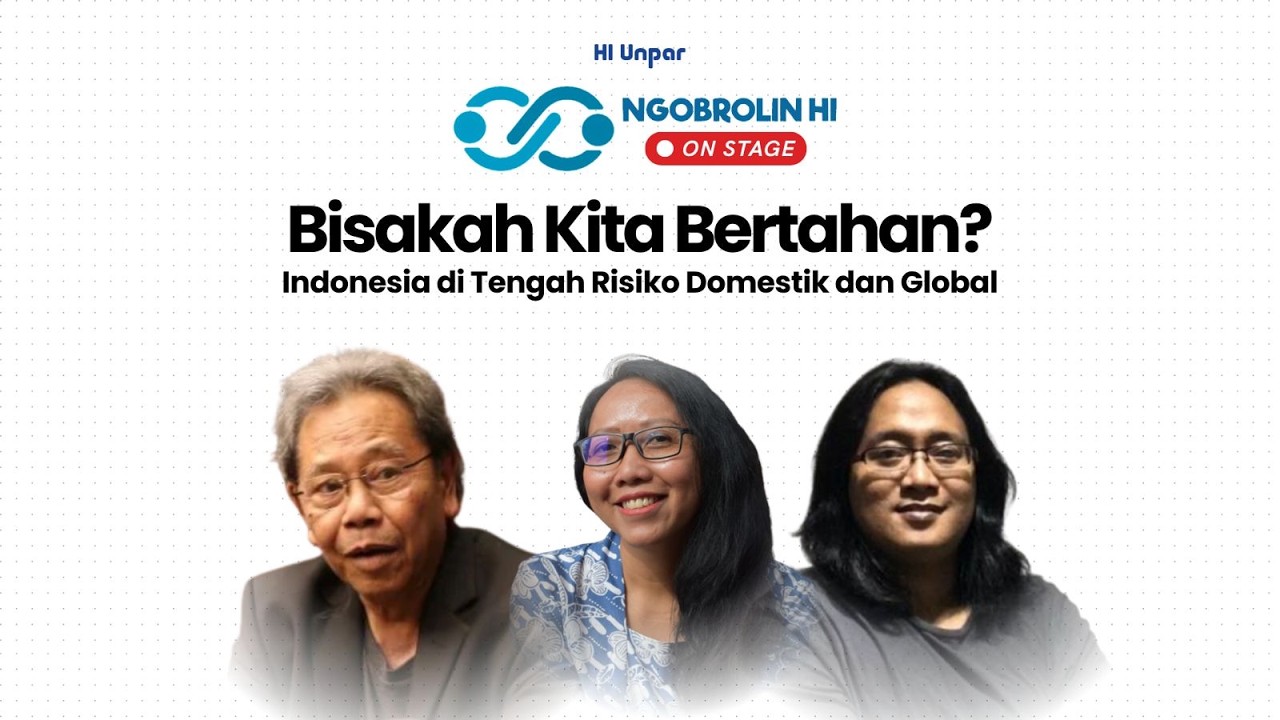
The video features a presentation by Mr. Kusnanto Anggoro, discussing Indonesia's risks concerning domestic and global challenges, including climate change, geopolitical shifts, and technological advancements. It highlights Indonesia's resilience and the generational differences in perceptions of democracy, showcasing the concerns about the current political climate and the possible futures. Subsequent discussions by speakers Indri and Pramono focus on ecological risks, civil society resilience, and the state's handling of information freedom and accountability.
- Presentation on risks faced by Indonesia.
- Discussion on civil society movements and the state's political climate.
Mr. Kusnanto Anggoro's Presentation on Risks and Resilience
Mr. Anggoro discusses Indonesia's challenges amid a global polycrisis, including climate change, technological advancements, and shifting geopolitical dynamics. He reflects on the country's historical context and current situation, highlighting the disparity in attitudes toward democracy between generations. Anggoro expresses a critical view of Indonesia's political landscape, noting that while resilience has improved, the risks to democracy remain significant. He uses a framework to indicate that Indonesia is likely to survive in the near future but questions the quality of that survival.
Insights on Ecological Risks and Civil Society Resilience
Mbak Indri presents insights into ecological risks and the resilience of civil society in Indonesia. She emphasizes the importance of youth involvement in addressing climate issues and highlights various community movements, such as "Seni Tani," which connect small farmers with consumers. Indri shares examples of organizations advocating for women's rights and climate justice, stressing the significance of grassroots movements in driving change. She emphasizes that resilience and action from civil society are crucial for overcoming current societal challenges.
Freedom of Information and Public Accountability
Mas Pram discusses the deteriorating state of freedom of information and expression in Indonesia. He highlights the challenges faced by journalists, including job losses and self-censorship due to political pressures. Pram emphasizes the importance of independent media in a democracy, noting that the current political climate stifles transparency and accountability. He gives examples of government actions undermining press freedom and raising serious questions about government accountability, public trust in media, and the overall political landscape in Indonesia.

