
Brief Summary
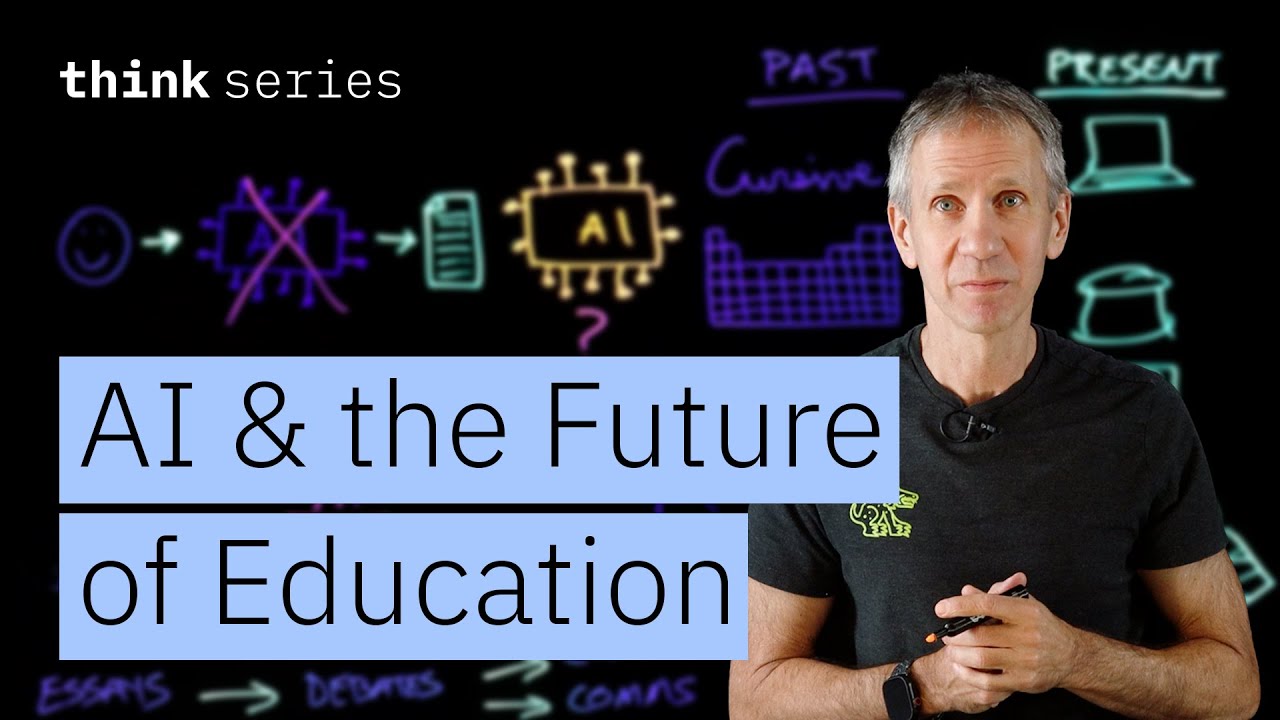
This video discusses the integration of AI in education, arguing that instead of prohibiting its use, educators should embrace it to enhance learning. It highlights the shift in essential skills over time, from cursive writing and memorisation to adaptability, critical thinking, and AI literacy. The video explores the advantages of AI in providing just-in-time education, personalised tutoring, editing assistance, and increased accessibility, while also addressing the need for ethical considerations and practical applications in the classroom. The key takeaway is that AI is not a passing trend but a tool that, if leveraged correctly, can prepare students for the future job market and promote equity in education.
- AI should be embraced in education to enhance learning rather than prohibited.
- Essential skills are shifting from memorisation to adaptability, critical thinking, and AI literacy.
- AI offers advantages such as personalised tutoring, editing assistance, and increased accessibility.
- Ethical considerations and practical applications of AI in the classroom are crucial.
- AI is a tool that can prepare students for the future job market and promote equity in education.
Introduction: AI and the Future of Education
The speaker introduces the transformative impact of AI on education, noting that the advent of generative AI chatbots renders traditional essay assignments obsolete. Instead of banning AI, the speaker advocates for embracing and using it to enhance education. The speaker argues that educators should adapt to this technological shift rather than resist it, and the video will explore the pros and cons of AI in the classroom, focusing on how it can elevate learning.
The Evolution of Essential Skills
The discussion shifts to how the skills deemed important in education have changed over time. Skills like cursive writing and memorising the periodic table, once heavily emphasised, are now less critical due to technological advancements. The speaker questions the value of spending instructional time on tasks easily replaced by tools like calculators and GPS, suggesting a need to prioritise skills that prepare students for the future. The speaker highlights the importance of preparing students for the future by focusing on skills that are relevant to the job market and everyday life.
Skills for the Age of AI
The speaker outlines essential skills for navigating the age of AI, emphasising flexibility, adaptability, and creative thinking. Critical thinking is highlighted as crucial for evaluating the accuracy and usefulness of AI-generated information. The speaker underscores the need to equip students with these skills to prepare them for the challenges and opportunities presented by AI in the future.
Advantages of AI in Teaching
The advantages of AI in education are explored, including just-in-time education, which provides immediate access to information and refreshers on various topics. AI can offer personalised education through AI-based tutors that adapt to individual learning styles and paces. Additionally, AI can serve as an editor, providing grammar and spell-checking assistance, and enhance accessibility for students with learning disabilities by translating text to speech or images to speech. The speaker also suggests AI could serve as a teaching assistant, aiding in lesson planning and grading, freeing up teachers to focus on content and instruction.
Practical Applications of AI in the Classroom
The speaker discusses practical applications of AI in the classroom, such as using it to prepare students for debates, improving their critical thinking and communication skills. AI can also serve as a research assistant, suggesting ideas and helping students hone their arguments. Furthermore, AI can promote equity in education by providing access to educational resources for students in underserved areas, as long as they have internet access. The speaker emphasises that AI can enable teachers to focus on the big picture and provide more one-on-one instructional time.
AI Literacy and Ethical Considerations
The importance of AI literacy and ethical considerations in education is addressed. Students and educators need to understand AI's capabilities and limitations, as well as the ethical implications of its use. The speaker stresses the need for responsible and trustworthy AI, urging students to consider the unintended consequences and societal impacts of their actions.
Practical Examples: Integrating AI into Curriculum
The speaker provides practical examples of integrating AI into the curriculum, suggesting a shift from writing numerous essays to engaging in debates that require critical thinking and communication skills. Instead of rote memorisation, the focus should be on understanding principles, such as the characteristics of the periodic table. The speaker also suggests replacing complex arithmetic drills with more advanced topics like algebra and calculus, which promote logical thinking and analysis.
Conclusion: Embracing AI for Future Preparedness
The speaker concludes by emphasising that AI is not a passing trend but a permanent fixture in the future. The speaker argues that education should embrace AI to equip students with the tools they need to compete in the modern job market. By learning how to use AI in the classroom, students will be better prepared to use it in the workplace, ensuring they are not left behind in the age of AI.

