
Brief Summary
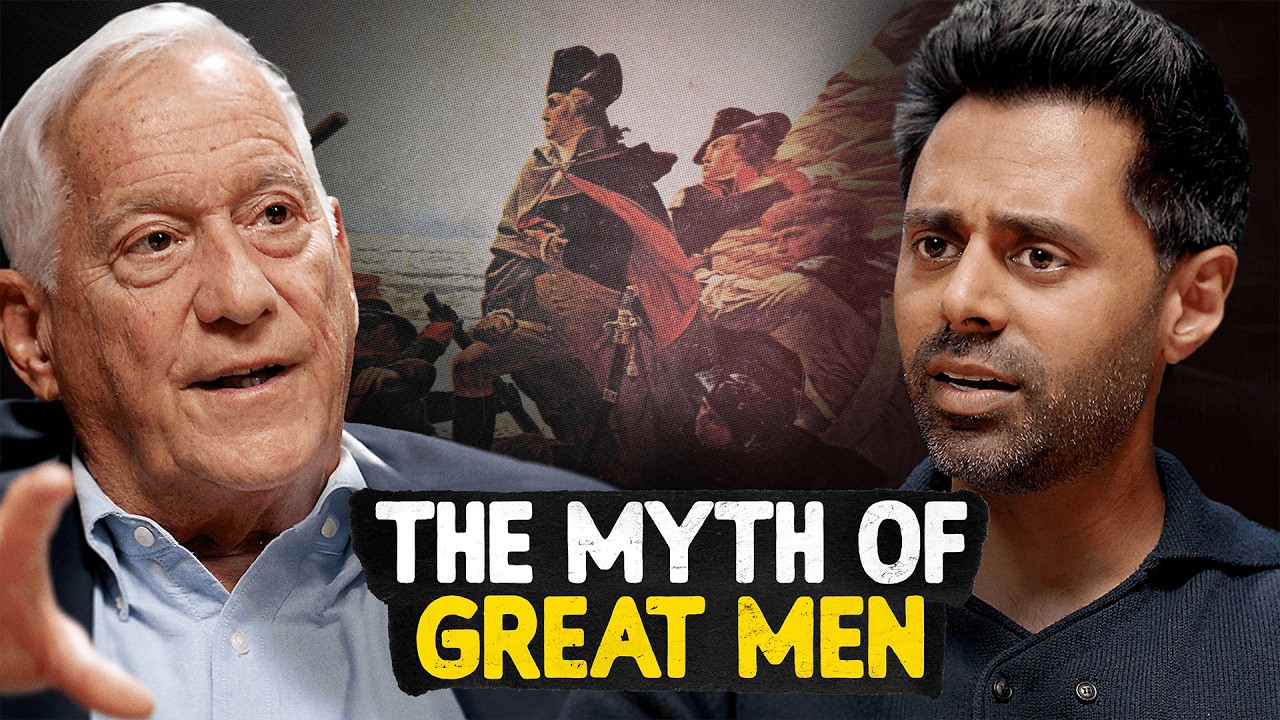
This video features Hasan Minhaj discussing historical narratives and the impact of powerful individuals on history, along with an interview with renowned biographer Walter Isacson. They explore the implications of the "Great Man" approach to history, scrutinising the narratives surrounding figures like Steve Jobs, Elon Musk, and the Founding Fathers.
- Critical perspective on biographies focusing on singular geniuses.
- Exploration of collective action versus individual accomplishments.
- Examination of the implications of wealth and societal values.
Opening Monologue
Hasan Minhaj opens with a reflection on America's 250th anniversary of the Declaration of Independence, highlighting the glorification of historical figures like George Washington and Benjamin Franklin. He critiques the dominant narrative that positions these individuals as the sole drivers of progress, suggesting that this perspective oversimplifies history. Minhaj contrasts it with a more collective approach, illustrating how significant changes often arise from the efforts of groups rather than singular heroes.
What Apple Didn’t Do (Yet)
Minhaj discusses Steve Jobs' reluctance to embrace social media and his belief that technology could disconnect people rather than bring them together. He recounts Jobs' strict household rules regarding device usage, revealing Jobs' views on attention and presence. The conversation leads to speculation on what innovations Jobs would have pursued had he been alive, including electric cars and more intuitive television technology.
The “Great Man” Approach to History
The focus shifts to Walter Isacson, who has written extensively about influential figures in history. He acknowledges that while biographies can highlight individual accomplishments, they often distort the collective effort that contributes to those achievements. Isacson reflects on how notable individuals, like Henry Kissinger and Steve Jobs, can indeed shape history, but stresses the importance of recognizing the groups and movements behind these singular narratives.
Is the Good Stuff Worth the Bad Stuff?
Hasan and Walter enter a discussion about the complex legacy of individuals like Elon Musk. Isacson states that while achievements can be groundbreaking, the accompanying negative behaviours can complicate their legacies. He suggests that understanding an individual’s full spectrum of traits is crucial for a genuine appraisal of their impact on society.
Walter Isn’t Writing “How To” Books
Isacson clarifies that his biographies are not intended as guides for success but rather explorations of complex figures and their motivations. He emphasises curiosity and the ability to take risks as vital traits of these individuals, encouraging readers to seek inspiration without mimicking behaviours they find troubling.
Lessons Walter Is Trying to Get Across
Walter Isacson shares essential lessons from his biographies, such as the value of pure curiosity, the need for passion, and the impact of creativity in achieving profound accomplishments. He distinguishes between being driven to succeed and being a cruel or insensitive leader, underscoring the necessity of empathy alongside ambition.
Can a Non-Asshole Become a Billionaire?
A debate arises regarding the nature of billionaires and whether one can achieve such wealth without compromise or unpleasant traits. Minhaj and Isacson question if the current capitalist system favours individuals who disregard empathy in pursuit of success, suggesting that achieving notable wealth often involves morally grey decisions.
Is Society Better Off Without Elon Musk?
They explore the idea that society may benefit from Musk's contributions but also ponder the ethical implications of his behaviours and public statements. The discussion acknowledges that while Musk has spurred significant technological advancements, his actions can polarise public opinion, leading to questions about the societal cost of genius.
Walter’s New Book “The Greatest Sentence Ever Written”
Walter introduces his latest book, which examines the second sentence of the Declaration of Independence, emphasising its ongoing relevance and aspiration for equality. He posits that this sentence serves as a moral guideline for successive generations, pushing society to strive for true equality and rights for all.
Would the Founding Fathers Be Digging This Supreme Court?
The conversation delves into contemporary governance and civil rights, questioning how the Founding Fathers would react to today's political landscape, particularly the actions of the Supreme Court. They reflect on the historical struggles for equality and the importance of maintaining the ideals set forth in the Declaration of Independence in modern governance.
Hanging Together
They discuss the necessity of unity in society to ensure progress towards shared values of equality and justice. Minhaj and Isacson reference Benjamin Franklin's famous quote about the importance of cooperation, stressing that modern society must foster dialogue and understanding among diverse groups.
Should Bazillionaires Exist?
The duo debates the implications of extreme wealth disparities, questioning the need for billionaires in a just society. They argue that while great wealth can stimulate innovation, systemic inequalities must be addressed to ensure equitable opportunities for future generations.
Henry Kissinger: He’s in Hell, Yeah?
In a lighter moment, the conversation touches on Henry Kissinger, with a humorous query about his legacy and potential afterlife. They reflect on Isacson's complex relationship with Kissinger and the moral considerations surrounding his historical decisions and actions.

