
Brief Summary
This video discusses Nicholas Spykman's Rimland Thesis, which argues for active US intervention in Eurasia to maintain a balance of power. It contrasts Spykman's ideas with Halford Mackinder’s Heartland Thesis and addresses the context of American isolationism. The main points include the impact of geography on state power, the historical relevance of the Rimland in global geopolitics, and the need for US foreign policy to adapt towards the dynamic nature of world power structures.
- Spykman’s theory claims that control of the Rimland is crucial for global dominance.
- The video critiques historical American isolationism and advocates for strategic intervention in global conflicts.
Introduction
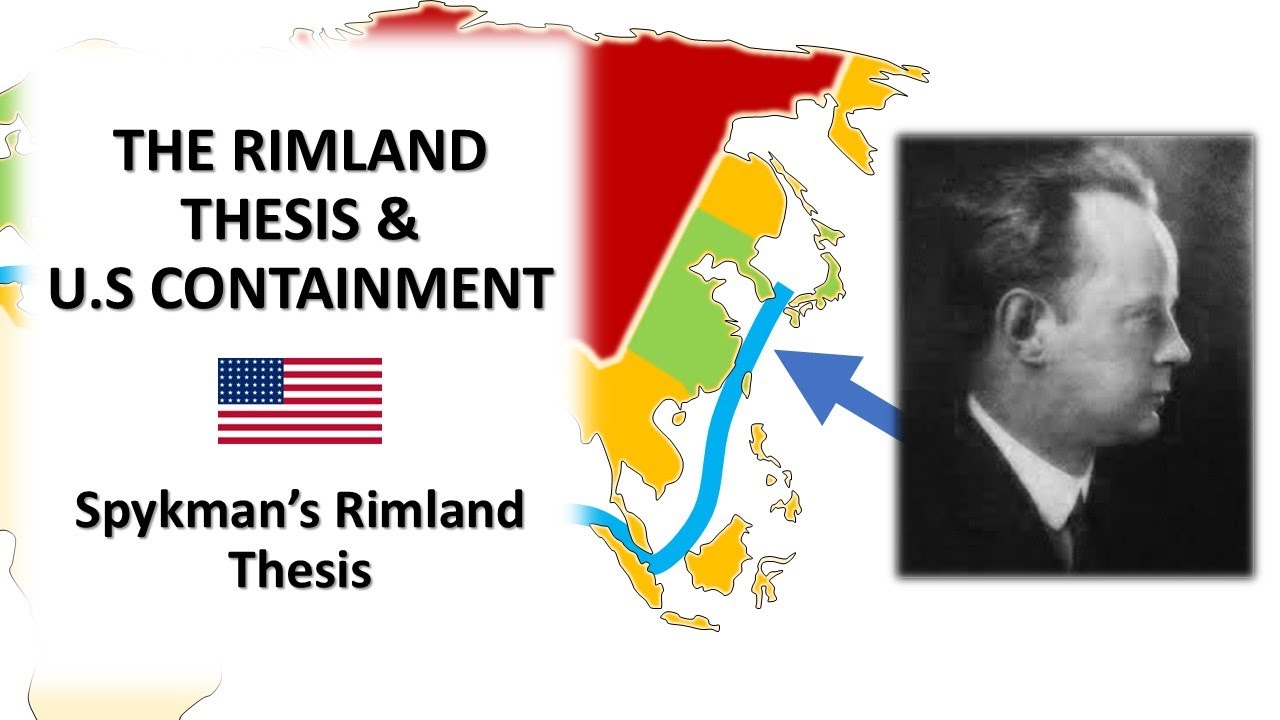
Nicholas Spykman asserts that “who controls the Rimland rules Eurasia” and ultimately influences global affairs. His Rimland Thesis, while overshadowed by Mackinder's Heartland Thesis, has significantly influenced US containment strategies. The video explores the Thesis’s roots, its implication for US policy, and how it emerged from the geopolitical landscape of the early 20th century.
Context: American Isolationism
Spykman began his career in diplomacy and academia during a time when American isolationism was prevalent. He argued for US intervention in disputes in Europe and Asia, countering the prevailing isolationist sentiment. Three forms of isolationism are identified: pure isolationism, hemispheric defense, and idealistic internationalism. Spykman faced opposition at Yale, and despite this, he worked to reframe American ideals to align with the geopolitical realities of industrial power struggles. His ideas were crystallised in a planned major work that remained unfinished due to his untimely death in 1943.
International Struggle & the Balance of Power
Spykman contends that power politics are unavoidable for the US, operating in a global system devoid of a central authority. The security of states relies on their relative power, leading to perpetual power struggles. He argues that international law cannot overcome this inherent rivalry; compliance only occurs where power dynamics dictate. Despite the pessimistic outlook on power struggles, Spykman identifies a potential equilibrium called the Balance of Power, where states form coalitions to check aggression. However, fluctuations in power dynamics due to technological advancements often destabilise this balance.
Mackinder’s Heartland Thesis
Spykman builds on Mackinder’s Heartland Thesis to advocate for US interests in maintaining a balance across Eurasia. He notes that geography influences state power, as does technology, which diminishes previous advantages of natural barriers. While Mackinder viewed the Heartland as the primary region for potential dominance, Spykman argues for a focus on the Rimland as the real risk for US security. He highlights that controlling Eurasia’s resources makes the Rimland vital to US interests—geographically and politically.
Spykman’s Rimland Thesis
Spykman posits that the Rimland, not the Heartland, is where unification in Eurasian power is most likely due to its resource wealth and geographic advantages that facilitate interaction among states. He critiques Mackinder's assumptions about the Heartland's strategic advantages while presenting the Rimland as dynamically engaged in power struggles. Historical patterns show frequent conflicts among Rimland states, indicating that they pose a greater threat to stability, necessitating US oversight.
US Policy towards the Rimland
Spykman outlines a pragmatic US foreign policy focused on intervention in the Rimland to preserve regional balances of power. He suggests that the US leverage its unique geopolitical position to maintain dominance in Western Europe and East Asia. Spykman calls for flexible foreign relations that discard traditional notions of allies and enemies, viewing international law as a tool for balance rather than an absolute constraint on power. He advocates for territorial adjustments to ensure a balanced distribution of power, reinforcing the idea that cooperation with allies is essential for US actions in these regions.
Assessment & Conclusions
Spykman intended for his Rimland Thesis to justify US intervention in Eurasia, shaping the early Cold War containment strategies. Although it has influenced strategic discussions, the Thesis faces critiques for being derivative of Mackinder's work and for overlooking essential aspects of modern geopolitics. Challenges include the clash between interventionist principles and democratic politics, an overemphasis on military power, and the limitations of focusing solely on strategic core regions. Despite the criticisms, the Rimland Thesis remains a critical framework for understanding global politics and the necessity for active US engagement in international affairs.

