
Brief Summary
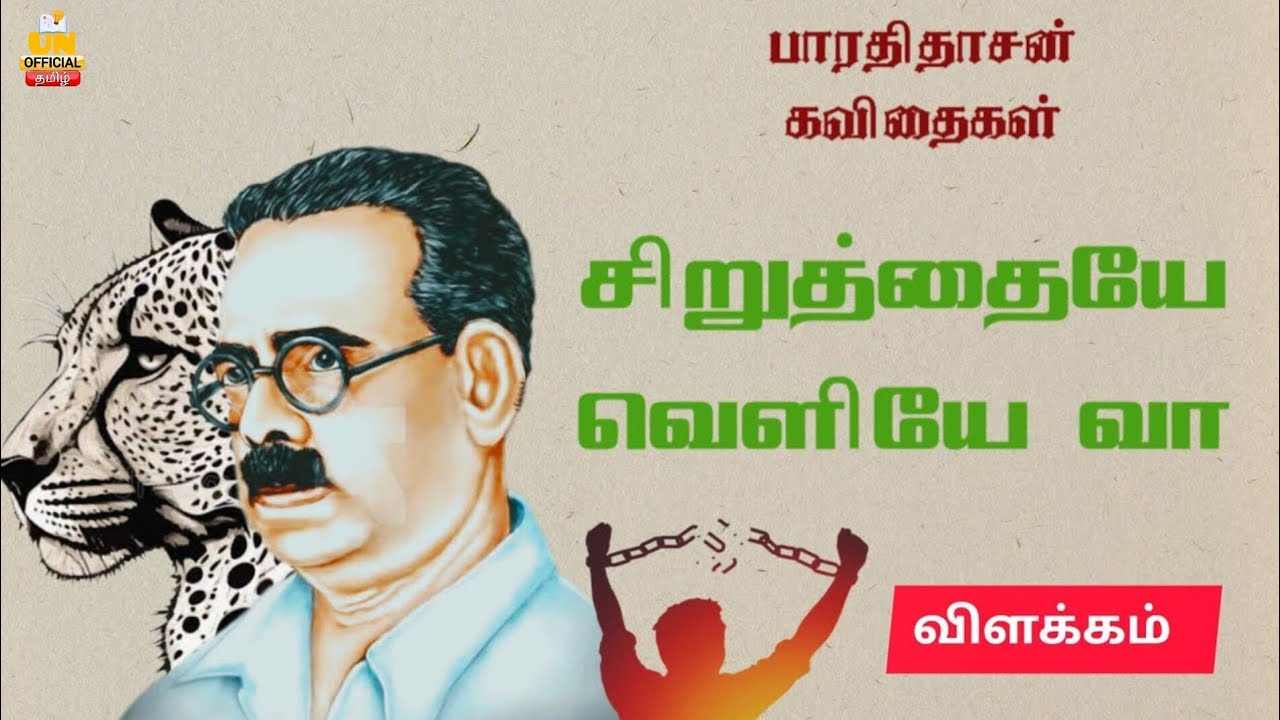
This video discusses the poem "சிறுத்தையே வெளியில்வா" (Sirruthaiye Veliyilvaa) written by the renowned Tamil poet Bharathidasan. The poet's contributions to society, particularly through his emotional and motivational verses aimed at inspiring the youth, are highlighted. The context of the poem's creation during a significant political event in 1945 is explained, emphasizing Bharathidasan’s commitment to the Dravidian movement and Tamil culture.
- Bharathidasan's full name was Kanagasubaperinbam.
- He wrote the poem to motivate the youth at a Dravidian student conference.
- The poem calls upon the youth to show their courage and rise against oppression.
Introduction to Bharathidasan and the Poem
The video opens with an introduction to Bharathidasan, a significant figure in Tamil literature and politics. His full name is Kanagasubaperinbam, and he lived from 1891 to 1964. Bharathidasan is known as a revolutionary poet and has made important contributions across various fields, including literature and politics. His change of name to Bharathidasan signifies his cultural connection to Bharathiyar, another revered Tamil poet. The multitude of his works such as "Sanjeevi," "Parvatam," and "Kumudham" reflect his literary prowess.
Context of the Poem's Creation
The poem "சிறுத்தையே வெளியில்வா" was penned during the Dravidian student conference in 1945 held in Pudupettai, where Bharathidasan aimed to inspire the youth with a stirring song. The conference was led by the influential figure, E.V. Ramasamy, emphasizing the socio-political movements during that era. The poem was recited emotionally during the conference by speaker A. Anbazhagan, highlighting its impact on the audience and the significance of Dravidian identity.
Analysis of the Poem
The essence of the poem revolves around the call to the youth to awaken and realize their potential. Bharathidasan encourages them to venture out of their confined spaces, likening their struggle to that of a wild cat, symbolizing ferocity in standing up for their rights. He juxtaposes the idea of hope against oppression, urging the youth to boldly express their strength and assert their identity.
Imagery and Symbolism
Bharathidasan uses vivid imagery and symbols in his poems. The “Simbu” (symbolizing strength and ferocity) represents the youth, while the “Simbu bird” serves as a metaphor for resilience. He implores the youth to rise and fight for their rights and culture with valor, emphasizing the importance of vigilance amidst the changing political landscape of Tamil Nadu.
Encouragement to the Youth
Bharathidasan encourages the youth to embrace their heritage and be proud of their Tamil identity. He warns them about the deceptive forces in society that may undermine their cultural rights, urging them to unite for the cause of Tamil language and heritage. The poet expresses a deep faith in the youth, stating that they possess the strength to navigate challenges and promote the Tamil language for future generations.
Conclusion: Call for Unity and Action
In conclusion, Bharathidasan’s poem serves as a clarion call for youths to unite and take action for the progress of their culture and language. He emphasizes the importance of collective strength in overcoming obstacles and achieving liberation for the Tamil community. The poet’s faith in the youth as the torchbearers of Tamil pride is evident, reflecting his deep commitment to the cause of Tamils. The video ends on a note of appreciation for Bharathidasan's impactful work and his passionate belief in the empowerment of the youth.

