
Brief Summary
This video explains the complexities of German aviation, focusing on the country's airports, particularly Berlin, Frankfurt, and Munich, and their roles in Lufthansa's operations. The discussion revolves around historical and political factors that have shaped the current airline landscape in Germany, the unique dual-hub model of Lufthansa, and the associated challenges and strategic decisions in managing these hubs.
- Berlin's Brandenburg Airport opened late and lacks intercontinental connections.
- Frankfurt serves as a major transfer hub, while Munich has grown into a significant intercontinental center.
- Lufthansa's dual-hub strategy presents operational challenges and economic implications.
- The impact of environmental legislation against short-haul flights poses a significant threat to the airline's feeder system.
Berlin's Missing Airport
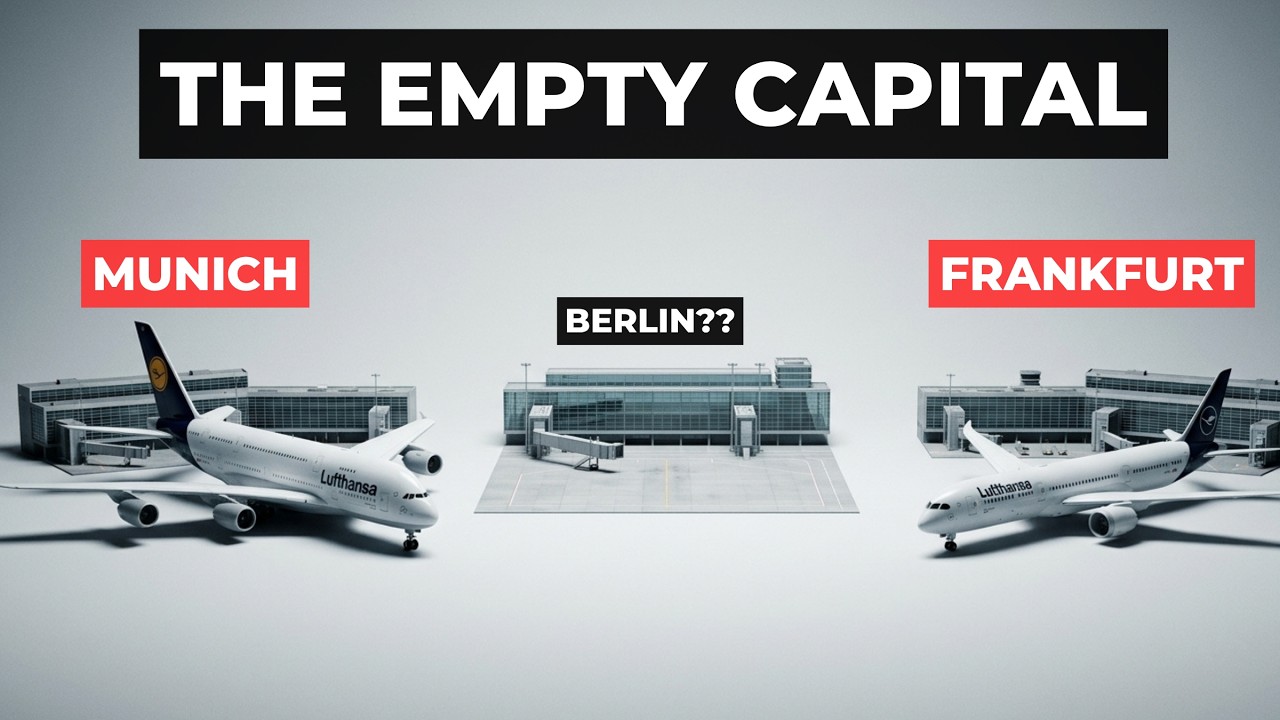
The video begins by discussing the irony of Berlin, Germany’s capital, lacking a significant airport despite its size and significance. Berlin’s Brandenburg Airport, which opened in 2020, was years behind schedule and over budget, leading to its status as a "national joke." It primarily serves short-haul flights, and most Lufthansa operations from Berlin reach only Frankfurt and Munich, which handle significantly more traffic. The disparity between Berlin's airport capacity and the need for long-haul connections highlights the unique challenges that Berlin faces compared to other European capitals.
Locked Out by War
The historical context of the Cold War is explored, explaining how Berlin's division limited Lufthansa's ability to operate in the city. Under post-war agreements, only airlines from the US, Britain, and France could serve West Berlin, while Lufthansa faced restrictions until the Berlin Wall fell. This delay in establishing a presence in Berlin resulted in Lufthansa building its operational base in Frankfurt and Munich, ultimately leading to a fragmented approach to German air travel that continues today.
Sponsor: Soar
The sponsor segment introduces Soar, a platform that simplifies booking flights by allowing users to search and book directly with airlines. It highlights the ease of use and efficiency of the service, making travel planning more straightforward for users.
Hub Economics 101
The video delves into hub economics, discussing two types of airline passengers: origin and destination traffic, and connecting traffic. It explains that hubs thrive when both passenger types are balanced, as connecting flights enhance route options and revenue. Lufthansa's split strategy between Frankfurt and Munich complicates this model, leading to higher operational costs and logistical issues that rival airlines have avoided by consolidating operations into a single hub.
Frankfurt, the Machine
Frankfurt is described as a highly efficient airline hub, pivotal to Lufthansa's operation since the opening of its Terminal 1 in 1972. It serves as a transfer point for millions, connecting to a dense network aided by Germany’s rail system. Despite its operational efficiency, Frankfurt faces a six-hour night curfew that limits scheduling flexibility, causing operational challenges during peak times and necessitating high-level oversight from Lufthansa’s management.
The Six-Hour Curfew
The video outlines the implications of Frankfurt's curfew, which restricts operations to 18 hours a day. The curfew can lead to widespread cancellations and problems during weather disruptions. Lufthansa has struggled to maintain service quality at Frankfurt, responding by assigning executive oversight to address operational shortcomings as they arise.
Munich's Landlord Airline
Munich Airport is characterized as having evolved from a secondary airport to a primary intercontinental hub due to its modern facilities and strategic location. The airport’s construction as a joint venture with Lufthansa has allowed for a unique partnership where the airline has a vested interest in its development. This symbiotic relationship has driven both increased capacity and investment in Munich's expansion, linking it to a growing passenger demand.
Two Markets, One Country
Lufthansa's operation splits its traffic between two hubs: Frankfurt and Munich, each catering to different markets within Germany. Frankfurt thrives on long-haul traffic, while Munich addresses Southern German demand. The differing market dynamics necessitate that Lufthansa carefully manage its route scheduling to optimize capacity and passenger flow at both locations.
Two Very Different Jobs
The roles of Frankfurt and Munich are examined more closely, showing how they serve different aviation needs. Frankfurt is defined as a bulk transfer hub for long-haul flights, while Munich operates as a showcase for premium services. The operational differences affect how cargo and passenger traffic are allocated at each airport, with Frankfurt managing a substantially larger share of long-haul routes.
The Invisible Armada
The video discusses the extensive feeder network required to operate both hubs effectively, emphasizing the logistical complexity of managing simultaneous regional flights feeding into two major hubs. This 'invisible armada' illustrates how local flights are critical for Munich’s intercontinental routes, and the operational demands multiply when handling two hubs.
The Short-Haul Ban
The impact of short-haul flight bans is discussed in relation to the rise of high-speed rail in Europe. A ban in France on short flights for routes that can be completed by train threatens Lufthansa’s feeder network and long-haul flight profitability. Lufthansa's response has included integrating rail travel into its service offerings with Deutsche Bahn to maintain passenger connections.
41 Missing Widebodies
Current aircraft shortages at Lufthansa are detailed, particularly the 41 missing Boeing wide-body aircraft due to delivery delays. The video addresses how this shortfall exacerbates competition between the two hubs for available aircraft and further complicates operations, reflecting the challenges of managing dual hubs.
The Blocked Third Runway
Despite plans for expansion, Munich is limited by political constraints that prevent the construction of a third runway. This hindrance places additional pressure on both airports to service increasing passenger numbers with existing infrastructure, emphasizing the challenges Lufthansa faces as it attempts to grow.
Buying More Doorways
The video transitions to Lufthansa’s strategy of acquiring additional hubs beyond Germany, like its recent move to acquire ITA Airways in Rome to expand its network. This tactic reflects a plan to increase operational flexibility and passenger accessibility, showcasing how Lufthansa navigates the limitations within its domestic operations.
The Fight for TAP
Lufthansa's bid for a stake in TAP Air Portugal illustrates its efforts to expand its network further into Europe, capitalizing on Portugal's strategic location for transatlantic routes. This move represents a strategic acquisition aiming to strengthen Lufthansa’s position in the competitive aviation market.
Back to Berlin
The video concludes by returning to Berlin and summarizing the airline’s historical challenges and current strategy. Despite lifting restrictions to operate in Berlin, Lufthansa has struggled to develop the necessary business ecosystem to make the capital a viable hub, explaining the ongoing reliance on Frankfurt and Munich for long-haul operations.

